

Hey there! As a supplier of Feed Mill Mixers, I've seen firsthand how different factors can impact the mixing process. One of the most crucial elements that often doesn't get enough attention is the feed particle size. In this blog, I'll break down how feed particle size influences the mixing process in a feed mill mixer and why it matters for your operations.
Why Feed Particle Size Matters
Let's start with the basics. Feed particle size refers to the size of the individual pieces of feed ingredients. It can vary widely, from fine powders to larger chunks. The particle size matters because it directly affects how well the ingredients mix together. If the particle sizes are too different, it can lead to uneven mixing, which can have a big impact on the quality of the final feed product.
For example, if you're mixing a fine powder with large chunks, the powder might clump together and not distribute evenly throughout the mixture. This can result in some parts of the feed having too much of one ingredient and not enough of another. On the other hand, if the particle sizes are more uniform, the ingredients are more likely to mix together evenly, resulting in a higher-quality feed product.
Impact on Mixing Efficiency
One of the main ways that feed particle size affects the mixing process is by influencing the mixing efficiency. Mixing efficiency refers to how well the mixer can blend the ingredients together in a given amount of time. When the particle sizes are uniform, the mixer can work more efficiently because the ingredients are easier to move around and distribute evenly.
On the other hand, when the particle sizes are different, the mixer has to work harder to overcome the differences in size and density. This can result in longer mixing times and lower mixing efficiency. In some cases, it might even be necessary to use a more powerful mixer or adjust the mixing parameters to achieve the desired level of mixing.
Effect on Mixing Quality
In addition to affecting the mixing efficiency, feed particle size also has a big impact on the mixing quality. Mixing quality refers to how well the ingredients are distributed throughout the mixture. When the particle sizes are uniform, the ingredients are more likely to be evenly distributed, resulting in a higher-quality feed product.
On the other hand, when the particle sizes are different, the ingredients might not mix together as well, resulting in uneven distribution. This can lead to variations in the nutrient content of the feed, which can have a negative impact on the health and performance of the animals.
Considerations for Feed Mill Mixers
As a Feed Mill Mixer supplier, I understand the importance of choosing the right mixer for your specific needs. When it comes to feed particle size, there are a few things to keep in mind.
First, you need to consider the range of particle sizes that you'll be working with. If you're dealing with a wide range of particle sizes, you might need a mixer that is designed to handle these differences. For example, some mixers are equipped with special agitators or paddles that can help to break up larger particles and distribute them more evenly throughout the mixture.
Second, you need to consider the mixing time and speed. When dealing with different particle sizes, it might be necessary to increase the mixing time or speed to ensure that the ingredients are evenly distributed. However, you also need to be careful not to over-mix the ingredients, as this can lead to other problems, such as ingredient degradation or dust generation.
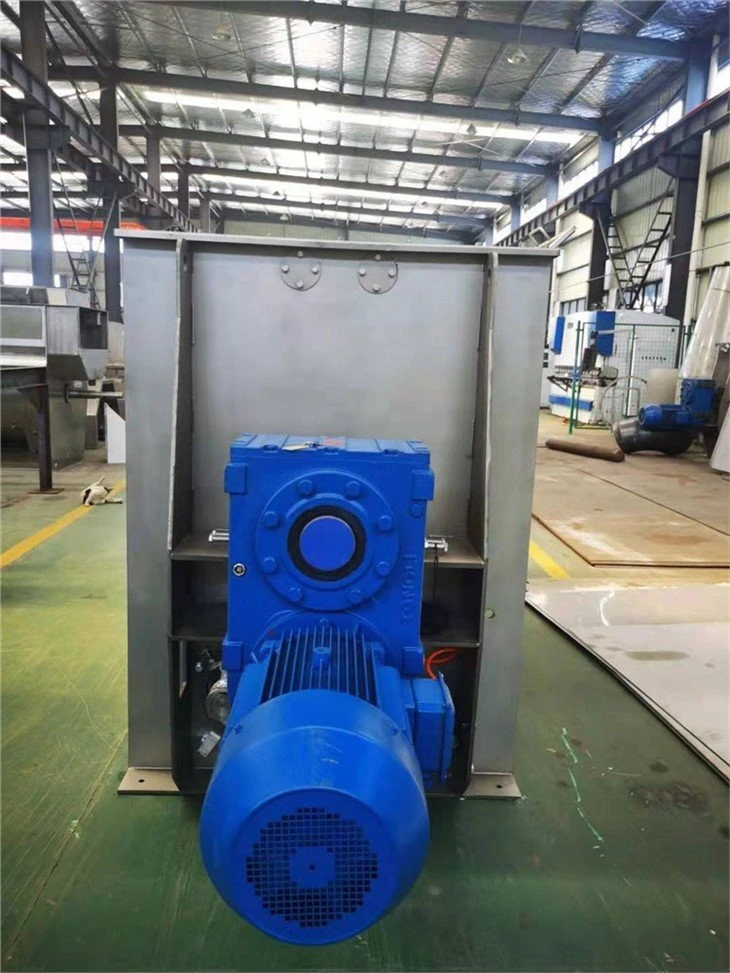
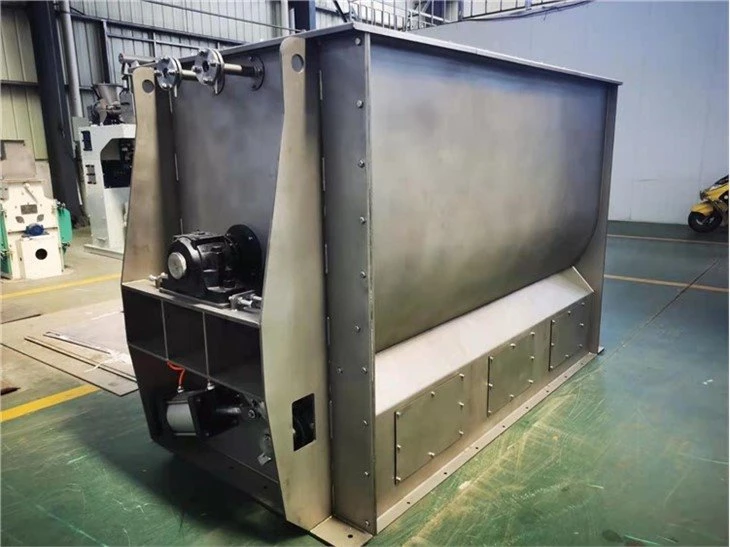
Finally, you need to consider the type of mixer that you're using. Different types of mixers have different capabilities and limitations when it comes to handling different particle sizes. For example, a SLHY Horizontal Mixer is a popular choice for many feed mills because it is designed to handle a wide range of particle sizes and can provide efficient and uniform mixing. On the other hand, a SJHS Paddle Mixer might be better suited for smaller particle sizes or for applications where a more gentle mixing action is required.
Importance of Particle Size Control
In addition to choosing the right mixer, it's also important to control the feed particle size to ensure optimal mixing performance. There are a few different ways to control the particle size, including grinding, sieving, and pelletizing.
Grinding is a common method for reducing the particle size of feed ingredients. By using a grinder, you can break down larger particles into smaller ones, which can improve the mixing efficiency and quality. However, it's important to be careful not to over-grind the ingredients, as this can lead to other problems, such as dust generation or ingredient degradation.
Sieving is another method for controlling the particle size. By using a sieve, you can separate the larger particles from the smaller ones, which can help to ensure that the particle sizes are more uniform. This can improve the mixing efficiency and quality, as well as reduce the risk of clogging or other problems in the mixer.
Pelletizing is a process that involves compressing the feed ingredients into pellets. This can help to improve the handling and storage of the feed, as well as reduce the dust generation. However, it's important to note that pelletizing can also affect the particle size and shape of the feed, which can have an impact on the mixing process.
Role of Pellet Die Manufacturer
If you're using a pelletizing process, it's important to work with a reputable Pellet Die Manufacturer. The pellet die is a critical component of the pelletizing process, as it determines the size and shape of the pellets. A high-quality pellet die can help to ensure that the pellets are uniform in size and shape, which can improve the mixing efficiency and quality.
In addition to choosing the right pellet die, it's also important to maintain the pellet die properly. This includes regular cleaning and maintenance, as well as replacing the pellet die when it becomes worn or damaged. By taking good care of the pellet die, you can ensure that it continues to perform at its best and provide consistent results.
Conclusion
In conclusion, feed particle size plays a crucial role in the mixing process in a feed mill mixer. By understanding how feed particle size affects the mixing efficiency and quality, you can make informed decisions about the type of mixer to use, the mixing parameters to set, and the methods for controlling the particle size.
As a Feed Mill Mixer supplier, I'm here to help you choose the right mixer for your specific needs and provide you with the support and expertise you need to ensure optimal mixing performance. If you have any questions or would like to learn more about our products and services, please don't hesitate to contact us. We're always happy to help!
References
- Smith, J. (2018). Feed Particle Size and Its Impact on Mixing Efficiency. Journal of Feed Science and Technology, 25(3), 123-135.
- Johnson, A. (2019). The Role of Pellet Die Design in Feed Pellet Quality. Poultry Science, 98(2), 890-902.
- Brown, C. (2020). Controlling Feed Particle Size for Optimal Mixing Performance. Feed Mill Management, 32(4), 45-52.