

Hey there, folks! As a supplier of Feed Mill Mixers, I often get asked about the difference between vertical and horizontal feed mill mixers. So, I thought I'd write this blog to clear things up for all you feed industry enthusiasts out there.
Let's start with the basics. What exactly is a feed mill mixer? Well, it's a crucial piece of equipment in the feed production process. Its main job is to blend different ingredients together evenly to create a high - quality feed product. Whether it's grains, vitamins, minerals, or other additives, a good mixer ensures that every bit of the feed has the right proportion of all the components.
Vertical Feed Mill Mixers
Vertical mixers are quite common in smaller feed mills or on farms where the production volume is relatively low. They have a tall, cylindrical design. The way they work is pretty straightforward. The ingredients are loaded into the top of the mixer, and a vertical auger or screw inside the mixer rotates. This rotation moves the ingredients from the bottom to the top and then back down again, causing them to mix as they circulate within the chamber.
One of the big advantages of vertical mixers is their simplicity. They're relatively easy to operate and maintain. You don't need a whole lot of technical know - how to get them up and running. Also, they take up less floor space compared to horizontal mixers. This is a huge plus for those with limited space in their feed mills or farms.
However, vertical mixers do have some drawbacks. They tend to have a slower mixing speed. Since the mixing action relies on the vertical movement of the ingredients, it can take longer to achieve a homogeneous mix, especially when dealing with a large batch. And the mixing quality might not be as high as that of horizontal mixers. Some ingredients may not get fully incorporated, leading to an uneven distribution in the final feed product.
Horizontal Feed Mill Mixers
Horizontal mixers, on the other hand, are more commonly used in large - scale feed production facilities. They have a long, horizontal drum design. Inside the drum, there are paddles or ribbons that rotate. As they spin, they move the ingredients in different directions, mixing them thoroughly as they go.
The biggest advantage of horizontal mixers is their superior mixing performance. They can achieve a very high degree of homogeneity in a relatively short amount of time. This means that the feed produced is of a much higher quality, with every particle containing the right balance of ingredients. They're also great for handling a wide variety of ingredients, including those with different densities and sizes.
Another plus is their high - capacity operation. Horizontal mixers can handle large batches of feed, making them ideal for commercial feed production. This can significantly increase the efficiency of the feed mill and reduce the overall production time.
But horizontal mixers also come with some challenges. They're usually more expensive than vertical mixers, both in terms of the initial purchase cost and the long - term maintenance cost. They also require more floor space, which can be a limiting factor for some smaller operations.
Our Product Offerings
Now, as a Feed Mill Mixer supplier, we offer a range of both vertical and horizontal mixers to meet the diverse needs of our customers. For those looking for a reliable and efficient horizontal mixer, we have the Double - circle Paddle Mixer. This mixer is designed with advanced technology to ensure a fast and thorough mixing process. It's perfect for large - scale feed production.
We also have the SLHY Horizontal Mixer. This mixer is known for its high - quality construction and excellent mixing performance. It can handle different types of feed ingredients with ease, making it a popular choice among our customers.
If you want to explore more of our horizontal mixer options, check out our Horizontal Mixer page on our website. We've put a lot of effort into developing these products to ensure they meet the highest standards in the industry.
Which One Should You Choose?
So, which type of mixer is right for you? Well, it depends on your specific needs. If you're running a small - scale farm or a feed mill with limited production volume and space, a vertical mixer might be the way to go. It's simple, cost - effective, and doesn't take up much room.

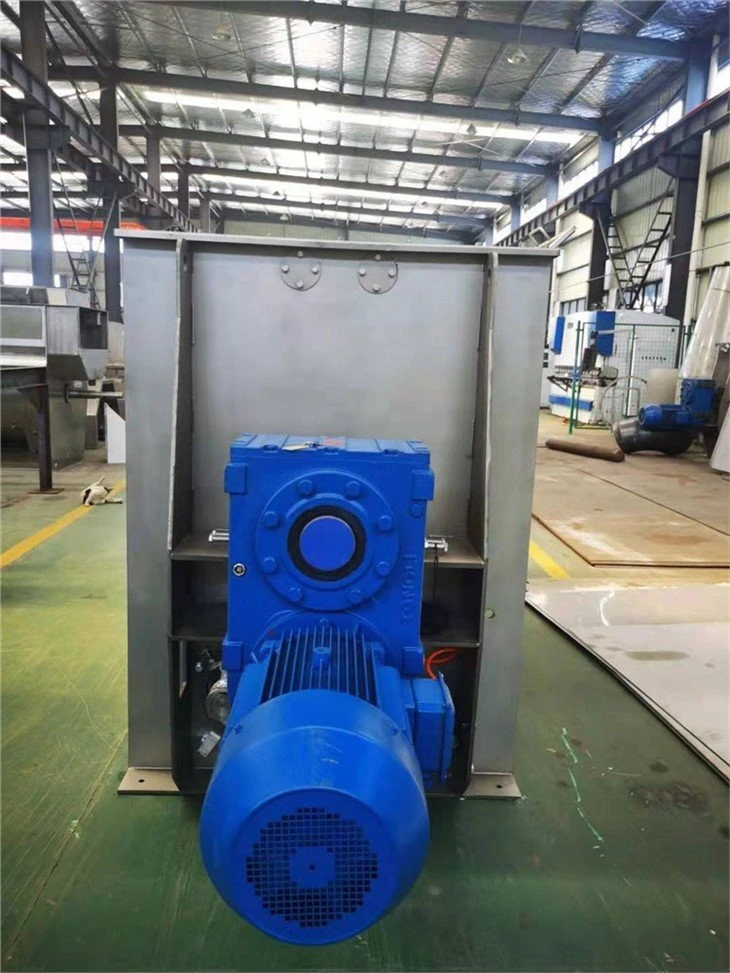
But if you're in the commercial feed production business and need to produce large quantities of high - quality feed quickly, a horizontal mixer is probably your best bet. It may cost more upfront, but the improved mixing quality and higher production efficiency can lead to better returns in the long run.
Let's Talk Business
If you're interested in learning more about our feed mill mixers or have any questions about which type of mixer would be best for your operation, don't hesitate to get in touch. We're here to help you make the right choice and ensure that your feed production process runs smoothly. Whether you're a small - time farmer or a large - scale feed producer, we've got the solution for you. Let's start a conversation and see how we can work together to take your feed production to the next level.
References
- "Feed Mill Machinery Handbook," a comprehensive guide on different types of feed mill equipment.
- Industry research reports on feed mixer technology and performance.