

You know, when I first started in the business of supplying Rotary Distributors, I was as green as they come. I mean, I knew the basics, but the nitty - gritty details were a whole new ballgame. One of the most fascinating components in a Rotary Distributor is the condenser. So, let's jump into how a condenser works in a rotary distributor.

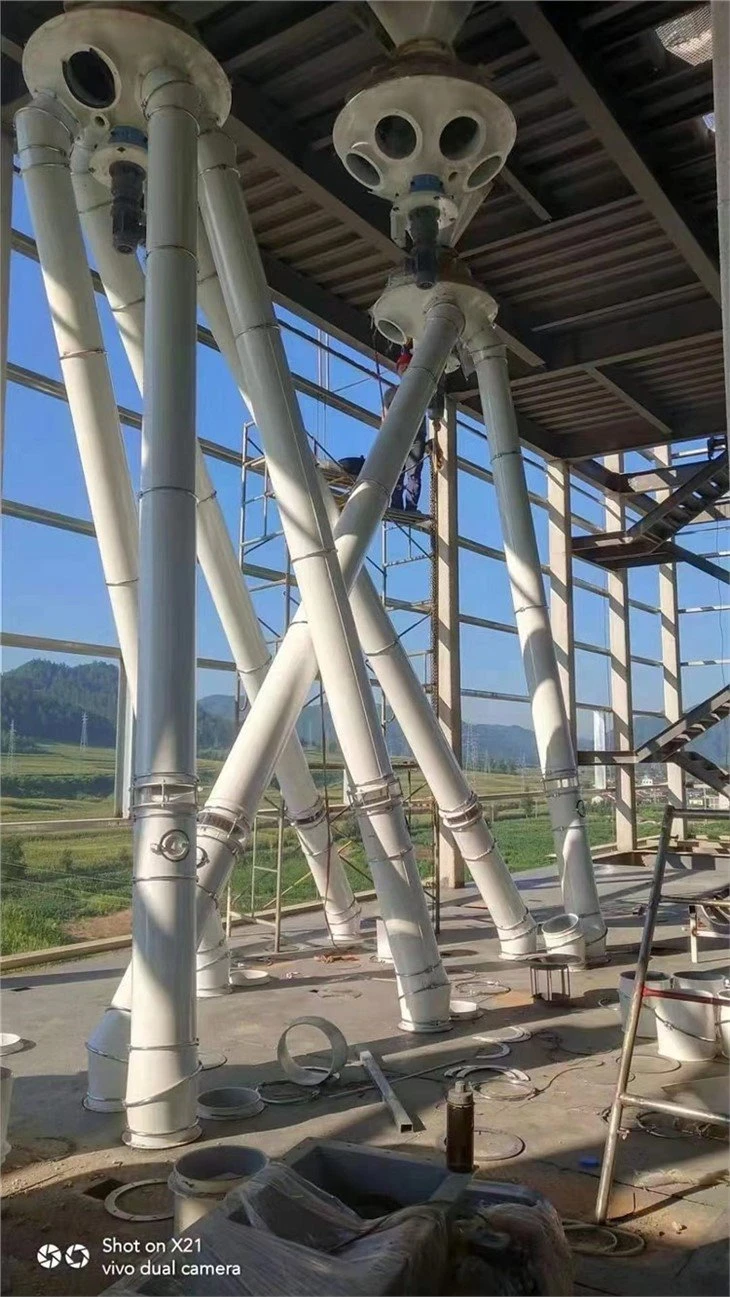
The Basics of a Rotary Distributor
Before we dig into the condenser, let's quickly go over what a Rotary Distributor is. It's a pretty nifty device that distributes materials evenly. We've got different types of rotary distributors in our catalog, like the Powder Rotary Distributor. This bad boy is designed specifically for powdered materials, ensuring they're spread out just right. Then there's the TFPX Series Rotary Distributor, which is a high - performance model, and the Rotary Distributor for Feed Machine, tailored for the needs of feed production.
Understanding the Condenser in a Rotary Distributor
The Role of a Condenser
In a rotary distributor, the condenser plays a crucial role. Picture this: the rotary distributor is moving stuff around, and there can be a lot of heat and vapor generated during the process. A condenser steps in to change these vapors back into a liquid state. It's like a magician turning steam back into water.
Let's take a real - world analogy. You know when you're cooking on the stove, and there's steam rising from the pot? If you put a cold lid on the pot, the steam hits the cold surface and turns back into water droplets. Well, that's pretty much what a condenser does in a rotary distributor.
The Working Principle
The condenser works based on the principle of heat transfer. When the hot vapor from the rotary distributor enters the condenser, it comes into contact with a cold surface. This cold surface can be a set of tubes filled with a coolant, like water or a refrigerant.
The hot vapor transfers its heat to the cold surface. As it loses heat, the vapor cools down and condenses into a liquid. This liquid then flows out of the condenser, and the cycle can continue.
There are different types of condensers used in rotary distributors. One common type is the shell - and - tube condenser. In this setup, the hot vapor flows inside the tubes, and the coolant flows around the outside of the tubes in the shell. The large surface area of the tubes allows for efficient heat transfer, making the condensation process quick and effective.
Another type is the air - cooled condenser. Instead of using a liquid coolant, it uses air to cool the vapor. Fans blow air over the condenser coils, removing the heat from the vapor and causing it to condense. Air - cooled condensers are great in situations where water is scarce or where using a water - based cooling system isn't practical.
Why it Matters
You might be thinking, "Why does the condensation process matter in a rotary distributor?" Well, there are a few good reasons.
First off, getting rid of the excess vapor helps maintain a stable working environment inside the rotary distributor. If the vapor isn't condensed and removed, it can build up and create pressure problems. This can lead to all sorts of issues, like reduced efficiency or even mechanical failures.
Secondly, condensing the vapor can also help with waste management. In many cases, the condensed liquid can be recycled or reused. This not only saves resources but can also cut down on costs.
Real - World Applications
Let's talk about how this all plays out in real - world scenarios. In the food processing industry, our Rotary Distributor for Feed Machine is used to distribute feed ingredients evenly. During this process, there can be a lot of moisture and steam generated. The condenser in the rotary distributor helps to remove this moisture, ensuring the feed ingredients stay dry and in the right condition. This is crucial for maintaining the quality of the feed.
In the chemical industry, the TFPX Series Rotary Distributor is often used to distribute various chemicals. Some of these chemicals can produce vapors that are not only a nuisance but can also be hazardous. The condenser steps in to turn these vapors back into a liquid state, making it safer to handle the chemicals and reducing the risk of environmental pollution.
Maintenance and Troubleshooting
Like any other component, the condenser in a rotary distributor needs to be properly maintained. Regular cleaning is essential to ensure that the heat transfer surfaces are free from dirt and debris. If the condenser gets clogged, it won't be able to transfer heat effectively, and the condensation process will slow down.
Another important aspect is checking the coolant level. Whether it's water or a refrigerant, having the right amount of coolant is crucial for the condenser to work efficiently. If the coolant level is too low, the condenser won't be able to cool the vapor as quickly, leading to problems.
When it comes to troubleshooting, if you notice that the rotary distributor is not operating as efficiently as it should, or if there's an increase in vapor within the system, the condenser could be the culprit. You might want to check if the fans are working properly in an air - cooled condenser or if there are any leaks in the coolant lines for a water - cooled condenser.
Wrapping It Up and Invitation to Connect
So, there you have it - a rundown of how a condenser works in a rotary distributor. It's an essential component that helps keep the whole system running smoothly. At our company, we're dedicated to providing high - quality Rotary Distributors with top - notch condensers.
If you're in the market for a new rotary distributor or have any questions about how our condensers work, don't hesitate to reach out. We're always happy to chat about your specific needs and see how we can help. Whether it's the Powder Rotary Distributor, the TFPX Series Rotary Distributor, or the Rotary Distributor for Feed Machine, we've got you covered.
References
- Thermodynamics textbooks for the principles of heat transfer and condensation.
- Rotary distributor product manuals for details on condenser function and maintenance.