

Hey there! As a supplier of hammer mills, I often get asked about the cooling methods of these machines. So, I thought I'd share some insights on this topic.
First off, let's understand why cooling is so important for a hammer mill. When a hammer mill is in operation, it generates a significant amount of heat. This heat can come from various sources, such as the friction between the hammers and the material being milled, the motor's operation, and the impact forces during the grinding process. If this heat isn't properly managed, it can lead to a bunch of problems. For example, the high temperature can cause the material being milled to change its properties, like losing moisture or getting damaged. It can also reduce the efficiency of the machine and even shorten its lifespan.
Now, let's dive into the different cooling methods commonly used for hammer mills.
Air Cooling
One of the most popular cooling methods is air cooling. It's relatively simple and cost - effective. In an air - cooled hammer mill, fans are used to blow air over the hot components of the machine. The moving air absorbs the heat and carries it away.
There are two main types of air cooling setups: natural air cooling and forced air cooling.
Natural Air Cooling
Natural air cooling relies on the natural movement of air around the hammer mill. The machine is designed with ventilation holes or fins that increase the surface area exposed to the air. As the air moves around the machine, it cools the hot parts. This method is suitable for smaller hammer mills or those with lower power requirements. The advantage of natural air cooling is that it doesn't require any additional power - consuming components like fans. However, it may not be sufficient for larger and more powerful hammer mills that generate a lot of heat.

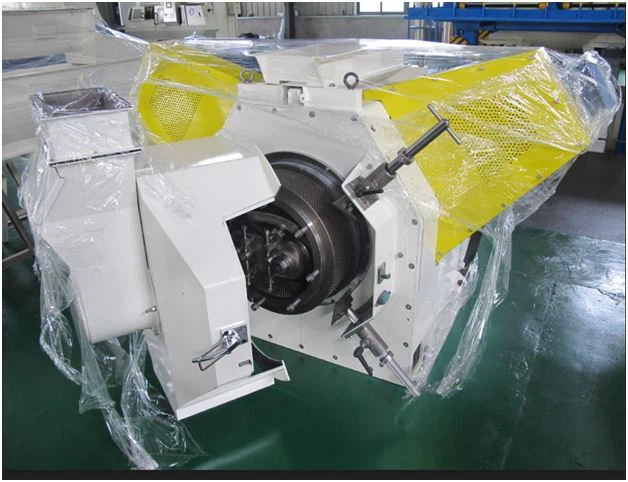
Forced Air Cooling
Forced air cooling, on the other hand, uses fans to actively blow air over the machine. These fans can be either internal or external. Internal fans are usually installed inside the hammer mill and are designed to direct air flow to the critical components, such as the motor and the grinding chamber. External fans can be placed around the machine to blow air from the outside. This method is more effective than natural air cooling as it can provide a higher volume of air flow, which means better heat dissipation. Forced air cooling is commonly used in medium - to - large - sized hammer mills.
Water Cooling
Water cooling is another effective way to cool a hammer mill. This method uses water as a coolant to absorb the heat from the machine.
Direct Water Cooling
In direct water cooling, water is circulated directly through channels or pipes inside the hammer mill. The water comes into direct contact with the hot components, such as the motor housing or the grinding chamber walls. As the water absorbs the heat, it gets heated up itself. Then, it is pumped out of the machine and passed through a heat exchanger, where it releases the heat to the surrounding environment. The cooled water is then recirculated back into the hammer mill. Direct water cooling is very efficient at removing heat, but it requires a more complex setup, including a water pump, pipes, and a heat exchanger.
Indirect Water Cooling
Indirect water cooling involves using a heat exchanger to transfer the heat from the hammer mill to the water. The heat exchanger is usually a separate unit that is connected to the machine. The hot components of the hammer mill transfer their heat to the heat exchanger, and then the water in the heat exchanger absorbs the heat. The advantage of indirect water cooling is that it reduces the risk of water leakage inside the hammer mill, which could damage the electrical components. However, it may be less efficient than direct water cooling as the heat transfer process is less direct.
Oil Cooling
Oil cooling is also an option for some hammer mills. In this method, oil is used as a coolant. Oil has some advantages over water, such as better lubrication properties and a higher boiling point.
The oil is circulated through the machine, absorbing the heat from the hot components. Similar to water cooling, the heated oil is then passed through a heat exchanger to release the heat. Oil cooling is often used in high - performance hammer mills where the heat generation is very high. However, it requires a proper oil management system to ensure the oil's quality and prevent contamination.
So, which cooling method is the best for your hammer mill? Well, it depends on several factors.
If you have a small - scale operation and a relatively low - power hammer mill, air cooling, especially natural air cooling, might be sufficient. It's simple, cost - effective, and easy to maintain.
For medium - sized hammer mills or those with moderate heat generation, forced air cooling or indirect water cooling could be good choices. Forced air cooling provides a good balance between cost and performance, while indirect water cooling offers better heat dissipation without the risk of water leakage.
If you're running a large - scale industrial operation with a high - power hammer mill, water cooling, especially direct water cooling, or oil cooling might be necessary. These methods can handle the high heat loads and ensure the machine operates at an optimal temperature.
As a supplier of hammer mills, we offer a range of models with different cooling methods to meet your specific needs. Whether you're looking for a small hammer mill for your farm or a large - scale industrial machine, we've got you covered.
If you're interested in our Alfalfa Pellet Mill or Cattle Pellet Machine, which are both equipped with efficient cooling systems, feel free to reach out. We can provide you with more detailed information about the cooling methods used in these machines and how they can benefit your operation.
Contact us if you have any questions or if you're ready to start a procurement discussion. We're here to help you find the perfect hammer mill for your business.
References
- Smith, J. (2020). "Cooling Systems in Industrial Machinery". Industrial Engineering Journal.
- Brown, A. (2019). "Heat Management in Hammer Mills". Agricultural Machinery Magazine.