

Drag conveyors are essential equipment in various industries, offering a reliable and efficient way to move bulk materials. As a leading drag conveyor supplier, we understand the importance of providing the right drive units to meet diverse application requirements. In this blog post, we will explore the different types of drive units available for drag conveyors and their respective advantages.
Electric Motor Drives
Electric motor drives are the most common type of drive units used in drag conveyors. They offer several advantages, including high efficiency, precise speed control, and ease of installation and maintenance. Electric motors can be powered by either AC or DC power sources, depending on the specific application requirements.
AC Electric Motors
AC electric motors are widely used in drag conveyors due to their simplicity, reliability, and cost-effectiveness. They are available in various sizes and power ratings, making them suitable for a wide range of applications. AC motors can be further classified into induction motors and synchronous motors.
- Induction Motors: Induction motors are the most commonly used type of AC motors in drag conveyors. They are simple in design, rugged, and require minimal maintenance. Induction motors operate on the principle of electromagnetic induction, where the rotating magnetic field in the stator induces a current in the rotor, causing it to rotate. Induction motors are available in both single-phase and three-phase configurations, with three-phase motors being more commonly used in industrial applications.
- Synchronous Motors: Synchronous motors are less commonly used in drag conveyors compared to induction motors. They offer higher efficiency and power factor compared to induction motors, but they are more complex and expensive. Synchronous motors operate at a constant speed that is synchronized with the frequency of the power supply. They are typically used in applications where precise speed control is required, such as in the food and beverage industry.
DC Electric Motors
DC electric motors are less commonly used in drag conveyors compared to AC electric motors. They offer several advantages, including precise speed control, high starting torque, and the ability to operate at low speeds. DC motors can be powered by either a battery or a DC power supply, depending on the specific application requirements.
- Brushed DC Motors: Brushed DC motors are the simplest and most commonly used type of DC motors. They consist of a stator, a rotor, and a commutator. The commutator is a mechanical switch that reverses the direction of the current in the rotor as it rotates, allowing the motor to maintain a constant direction of rotation. Brushed DC motors are available in various sizes and power ratings, making them suitable for a wide range of applications.
- Brushless DC Motors: Brushless DC motors are more advanced and efficient compared to brushed DC motors. They do not have a commutator, which eliminates the need for brushes and reduces the maintenance requirements. Brushless DC motors are typically used in applications where high efficiency, precise speed control, and low noise are required, such as in the medical and aerospace industries.
Hydraulic Drives
Hydraulic drives are another type of drive units used in drag conveyors. They offer several advantages, including high power density, precise speed control, and the ability to operate in harsh environments. Hydraulic drives use a hydraulic pump to convert mechanical energy into hydraulic energy, which is then used to drive a hydraulic motor.
Hydraulic Pumps
Hydraulic pumps are the heart of a hydraulic drive system. They are responsible for converting mechanical energy into hydraulic energy by pressurizing the hydraulic fluid. There are several types of hydraulic pumps available, including gear pumps, vane pumps, and piston pumps.
- Gear Pumps: Gear pumps are the simplest and most commonly used type of hydraulic pumps. They consist of two gears that mesh together to create a sealed chamber. As the gears rotate, the hydraulic fluid is drawn into the chamber and then forced out through the outlet port. Gear pumps are available in various sizes and power ratings, making them suitable for a wide range of applications.
- Vane Pumps: Vane pumps are more efficient and quieter compared to gear pumps. They consist of a rotor with vanes that slide in and out of slots in the rotor. As the rotor rotates, the vanes create a sealed chamber that draws in and pressurizes the hydraulic fluid. Vane pumps are typically used in applications where high efficiency and low noise are required, such as in the automotive and aerospace industries.
- Piston Pumps: Piston pumps are the most efficient and powerful type of hydraulic pumps. They consist of a cylinder block with pistons that reciprocate in the cylinders. As the pistons move, they create a sealed chamber that draws in and pressurizes the hydraulic fluid. Piston pumps are typically used in applications where high pressure and high flow rates are required, such as in the construction and mining industries.
Hydraulic Motors
Hydraulic motors are used to convert hydraulic energy into mechanical energy. They are available in various types, including gear motors, vane motors, and piston motors.
- Gear Motors: Gear motors are the simplest and most commonly used type of hydraulic motors. They consist of two gears that mesh together to create a sealed chamber. As the hydraulic fluid is forced into the chamber, the gears rotate, causing the motor to turn. Gear motors are available in various sizes and power ratings, making them suitable for a wide range of applications.
- Vane Motors: Vane motors are more efficient and quieter compared to gear motors. They consist of a rotor with vanes that slide in and out of slots in the rotor. As the hydraulic fluid is forced into the chamber, the vanes create a sealed chamber that causes the rotor to rotate. Vane motors are typically used in applications where high efficiency and low noise are required, such as in the automotive and aerospace industries.
- Piston Motors: Piston motors are the most efficient and powerful type of hydraulic motors. They consist of a cylinder block with pistons that reciprocate in the cylinders. As the hydraulic fluid is forced into the cylinders, the pistons move, causing the motor to turn. Piston motors are typically used in applications where high torque and high speed are required, such as in the construction and mining industries.
Chain Drives
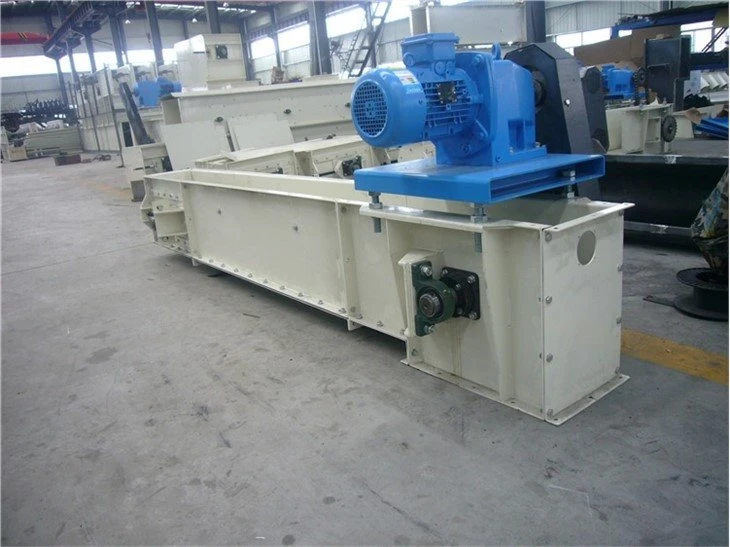
Chain drives are a type of mechanical drive unit used in drag conveyors. They offer several advantages, including high efficiency, simple design, and the ability to operate in harsh environments. Chain drives use a chain to transmit power from the drive unit to the conveyor chain.

Chain Types
There are several types of chains available for use in drag conveyors, including roller chains, silent chains, and engineered steel chains.
- Roller Chains: Roller chains are the most commonly used type of chains in drag conveyors. They consist of a series of interconnected links with rollers that engage with the sprockets. Roller chains are available in various sizes and pitches, making them suitable for a wide range of applications.
- Silent Chains: Silent chains are a type of chain that is designed to operate quietly. They consist of a series of interconnected links with teeth that engage with the sprockets. Silent chains are typically used in applications where low noise is required, such as in the food and beverage industry.
- Engineered Steel Chains: Engineered steel chains are a type of chain that is designed to withstand high loads and harsh environments. They consist of a series of interconnected links that are made from high-strength steel. Engineered steel chains are typically used in applications where high strength and durability are required, such as in the mining and construction industries.
Sprocket Types
Sprockets are used to engage with the chain and transmit power from the drive unit to the conveyor chain. There are several types of sprockets available for use in drag conveyors, including single-strand sprockets, multi-strand sprockets, and adjustable sprockets.
- Single-Strand Sprockets: Single-strand sprockets are the most commonly used type of sprockets in drag conveyors. They consist of a single row of teeth that engage with the chain. Single-strand sprockets are available in various sizes and pitches, making them suitable for a wide range of applications.
- Multi-Strand Sprockets: Multi-strand sprockets are used in applications where high power transmission is required. They consist of multiple rows of teeth that engage with the chain. Multi-strand sprockets are typically used in applications where high load capacity is required, such as in the mining and construction industries.
- Adjustable Sprockets: Adjustable sprockets are used in applications where the chain tension needs to be adjusted. They consist of a sprocket that can be adjusted to change the distance between the teeth. Adjustable sprockets are typically used in applications where the chain needs to be tightened or loosened, such as in the maintenance of drag conveyors.
Conclusion
In conclusion, there are several types of drive units available for drag conveyors, each with its own advantages and disadvantages. Electric motor drives are the most common type of drive units used in drag conveyors, offering high efficiency, precise speed control, and ease of installation and maintenance. Hydraulic drives offer high power density, precise speed control, and the ability to operate in harsh environments. Chain drives offer high efficiency, simple design, and the ability to operate in harsh environments.
As a leading drag conveyor supplier, we offer a wide range of drive units to meet diverse application requirements. Our TGSSP Series Level Drag Conveyor and Drag Chain Conveyor are designed to provide reliable and efficient performance in a variety of industries. If you are interested in learning more about our drag conveyors and drive units, please contact us to discuss your specific requirements. We look forward to working with you to provide the best solution for your application.
References
- "Conveyor Belt Handbook" by Christopher W. Smyth
- "Industrial Conveyors: Design, Operation, and Maintenance" by Robert J. Schaefer
- "Power Transmission Handbook" by Heinz P. Bloch and Fred K. Geitner