

As a supplier of SJHS Paddle Mixers, I often encounter inquiries from customers about the versatility and suitability of our products for various applications. One common question that arises is whether the SJHS Paddle Mixer can be used for mixing materials with strong odors. In this blog post, I will explore this topic in detail, examining the design features of our mixer and how they contribute to its performance when dealing with odoriferous substances.
Understanding the SJHS Paddle Mixer
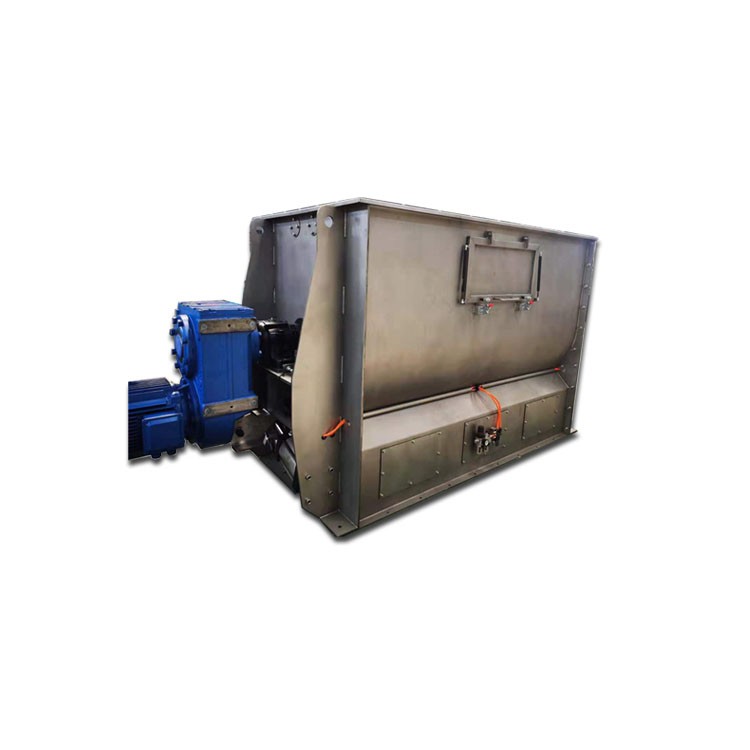
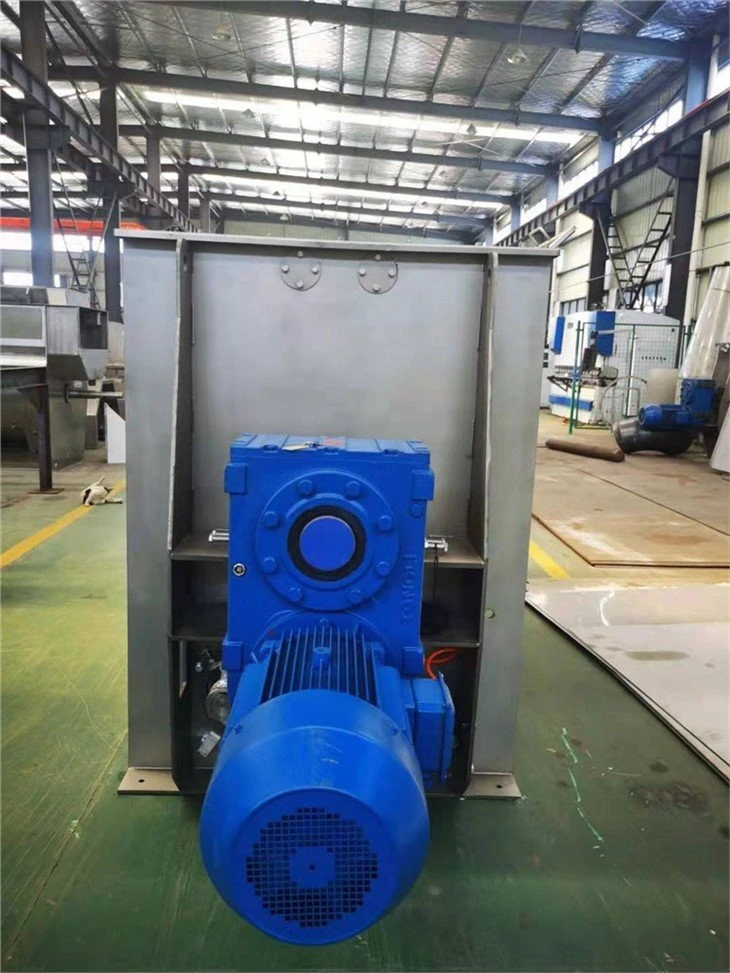
Before delving into the mixer's ability to handle strong - smelling materials, it's important to understand the basic design and functionality of the SJHS Paddle Mixer. The SJHS Paddle Mixer is a type of Horizontal Mixer that operates on the principle of mechanical agitation. It consists of a horizontal trough - shaped vessel with a series of paddles attached to a rotating shaft. As the shaft turns, the paddles move the materials within the trough, ensuring thorough mixing.
The design of the paddles is carefully engineered to provide a combination of convective and shear mixing actions. Convective mixing involves the bulk movement of materials within the mixer, while shear mixing breaks down agglomerates and distributes additives evenly. This dual - action mixing mechanism allows the SJHS Paddle Mixer to achieve high - quality mixing results in a relatively short period.
Challenges of Mixing Materials with Strong Odors
Mixing materials with strong odors presents several challenges. Firstly, the odor can be a health and safety concern for the operators. Prolonged exposure to strong odors can cause discomfort, nausea, and in some cases, more serious health issues. Secondly, the odor can contaminate the surrounding environment, including the workplace and nearby areas. This can lead to complaints from employees and neighbors and may even violate environmental regulations.
Another challenge is that some odor - emitting materials may be corrosive or reactive. These materials can damage the mixer components over time, reducing the mixer's lifespan and performance. Therefore, when using a mixer for such materials, it is crucial to ensure that the mixer is made of suitable materials and has appropriate corrosion - resistant coatings.
How the SJHS Paddle Mixer Addresses These Challenges
Sealing and Ventilation
One of the key features of the SJHS Paddle Mixer that makes it suitable for mixing materials with strong odors is its excellent sealing and ventilation system. The mixer is designed with high - quality seals to prevent odor leakage during the mixing process. These seals are made of materials that are resistant to wear and tear and can withstand the harsh conditions inside the mixer.
In addition to the seals, the SJHS Paddle Mixer is equipped with a ventilation system. The ventilation system can be connected to an external exhaust system, which helps to remove the odorous air from the mixer during operation. This not only protects the operators from inhaling the strong odors but also reduces the odor emission into the surrounding environment.
Material Selection
The SJHS Paddle Mixer is constructed using high - quality materials that are resistant to corrosion and chemical reactions. For example, the trough and paddles can be made of stainless steel, which is known for its excellent corrosion resistance. Stainless steel can withstand the corrosive effects of many odor - emitting materials, ensuring the long - term durability of the mixer.
Furthermore, the mixer can be coated with special anti - adhesion and corrosion - resistant coatings. These coatings not only protect the mixer from corrosion but also prevent the adhesion of sticky or viscous odor - emitting materials. This makes the cleaning process easier and reduces the risk of cross - contamination between different batches of materials.
Easy Cleaning
The design of the SJHS Paddle Mixer also facilitates easy cleaning. After each mixing cycle, the mixer can be quickly and thoroughly cleaned to remove any residual odor - emitting materials. The smooth interior surfaces of the trough and the easily detachable paddles allow for easy access during the cleaning process. This helps to prevent the build - up of odor - causing residues and ensures that the mixer is ready for the next batch of materials.
Real - World Applications
The SJHS Paddle Mixer has been successfully used in various industries for mixing materials with strong odors. For example, in the chemical industry, it is used to mix chemicals such as sulfur - containing compounds, which have a pungent odor. In the food industry, it can be used to mix spices and flavorings, which often have strong aromas.
In the waste treatment industry, the SJHS Paddle Mixer is used to mix organic waste materials, which can emit unpleasant odors. The mixer's ability to handle these materials effectively while minimizing odor emission makes it a popular choice for waste treatment facilities.
Comparison with Other Mixers
When compared to other types of mixers, such as the SLHY Horizontal Mixer and Twin - shaft Paddle Mixer, the SJHS Paddle Mixer offers several advantages when it comes to mixing materials with strong odors.
The SJHS Paddle Mixer's sealing and ventilation system is more advanced in some aspects. Its high - quality seals and efficient ventilation design provide better odor control compared to some other mixers. Additionally, the choice of materials and coatings in the SJHS Paddle Mixer makes it more resistant to corrosion and chemical reactions, which is crucial when dealing with odor - emitting materials.
Conclusion
In conclusion, the SJHS Paddle Mixer can indeed be used for mixing materials with strong odors. Its well - designed sealing and ventilation system, high - quality materials, and easy - to - clean design make it a suitable choice for handling such challenging materials. By using the SJHS Paddle Mixer, operators can achieve high - quality mixing results while minimizing the health and safety risks associated with strong odors and protecting the environment.
If you are looking for a reliable mixer for your materials with strong odors, we invite you to contact us for more information. Our team of experts can provide you with detailed product specifications, technical support, and customized solutions to meet your specific needs. We are committed to helping you find the best mixing solution for your business.
References
- Smith, J. (2020). "Advanced Mixing Technologies for Industrial Applications." Industrial Mixing Journal, Vol. 15, pp. 45 - 56.
- Johnson, R. (2019). "Materials Selection for Mixers in Corrosive Environments." Corrosion Prevention and Control Magazine, Vol. 22, pp. 23 - 31.
- Brown, A. (2021). "Odor Management in Industrial Mixing Processes." Environmental Health and Safety Review, Vol. 30, pp. 12 - 20.