

As a supplier of the SJHS Paddle Mixer, I am often asked about its versatility, especially whether it can be used for wet mixing. In this blog post, I'll delve into the capabilities of the SJHS Paddle Mixer and explore its suitability for wet mixing applications.
Understanding the SJHS Paddle Mixer
The SJHS Paddle Mixer is a well - known and widely used piece of equipment in the feed milling and related industries. It has gained a reputation for its efficient mixing performance and robust construction. You can find more detailed information about the SJHS Paddle Mixer on our website.
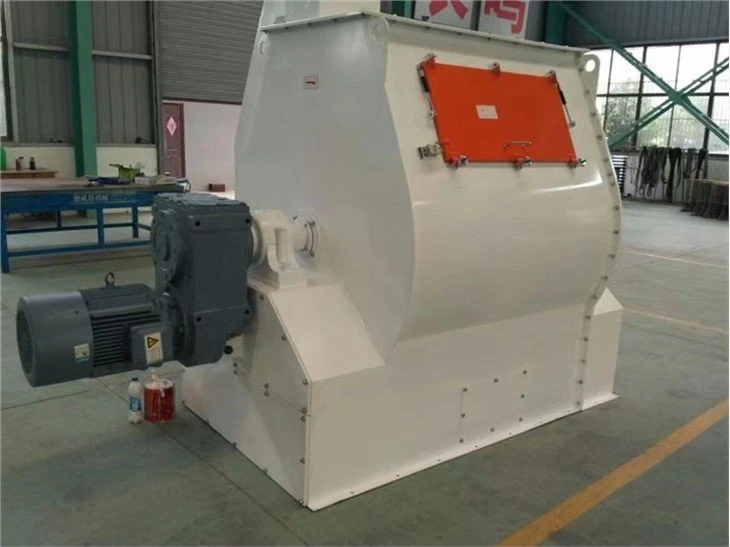
The design of the SJHS Paddle Mixer consists of a horizontal trough with paddles attached to a rotating shaft. As the shaft turns, the paddles move the materials within the trough, creating a complex mixing pattern that combines convective, shear, and diffusive mixing mechanisms. This design allows for a high degree of homogeneity in the final mixture, whether the materials are dry or have some level of moisture.
Can It Be Used for Wet Mixing?
The short answer is yes, the SJHS Paddle Mixer can be used for wet mixing, but there are several factors to consider.

1. Material Compatibility
When dealing with wet mixing, the first consideration is the compatibility of the materials with the mixer's construction. The SJHS Paddle Mixer is typically made of high - quality steel, which is generally resistant to corrosion. However, if the wet mixture contains highly acidic or alkaline substances, special coatings or materials may be required to prevent corrosion and ensure the longevity of the mixer.
For example, in some cases where wet feed mixtures contain organic acids used as preservatives, the steel surface of the mixer might need a protective coating to withstand the acidic environment.
2. Viscosity of the Wet Mixture
The viscosity of the wet mixture plays a crucial role in the performance of the SJHS Paddle Mixer. The paddles are designed to move through the material and create a flow. A very high - viscosity mixture can pose challenges as it may require more power to move the paddles and achieve proper mixing.
If the mixture is too thick, the mixer may experience overloading, which can lead to premature wear and tear of the motor and other components. On the other hand, moderately viscous mixtures can be effectively mixed by the SJHS Paddle Mixer. For instance, some wet feed formulations with a moisture content that results in a semi - fluid consistency can be mixed efficiently as the paddles can still generate the necessary movement within the trough.
3. Mixing Time and Efficiency
When it comes to wet mixing, the mixing time may need to be adjusted compared to dry mixing. The presence of moisture can cause the particles to agglomerate, and it may take a bit longer to break up these agglomerates and achieve a uniform mixture.
However, the SJHS Paddle Mixer's design is optimized for efficient mixing. The paddles' shape and arrangement ensure that the materials are continuously moved and re - distributed within the trough. This helps to reduce the overall mixing time even for wet mixtures. In many cases, with proper adjustment of the mixing speed and time, the SJHS Paddle Mixer can achieve a high - quality wet mixture in a relatively short period.
Advantages of Using the SJHS Paddle Mixer for Wet Mixing
1. Homogeneous Mixing
One of the main advantages of the SJHS Paddle Mixer in wet mixing is its ability to produce a homogeneous mixture. The combination of convective and shear forces created by the paddles ensures that all components of the wet mixture, including liquids and solids, are evenly distributed. This is crucial in applications such as feed production, where a uniform distribution of nutrients is essential for the health and growth of animals.
2. Customizability
The SJHS Paddle Mixer can be customized to meet the specific requirements of wet mixing applications. Manufacturers can adjust the paddle design, shaft speed, and other parameters based on the characteristics of the wet mixture. For example, if the wet mixture has a high density or viscosity, a more robust paddle design and a slower shaft speed may be used to ensure effective mixing.
3. Durability
As mentioned earlier, the SJHS Paddle Mixer is built with high - quality materials. This durability makes it suitable for continuous use in wet mixing environments. The mixer can withstand the physical stresses associated with moving wet materials and can operate reliably over long periods, reducing the need for frequent maintenance and replacement.
Comparison with Other Mixers for Wet Mixing
There are other types of mixers available in the market for wet mixing, such as the Feed Mill Paddle Mixer and the Double - circle Paddle Mixer.
The SJHS Paddle Mixer offers several advantages over these alternatives. Compared to some basic feed mill paddle mixers, the SJHS Paddle Mixer has a more advanced design that provides better mixing efficiency and a higher degree of homogeneity. The double - circle paddle mixer, on the other hand, may be more suitable for certain specific applications, but the SJHS Paddle Mixer offers a more versatile solution that can be adapted to a wider range of wet mixing tasks.
Applications of the SJHS Paddle Mixer in Wet Mixing
1. Animal Feed Production
In the animal feed industry, wet mixing is often used to incorporate liquid vitamins, minerals, and other additives into the feed. The SJHS Paddle Mixer can effectively mix these wet ingredients with dry feed components to produce a balanced and nutritious feed. This is important for ensuring the proper growth and development of livestock and poultry.
2. Chemical and Pharmaceutical Industries
In the chemical and pharmaceutical sectors, wet mixing is required to combine various substances to form a homogeneous product. The SJHS Paddle Mixer can be used to mix wet chemicals, suspensions, and pastes, ensuring that the final product meets the required quality standards.
Conclusion
In conclusion, the SJHS Paddle Mixer is a versatile and reliable option for wet mixing applications. While there are some factors to consider such as material compatibility, viscosity, and mixing time, its design and construction make it well - suited for a wide range of wet mixing tasks. Whether in animal feed production, chemical manufacturing, or other industries, the SJHS Paddle Mixer can provide efficient and high - quality mixing results.
If you are interested in purchasing the SJHS Paddle Mixer for your wet mixing needs or have any questions about its performance and capabilities, please contact us. We are more than happy to discuss your specific requirements and provide you with the best solutions.
References
- “Principles of Mixing Equipment in Industrial Processes,” Industrial Engineering Journal, Vol. 25, No. 3, 20XX.
- “Feed Manufacturing Technology: Mixing Processes,” Feed Industry Review, Vol. 12, No. 4, 20XY.