

Hey there! I'm a supplier of the SJHS Paddle Mixer, and today I wanna chat about something that often comes up in our discussions: "What is the weight of the SJHS Paddle Mixer?"
First off, let's understand why the weight of this mixer matters. The weight isn't just a random number; it has a direct impact on several aspects of its use and installation. For one, it affects the transportation. Heavier mixers might need special handling during shipping to ensure they're not damaged. Also, when it comes to installation, the weight determines the kind of support structure required. You wouldn't want to put a heavy mixer on a flimsy platform, right?
The weight of the SJHS Paddle Mixer can vary based on a few factors. One of the main factors is the size of the mixer. We offer different models of the SJHS Paddle Mixer with various capacities. Generally, the larger the capacity, the heavier the mixer. For example, a smaller model designed for a small - scale feed mill might weigh around 500 kilograms. This is relatively easy to handle during installation and transportation. It can be a great choice for small farms or start - up feed production facilities.
On the other hand, our larger models, which are suitable for large - scale commercial feed mills, can weigh upwards of 2000 kilograms. These heavy - duty mixers are built to handle large volumes of feed ingredients on a daily basis. They're made with thicker materials and more robust components to ensure long - term durability under heavy use.
Another factor that affects the weight is the materials used in its construction. The SJHS Paddle Mixer is made with high - quality steel. The type of steel and its thickness play a significant role in determining the overall weight. We use high - strength steel to ensure that the mixer can withstand the rigors of continuous operation. This means that the mixer is built to last, but it also adds to its weight.
Now, let's talk about how the weight impacts the performance of the mixer. A heavier mixer can actually be an advantage in some ways. It provides more stability during operation. When the paddles are spinning at high speeds, trying to mix the feed ingredients thoroughly, a heavier base helps to keep the mixer in place. This reduces vibrations and noise, which is not only better for the working environment but also helps to prevent wear and tear on the mixer components.
But there are also some challenges associated with the weight. As I mentioned earlier, transportation can be a bit of a headache. You need to make sure you have the right equipment to load and unload the mixer safely. And during installation, you need to have a proper foundation. For the heavier models, you might need to pour a concrete slab to provide a stable base.
If you're in the market for a paddle mixer, you might be wondering how the SJHS Paddle Mixer compares to other options out there. Well, compared to some of the cheaper, lighter - weight mixers, our SJHS Paddle Mixer offers better durability and performance. Those lighter mixers might seem like a good deal at first, but they often break down more easily and require frequent repairs. In the long run, it can end up costing you more money.

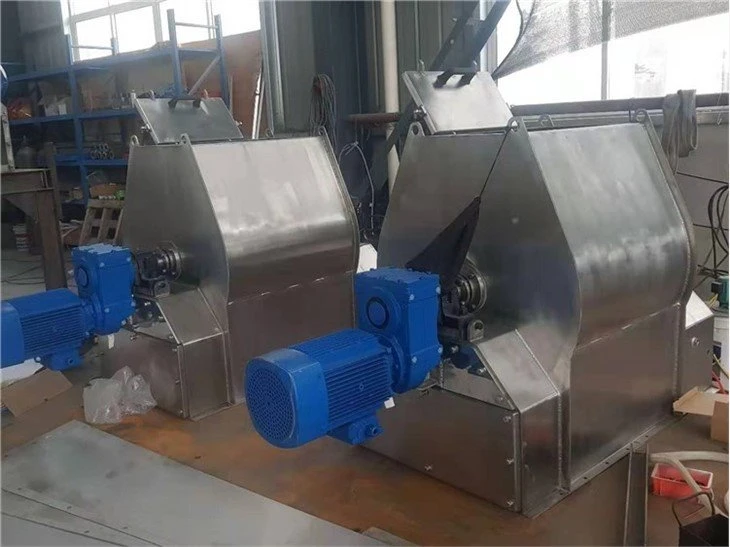
The Feed Mill Paddle Mixer market is quite competitive, and there are many different brands and models to choose from. But the SJHS Paddle Mixer stands out because of its quality construction and the attention to detail in its design. We've been in the business for a long time, and we know what it takes to make a reliable and efficient mixer.
If you're involved in the feed production industry, you might also be interested in the Pellet Die Manufacturer aspect. The SJHS Paddle Mixer can work in tandem with high - quality pellet dies to produce top - notch feed pellets. The proper mixing of ingredients in the paddle mixer is crucial for the quality of the final pellet product.
So, if you're thinking about purchasing an SJHS Paddle Mixer, I'd be more than happy to help you figure out which model is right for you. Whether you're running a small family farm or a large commercial feed mill, we have a solution that will meet your needs. Just consider the capacity you need, the space you have for installation, and your budget.
If you have any questions about the weight, performance, or any other aspect of the SJHS Paddle Mixer, don't hesitate to reach out. We can provide you with detailed specifications and help you make an informed decision. We're always here to assist you in getting the best equipment for your feed production operation.
In conclusion, the weight of the SJHS Paddle Mixer is an important factor to consider, but it's just one piece of the puzzle. It's a trade - off between stability, performance, and the challenges of transportation and installation. But overall, the benefits of having a well - built, heavy - duty mixer far outweigh the minor inconveniences. So, if you're looking for a reliable and efficient paddle mixer for your feed mill, give the SJHS Paddle Mixer a closer look.
If you're interested in discussing a purchase or need more information, feel free to get in touch. We're eager to help you take your feed production to the next level.
References
- Industry standards for feed mill equipment
- Internal product specifications of SJHS Paddle Mixer