

As a supplier of SJHS Paddle Mixers, I am often asked about the mixing speed range of our equipment. Understanding the appropriate mixing speed is crucial for achieving optimal mixing results in various applications. In this blog post, I will delve into the mixing speed range of SJHS Paddle Mixers, exploring the factors that influence it and its significance in different industries.
The Basics of SJHS Paddle Mixers
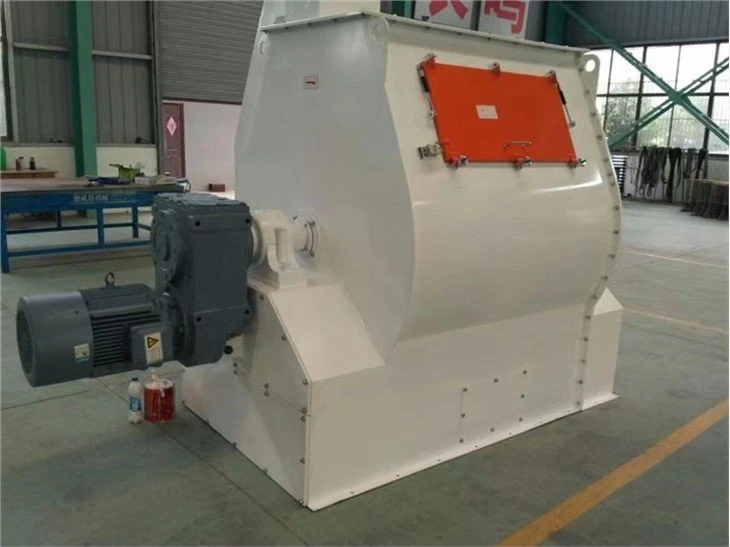
SJHS Paddle Mixers are versatile pieces of equipment widely used in industries such as feed processing, chemical manufacturing, and food production. These mixers feature a horizontal trough with one or more shafts equipped with paddles. As the shafts rotate, the paddles move the material within the trough, promoting thorough mixing.
The design of the paddles and the arrangement of the shafts play a significant role in determining the mixing efficiency and the speed range at which the mixer can operate effectively. The paddles are typically shaped to create a complex flow pattern within the material, ensuring that all particles are evenly distributed throughout the mixture.
Factors Influencing the Mixing Speed Range
Several factors influence the mixing speed range of SJHS Paddle Mixers. These include the type of material being mixed, the desired mixing quality, the capacity of the mixer, and the power of the motor.
Type of Material
The physical properties of the material being mixed, such as its density, particle size, and viscosity, have a significant impact on the mixing speed. For example, materials with high viscosity may require a slower mixing speed to ensure proper blending, while lighter and more free-flowing materials can be mixed at higher speeds.
Desired Mixing Quality
The level of homogeneity required in the final mixture also affects the mixing speed. If a high degree of uniformity is needed, a slower mixing speed may be necessary to allow sufficient time for the particles to interact and blend thoroughly. On the other hand, for less critical applications, a faster mixing speed can be used to increase productivity.
Mixer Capacity
The size and capacity of the mixer determine the amount of material that can be processed at once. Larger mixers generally require a slower mixing speed to ensure that all the material is properly mixed. This is because the increased volume of material may require more time for the paddles to reach all areas of the trough.
Motor Power
The power of the motor driving the mixer is another important factor. A more powerful motor can handle higher mixing speeds and larger loads. However, it is essential to match the motor power to the specific requirements of the mixer and the material being mixed to avoid overloading the motor or causing excessive wear on the equipment.
Typical Mixing Speed Range
The mixing speed range of SJHS Paddle Mixers can vary depending on the specific model and application. Generally, these mixers can operate at speeds ranging from 10 to 60 revolutions per minute (RPM).
For light and free-flowing materials, such as grains and powders, a higher mixing speed of around 40 to 60 RPM may be suitable. This allows for quick and efficient mixing, reducing the overall processing time. On the other hand, for heavier and more viscous materials, such as pastes and slurries, a lower mixing speed of 10 to 30 RPM is often recommended to ensure proper blending.
It is important to note that these are just general guidelines, and the optimal mixing speed for a particular application may need to be determined through testing and experimentation. Factors such as the specific formulation of the material, the desired mixing time, and the equipment configuration can all influence the ideal mixing speed.
Importance of Choosing the Right Mixing Speed
Selecting the appropriate mixing speed is crucial for achieving the desired mixing results and ensuring the efficiency and longevity of the mixer. Using a speed that is too high can lead to several issues, including:
- Material degradation: Excessive speed can cause the material to break down or become damaged, especially if it contains fragile particles or sensitive components.
- Uneven mixing: High speeds may not allow sufficient time for the material to be properly blended, resulting in an uneven mixture with inconsistent quality.
- Increased wear and tear: The high forces generated at high speeds can put additional stress on the mixer components, leading to premature wear and potential breakdowns.
Conversely, using a speed that is too low can also have negative consequences:

- Longer mixing times: Slower speeds require more time to achieve the desired level of mixing, which can reduce productivity and increase operating costs.
- Incomplete mixing: Insufficient speed may not be able to overcome the resistance of the material, resulting in incomplete blending and poor mixing quality.
Applications of SJHS Paddle Mixers and Their Mixing Speed Requirements
SJHS Paddle Mixers are used in a wide range of applications, each with its own specific mixing speed requirements. Here are some common industries and how the mixing speed is adjusted accordingly:
Feed Processing
In the feed industry, SJHS Paddle Mixers are used to blend various ingredients, such as grains, vitamins, minerals, and additives, to produce high-quality animal feed. The mixing speed is typically adjusted based on the type of feed being produced and the specific requirements of the animals. For example, for poultry feed, a relatively high mixing speed of around 40 to 50 RPM may be used to ensure quick and efficient blending of the ingredients. For cattle feed, which often contains larger particles and may require more thorough mixing, a slightly lower speed of 30 to 40 RPM may be more appropriate.
Chemical Manufacturing
In chemical manufacturing, SJHS Paddle Mixers are used to combine different chemicals and compounds to produce a variety of products, such as fertilizers, pesticides, and plastics. The mixing speed in this industry depends on the nature of the chemicals being mixed and the reaction requirements. For some chemical reactions, a slow and controlled mixing speed may be necessary to ensure proper interaction and prevent unwanted side reactions. In other cases, a higher speed may be used to increase the reaction rate and improve productivity.
Food Production
In the food industry, SJHS Paddle Mixers are used to mix ingredients for products such as bread, cakes, sauces, and soups. The mixing speed is carefully selected to ensure that the food products have the desired texture, flavor, and consistency. For example, when mixing dough for bread, a moderate speed of around 20 to 30 RPM is often used to develop the gluten and create a smooth and elastic dough. For mixing sauces and dressings, a higher speed of 30 to 40 RPM may be used to achieve a homogeneous mixture.
Conclusion
In conclusion, the mixing speed range of SJHS Paddle Mixers is an important factor that can significantly impact the mixing efficiency, quality, and productivity. By understanding the factors that influence the mixing speed and selecting the appropriate speed for each application, users can ensure that they achieve the best possible mixing results while maximizing the performance and lifespan of their mixers.
If you are in the market for a high-quality paddle mixer, our SJHS Paddle Mixers offer a wide range of options to meet your specific needs. With their robust design, efficient mixing capabilities, and adjustable speed settings, our mixers are suitable for a variety of applications in different industries.
To learn more about our Twin-shaft Paddle Mixer, Feed Mill Paddle Mixer, or Horizontal Mixer, or to discuss your specific requirements, please contact us. Our team of experts is ready to assist you in choosing the right mixer and providing you with the best solutions for your mixing needs.
References
- Smith, J. (2020). Mixing Technology Handbook. Publisher XYZ.
- Johnson, A. (2019). Feed Processing Technology. ABC Publications.
- Brown, C. (2018). Chemical Mixing Principles and Applications. DEF Press.