

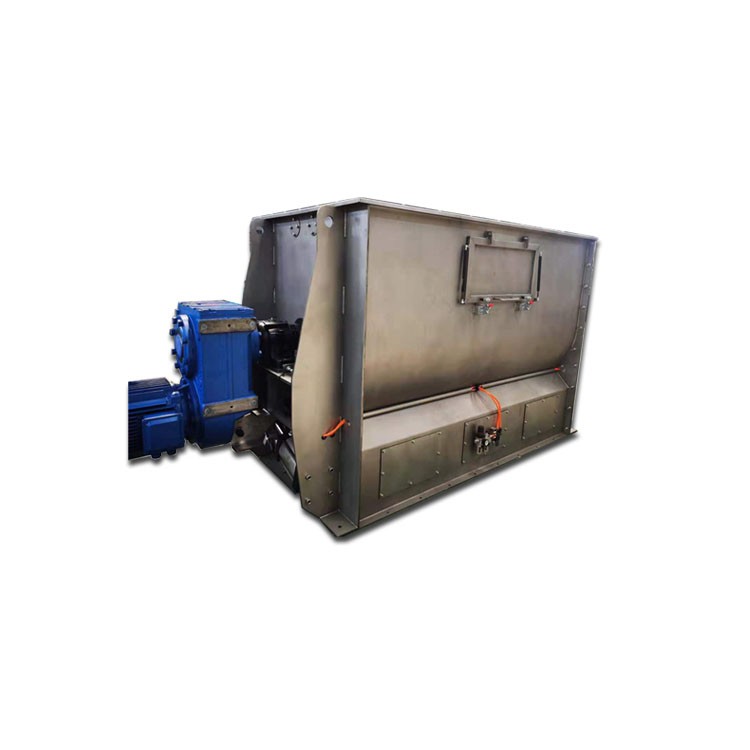
The mixing capacity of industrial mixers is a critical parameter that determines their efficiency and suitability for various applications. As a supplier of the SJHS Paddle Mixer, understanding and communicating this capacity is essential for customers looking to optimize their production processes. In this blog, we will delve into what the mixing capacity of the SJHS Paddle Mixer means, how it is measured, and factors that influence it.
Defining Mixing Capacity
The mixing capacity of the SJHS Paddle Mixer refers to the maximum volume or mass of materials that the mixer can effectively blend within a specified time frame. This capacity is typically expressed in cubic meters (m³) or kilograms (kg) per batch or per hour, depending on the mode of operation (batch or continuous).
For batch mixers, the capacity is the amount of material that can be loaded into the mixing chamber, thoroughly mixed, and then discharged in a single cycle. In continuous mixers, it represents the quantity of material that can be processed per unit of time while maintaining a consistent level of mixing quality.
Measuring the Mixing Capacity
Determining the mixing capacity of the SJHS Paddle Mixer involves a combination of theoretical calculations and practical testing.
Theoretical Calculations
Theoretical capacity can be estimated based on the physical dimensions of the mixing chamber and the design of the paddle agitators. The volume of the mixing chamber provides an upper limit for the amount of material that can be loaded. However, in practice, the actual capacity is often less than the total volume to allow for proper agitation and prevent overloading.
The design of the paddle agitators also plays a crucial role. The shape, size, and speed of the paddles affect the flow pattern and mixing efficiency within the chamber. Manufacturers use mathematical models and fluid dynamics principles to predict the mixing performance and estimate the capacity based on these factors.
Practical Testing
Practical testing is essential to validate the theoretical capacity and ensure that the mixer meets the desired mixing quality standards. During testing, different types and quantities of materials are loaded into the mixer, and the mixing time, power consumption, and homogeneity of the mixture are measured.
The mixing time is a key parameter in determining the capacity. It refers to the time required to achieve a specified level of uniformity in the mixture. The shorter the mixing time, the higher the capacity of the mixer. Power consumption is also monitored to ensure that the mixer operates within its designed limits and to assess its energy efficiency.
Factors Influencing the Mixing Capacity
Several factors can influence the mixing capacity of the SJHS Paddle Mixer:
Material Properties
The physical and chemical properties of the materials being mixed have a significant impact on the mixing capacity. Factors such as particle size, density, shape, and moisture content can affect the flowability and mixing behavior of the materials.
For example, materials with large particle sizes or high densities may require more energy and longer mixing times to achieve a uniform mixture. Materials with high moisture content may be more cohesive and difficult to disperse, reducing the mixing efficiency and capacity.
Mixing Speed
The speed of the paddle agitators is another important factor. Increasing the mixing speed can enhance the shear forces and improve the mixing efficiency, but it also increases the power consumption and may cause excessive wear on the mixer components.
Therefore, an optimal mixing speed needs to be determined based on the material properties and the desired mixing quality. This speed may vary depending on the type of materials being mixed and the specific application.
Mixing Time
The mixing time is closely related to the mixing capacity. Longer mixing times generally result in better mixing quality but reduce the throughput of the mixer. Therefore, a balance needs to be struck between mixing time and capacity to achieve the desired production rate and quality.

Loading Ratio
The loading ratio, which is the ratio of the actual material volume to the total volume of the mixing chamber, also affects the mixing capacity. Overloading the mixer can lead to poor mixing performance, increased power consumption, and potential damage to the mixer components.
On the other hand, underloading the mixer may result in inefficient use of the equipment and lower productivity. Therefore, it is important to maintain an appropriate loading ratio to ensure optimal mixing performance.
Applications and Benefits of the SJHS Paddle Mixer
The SJHS Paddle Mixer is widely used in various industries, including the feed, chemical, pharmaceutical, and food industries. Its high mixing capacity and excellent mixing performance make it suitable for a wide range of applications:
Feed Industry
In the feed industry, the SJHS Paddle Mixer is used to mix different types of raw materials, such as grains, vitamins, minerals, and additives, to produce high-quality animal feed. Its large mixing capacity allows for the efficient production of large batches of feed, while its gentle mixing action ensures that the nutritional value of the ingredients is preserved.
You can learn more about Horizontal Mixer and Feed Mill Paddle Mixer on our website, which provide more information about their applications in the feed industry.
Chemical Industry
In the chemical industry, the SJHS Paddle Mixer is used to blend various chemicals, such as powders, granules, and liquids, to produce chemical products with consistent quality. Its ability to handle a wide range of materials and its precise control over the mixing process make it a popular choice for chemical manufacturers.
Pharmaceutical Industry
In the pharmaceutical industry, the SJHS Paddle Mixer is used to mix active pharmaceutical ingredients (APIs) with excipients to produce tablets, capsules, and other dosage forms. Its high mixing accuracy and compliance with strict quality standards make it suitable for pharmaceutical applications.
Food Industry
In the food industry, the SJHS Paddle Mixer is used to mix ingredients for food products, such as flour, sugar, spices, and additives. Its hygienic design and gentle mixing action ensure that the food products meet the highest quality and safety standards.
Conclusion
The mixing capacity of the SJHS Paddle Mixer is a crucial parameter that determines its efficiency and suitability for various applications. By understanding the factors that influence the mixing capacity and optimizing the operating conditions, customers can maximize the productivity and performance of the mixer.
If you are interested in our SJHS Paddle Mixer or have any questions about its mixing capacity or other features, please feel free to contact us for more information. Our team of experts is ready to assist you in selecting the right mixer for your specific needs and to provide you with professional advice and support.
References
- Perry, R. H., & Green, D. W. (Eds.). (2008). Perry's Chemical Engineers' Handbook. McGraw-Hill Professional.
- Myers, R. K. (2013). Mixing: Theory and Practice. John Wiley & Sons.