

Hey there! As a supplier of poultry feed mixers, I've seen firsthand how crucial the design of mixing blades can be for a mixer's performance. In this blog, I'll break down the impact of mixing blade design on a poultry feed mixer and why it matters to you.
Understanding the Basics of Mixing Blades
First off, let's talk about what mixing blades are and what they do. Mixing blades are the key components in a poultry feed mixer that are responsible for blending different ingredients together. They come in various shapes, sizes, and configurations, each designed to achieve specific mixing goals.
The main function of mixing blades is to create a turbulent flow within the mixer, ensuring that all the ingredients are thoroughly mixed. This is important because a well - mixed feed ensures that each bird gets a balanced diet, which is essential for their growth, health, and productivity.
Different Types of Mixing Blades
There are several types of mixing blades commonly used in poultry feed mixers. One of the most popular types is the paddle blade. Paddle blades are flat and rectangular in shape. They are great for gentle mixing, which is ideal for fragile ingredients like vitamins and minerals. You can check out our Feed Mill Paddle Mixer that features high - quality paddle blades.
Another type is the ribbon blade. Ribbon blades are helical in shape and are very efficient at moving materials axially and radially within the mixer. They are often used for mixing dry ingredients and can achieve a high degree of homogeneity in a relatively short time.
Then there's the screw blade. Screw blades are excellent for handling viscous or sticky materials. They can push the feed ingredients up and down, ensuring thorough mixing. Our SJHS Paddle Mixer offers a unique blade design that combines the advantages of different blade types for optimal performance.
Impact on Mixing Efficiency
The design of the mixing blade has a direct impact on the mixing efficiency of a poultry feed mixer. A well - designed blade can reduce the mixing time significantly. For example, a mixer with properly angled paddle blades can create a more efficient flow pattern, allowing the ingredients to be mixed faster.
In addition, the shape and size of the blade can affect the degree of mixing. Blades that are too small may not be able to move enough material, while blades that are too large can cause excessive shear forces, which may damage the ingredients. A balanced blade design ensures that all the ingredients are evenly distributed throughout the feed.
Homogeneity of the Feed
One of the most important factors in poultry feed production is the homogeneity of the feed. A mixer with a good blade design can ensure that all the nutrients, such as proteins, vitamins, and minerals, are evenly distributed in the feed. This is crucial because if the feed is not homogeneous, some birds may receive more nutrients than others, leading to uneven growth and health issues.
For instance, if the vitamins are not properly mixed in the feed, some birds may suffer from vitamin deficiencies, while others may have an over - intake. A well - designed mixing blade can prevent such problems by ensuring that every particle of the feed contains the right amount of nutrients.
Wear and Tear
The design of the mixing blade also affects its durability. Blades that are poorly designed may wear out quickly, leading to frequent replacements. This not only increases the cost of production but also disrupts the feed - mixing process.
On the other hand, a well - designed blade made from high - quality materials can withstand the harsh conditions inside the mixer. For example, blades with a smooth surface and proper reinforcement are less likely to wear out. This means less downtime for maintenance and a more cost - effective operation in the long run.
Energy Consumption
The design of the mixing blade can also impact the energy consumption of the poultry feed mixer. A mixer with an inefficient blade design may require more energy to operate. For example, if the blades are not properly balanced or if they create too much resistance, the motor has to work harder, consuming more electricity.
A well - designed blade, on the other hand, can reduce the energy consumption of the mixer. By creating a more efficient flow pattern, the blades can mix the feed with less power, saving you money on energy costs.
Considerations for Blade Design
When choosing a poultry feed mixer, it's important to consider the blade design. Here are some factors to keep in mind:
- Ingredient Characteristics: Different ingredients have different properties. For example, if you are mixing dry powders, a ribbon blade may be more suitable. If you are dealing with wet or sticky ingredients, a screw blade might be a better choice.
- Mixing Capacity: The size of the mixer and the amount of feed you need to mix also play a role in blade design. Larger mixers may require larger blades to ensure efficient mixing.
- Desired Mixing Time: If you need to mix the feed quickly, you may want a mixer with a blade design that can achieve high - speed mixing.
Our Offerings
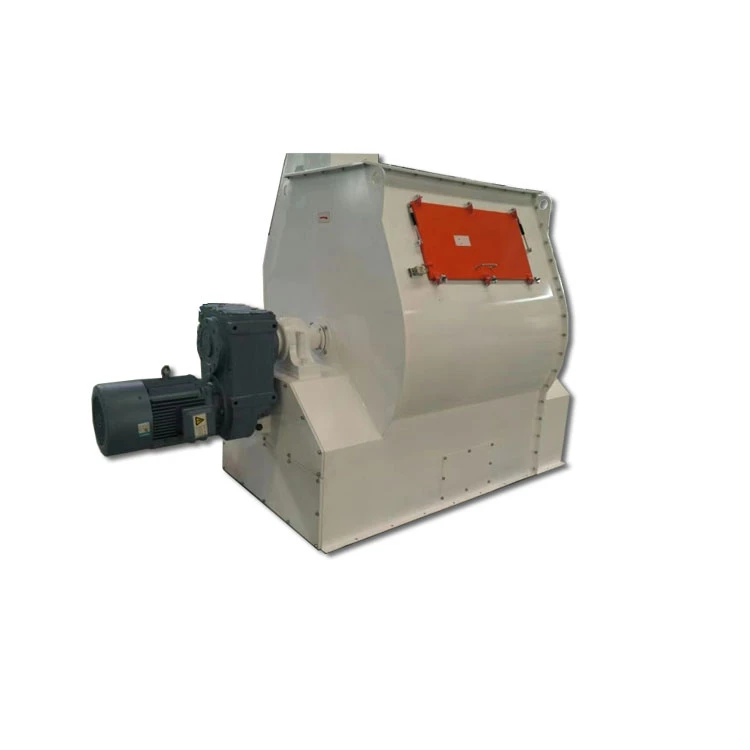
At our company, we understand the importance of a well - designed mixing blade. That's why we offer a range of poultry feed mixers with different blade designs to meet your specific needs. Our Horizontal Mixer is a popular choice among our customers. It features a unique blade design that ensures fast and efficient mixing.
Whether you are a small - scale poultry farmer or a large - scale feed producer, we have the right mixer for you. Our mixers are designed to provide high - quality mixing performance, durability, and energy efficiency.
Conclusion
In conclusion, the design of the mixing blade has a significant impact on the performance of a poultry feed mixer. It affects the mixing efficiency, homogeneity of the feed, wear and tear, and energy consumption. By choosing a mixer with a well - designed blade, you can ensure that your poultry feed is of high quality, which is essential for the health and productivity of your birds.

If you're interested in learning more about our poultry feed mixers or have any questions about blade design, feel free to reach out to us. We're here to help you make the best choice for your poultry feed production needs. Let's work together to create the perfect feed for your flock!
References
- Smith, J. (2020). Poultry Feed Mixing Technology. Journal of Poultry Science.
- Johnson, A. (2019). Impact of Mixing Blade Design on Feed Quality. Feed Industry Review.