

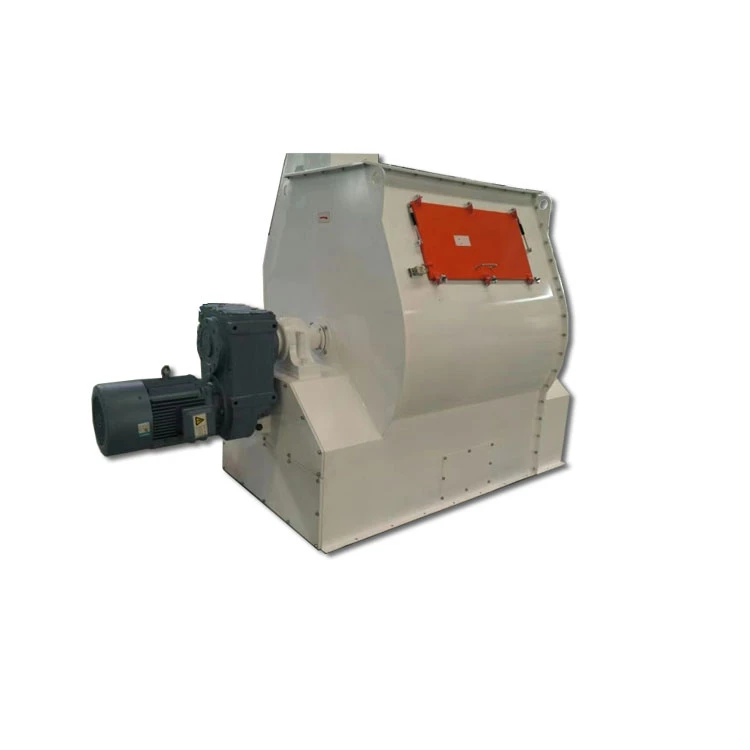
In the field of industrial mixing, horizontal mixers are crucial pieces of equipment used in various industries such as food processing, chemical manufacturing, and feed production. Among the different types of horizontal mixers, single-shaft and double-shaft horizontal mixers are two common options. As a seasoned supplier of Horizontal Mixer, I will explore the differences between these two types of mixers to help you make an informed decision when choosing the right one for your specific needs.
Structural Design
One of the most significant differences between single-shaft and double-shaft horizontal mixers lies in their structural design. A single-shaft horizontal mixer, as the name suggests, features a single rotating shaft equipped with mixing elements such as paddles or blades. These mixing elements are typically arranged helically along the shaft, which allows them to move the material axially and radially within the mixing chamber. The simplicity of the single-shaft design makes it relatively easy to manufacture, maintain, and clean.
On the other hand, a double-shaft horizontal mixer consists of two parallel rotating shafts with mixing elements. The shafts usually rotate in opposite directions, creating a more complex and intense mixing action. The counter-rotating shafts generate a cross-flow of material within the mixing chamber, which results in higher shear forces and more efficient mixing. The double-shaft design is more suitable for applications that require thorough and rapid mixing of diverse materials, including those with varying particle sizes, densities, and viscosities.
Mixing Performance
The mixing performance of a horizontal mixer is determined by several factors, including the mixing mechanism, mixing time, and uniformity of the mixture. In terms of mixing mechanism, single-shaft horizontal mixers rely primarily on the convective movement of material generated by the rotation of the shaft and the mixing elements. This mixing action is effective for blending materials with similar properties and achieving a relatively uniform mixture. However, for materials with significant differences in particle size, density, or viscosity, the mixing efficiency of a single-shaft mixer may be limited.
Double-shaft horizontal mixers, on the other hand, offer superior mixing performance due to their more complex mixing mechanism. The counter-rotating shafts create a high-intensity mixing zone where the materials are continuously sheared, folded, and dispersed. This results in a more thorough and rapid mixing process, even for challenging materials. As a result, double-shaft mixers can achieve a higher degree of uniformity in a shorter mixing time compared to single-shaft mixers.
Capacity and Throughput
When it comes to mixing capacity and throughput, both single-shaft and double-shaft horizontal mixers can be designed to meet a wide range of production requirements. However, double-shaft mixers generally have a higher capacity and throughput compared to single-shaft mixers. The dual-shaft design allows for a larger mixing chamber volume and a more efficient use of space, which enables the mixer to handle larger batches of material in a shorter time.
Additionally, the high-intensity mixing action of double-shaft mixers reduces the mixing time required to achieve a uniform mixture, further increasing the throughput. This makes double-shaft horizontal mixers a better choice for high-volume production applications where efficiency and productivity are critical.

Energy Consumption
Energy consumption is an important consideration when choosing a horizontal mixer, especially for large-scale production operations. Single-shaft horizontal mixers typically have lower energy consumption compared to double-shaft mixers. The simpler design of single-shaft mixers requires less power to operate, as there is only one rotating shaft to drive. This can result in significant cost savings in terms of electricity consumption over the long term.
However, it's important to note that the energy efficiency of a mixer also depends on other factors such as the mixing speed, the type of material being mixed, and the design of the mixing elements. In some cases, the higher energy consumption of a double-shaft mixer may be justified by its superior mixing performance and shorter mixing time, which can lead to overall productivity gains.
Applications
The choice between a single-shaft and a double-shaft horizontal mixer also depends on the specific application requirements. Single-shaft horizontal mixers are commonly used in applications where the mixing process is relatively simple and the materials being mixed have similar properties. Examples of such applications include the mixing of dry powders, granules, and easily blendable liquids in industries such as food, pharmaceuticals, and chemicals.
Double-shaft horizontal mixers, on the other hand, are more suitable for applications that require intensive mixing of complex materials. They are commonly used in industries such as feed production, where different types of grains, vitamins, minerals, and additives need to be thoroughly mixed to ensure a balanced and nutritious feed. For instance, our SJHS Paddle Mixer and Double-circle Paddle Mixer are double-shaft mixers that are specifically designed for the feed industry, offering high mixing efficiency and uniformity.
Maintenance and Cleaning
Maintenance and cleaning are essential aspects of ensuring the long-term performance and reliability of a horizontal mixer. Single-shaft horizontal mixers are generally easier to maintain and clean compared to double-shaft mixers. The simpler design of single-shaft mixers means that there are fewer components to inspect, lubricate, and replace, which reduces the maintenance time and cost.
In terms of cleaning, single-shaft mixers can be more easily accessed and cleaned due to the absence of a second shaft. This is particularly important in industries such as food and pharmaceuticals, where strict hygiene standards must be maintained. However, with proper design and construction, double-shaft mixers can also be designed to facilitate easy maintenance and cleaning. For example, some double-shaft mixers are equipped with features such as removable access doors and self-cleaning mechanisms to simplify the cleaning process.
Cost
The cost is another important factor to consider when choosing between a single-shaft and a double-shaft horizontal mixer. Single-shaft horizontal mixers are generally less expensive than double-shaft mixers. The simpler design and fewer components of single-shaft mixers result in lower manufacturing costs, which are reflected in the purchase price.
However, it's important to consider the overall cost of ownership when making a purchasing decision. While the initial investment in a double-shaft mixer may be higher, its superior mixing performance, higher throughput, and longer service life may offset the higher cost over time. Additionally, the potential savings in energy consumption, labor costs, and product quality may also justify the higher initial investment.
In conclusion, the choice between a single-shaft and a double-shaft horizontal mixer depends on a variety of factors, including the mixing requirements, production capacity, energy consumption, application, maintenance, and cost. As a supplier of Horizontal Mixer, we understand the importance of choosing the right mixer for your specific needs. Our team of experts can provide you with personalized advice and solutions to help you select the most suitable mixer for your application. If you are interested in learning more about our horizontal mixers or have any questions regarding the selection process, please feel free to contact us for a detailed discussion and quote.
References
- Smith, J. (2020). Industrial Mixing Technology: Principles and Applications. Wiley.
- Jones, A. (2019). Handbook of Feed Manufacturing Technology. CABI.