

In the realm of feed production, the efficiency and quality of the mixing process play a pivotal role in determining the overall success of a feed mill. Among the various types of feed mill mixers available in the market, the paddle - type feed mill mixer stands out due to its numerous advantages. As a seasoned Feed Mill Mixer supplier, I have witnessed firsthand the transformative impact that paddle - type mixers can have on feed production operations.
1. Uniform Mixing
One of the most significant advantages of a paddle - type feed mill mixer is its ability to achieve a high degree of mixing uniformity. The design of the paddle - type mixer consists of a series of paddles attached to a rotating shaft within a mixing chamber. As the shaft rotates, the paddles move the feed ingredients in a complex pattern, ensuring that all components are thoroughly blended.
The paddles are strategically designed to create both radial and axial movement of the feed materials. Radial movement occurs as the paddles push the ingredients towards the outer walls of the mixing chamber and then back towards the center. Axial movement, on the other hand, moves the materials along the length of the mixer. This combination of movements ensures that even small quantities of additives, such as vitamins, minerals, and medications, are evenly distributed throughout the feed.
Studies have shown that paddle - type mixers can achieve a coefficient of variation (CV) of less than 5% in most cases. A low CV indicates a high level of mixing uniformity, which is crucial for ensuring that each animal receives the correct amount of nutrients in their feed. This uniformity not only improves the health and growth performance of the animals but also reduces the risk of nutrient deficiencies or toxicities.
2. Gentle Mixing Action
Another advantage of paddle - type feed mill mixers is their gentle mixing action. Unlike some other types of mixers, such as high - shear mixers, paddle - type mixers do not subject the feed ingredients to excessive mechanical stress. This is particularly important for fragile ingredients, such as grains, seeds, and pellets.
The gentle mixing action of the paddles helps to preserve the physical integrity of the feed particles. For example, it prevents the breakage of pellets, which can lead to dust generation and uneven feeding. In addition, it minimizes the degradation of heat - sensitive ingredients, such as enzymes and probiotics, which can lose their activity if exposed to high levels of mechanical stress or heat.
The gentle mixing action also reduces the wear and tear on the mixer components. Since the paddles do not exert excessive force on the feed, the mixer parts are less likely to be damaged, resulting in lower maintenance costs and longer equipment lifespan.
3. High Throughput
Paddle - type feed mill mixers are capable of handling large volumes of feed in a relatively short period of time. This high throughput is due to their efficient design and the ability to mix the feed quickly and thoroughly.
The size of the mixing chamber and the speed of the rotating shaft can be adjusted to meet the specific production requirements of a feed mill. Larger mixing chambers can accommodate more feed, while higher shaft speeds can increase the mixing efficiency. In addition, some paddle - type mixers are equipped with multiple inlets and outlets, which allow for continuous feeding and discharging of the feed, further increasing the throughput.
For example, a medium - sized paddle - type mixer can typically mix up to 10 - 20 tons of feed per hour, depending on the type of feed and the mixing requirements. This high throughput makes paddle - type mixers suitable for large - scale feed production operations, where time and efficiency are of the essence.

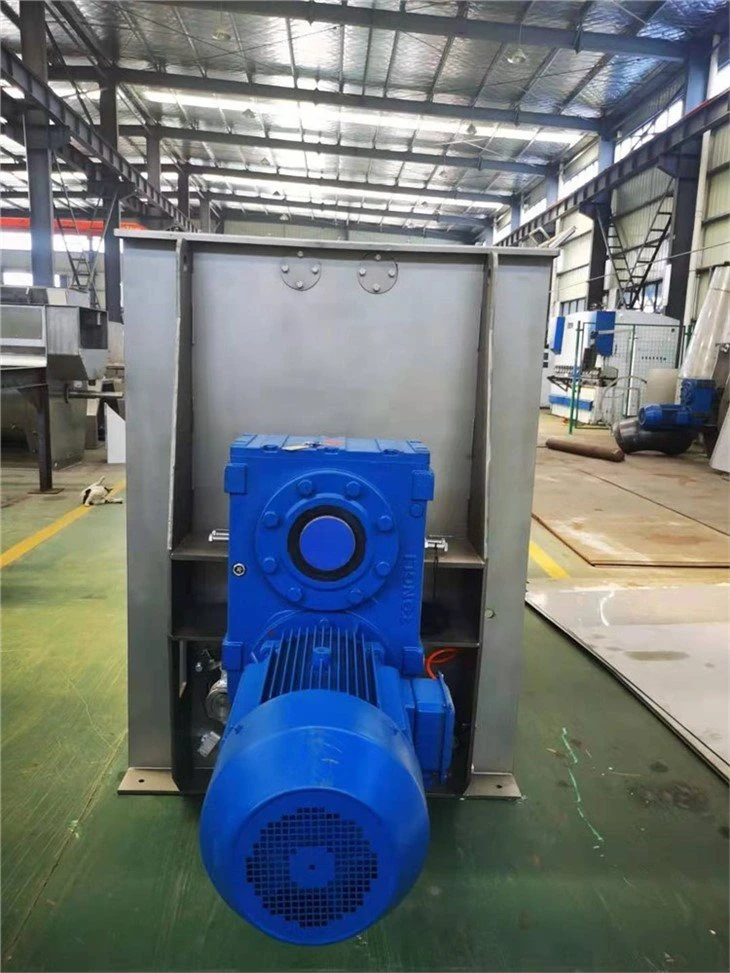
4. Easy Cleaning and Maintenance
Paddle - type feed mill mixers are relatively easy to clean and maintain. The design of the mixer allows for easy access to the mixing chamber, paddles, and other components. This makes it possible to remove any residual feed or debris after each batch, preventing cross - contamination between different types of feed.
Most paddle - type mixers are also equipped with clean - in - place (CIP) systems, which use water and cleaning agents to automatically clean the internal surfaces of the mixer. This reduces the time and labor required for manual cleaning and ensures a more thorough and consistent cleaning process.
In terms of maintenance, the components of paddle - type mixers are generally durable and easy to replace. The paddles, shafts, and bearings are designed to withstand the rigors of continuous operation, and replacement parts are readily available. Regular maintenance, such as lubrication and inspection of the components, can help to ensure the long - term reliability and performance of the mixer.
5. Versatility
Paddle - type feed mill mixers are highly versatile and can be used to mix a wide range of feed ingredients. They can handle dry feeds, such as grains, concentrates, and premixes, as well as wet feeds, such as liquid additives and molasses.
The adjustable paddle configuration allows for customization of the mixing process based on the specific characteristics of the feed ingredients. For example, different paddle shapes and angles can be used to optimize the mixing of different types of materials. In addition, the mixer can be used in combination with other equipment, such as grinders, pelletizers, and coolers, to create a complete feed production line.
6. Compatibility with Other Equipment
As a Feed Mill Mixer supplier, I understand the importance of compatibility between different pieces of equipment in a feed production line. Paddle - type feed mill mixers are designed to be easily integrated with other equipment, such as conveyors, hoppers, and pellet mills.
This compatibility ensures a smooth flow of materials through the production process, reducing the risk of bottlenecks and improving overall efficiency. For example, the mixer can be connected to a conveyor system that delivers the feed ingredients to the mixer and then transports the mixed feed to the next stage of the production process.
Related Products and Links
If you are interested in other related products, you can visit our Pellet Die Manufacturer page to learn more about high - quality pellet dies. We also offer Horizontal Mixer options, which are designed for different production requirements. You can also explore our Horizontal Mixer product details for more information.
Conclusion
In conclusion, the paddle - type feed mill mixer offers a multitude of advantages for feed production operations. Its ability to achieve uniform mixing, gentle mixing action, high throughput, easy cleaning and maintenance, versatility, and compatibility with other equipment make it an ideal choice for feed mills of all sizes.
If you are looking to improve the efficiency and quality of your feed production process, I encourage you to consider investing in a paddle - type feed mill mixer. Our company has extensive experience in providing high - quality feed mill mixers and related equipment. We are committed to helping you find the best solution for your specific needs. To discuss your requirements and explore the possibilities of using our paddle - type feed mill mixers, please feel free to contact us for procurement and further discussions.
References
- "Feed Manufacturing Technology," Feed Industry Association Publications.
- "Principles of Animal Nutrition and Feed Technology," Academic Press.
- Industry reports on feed mill equipment performance and efficiency.