

Hey there! As a supplier of belt dryers, I've seen firsthand the challenges that come with drying powder materials. Belt dryers are a popular choice for many industries because they're versatile, efficient, and can handle a wide range of materials. But when it comes to powder materials, there are a few unique issues that need to be addressed. In this blog post, I'm gonna share some tips on how to solve the problems of drying powder materials in a belt dryer.
Understanding the Challenges of Drying Powder Materials
Before we dive into the solutions, let's first understand the challenges of drying powder materials. Powders have a large surface area, which means they can dry quickly. However, this also makes them more prone to issues like dusting, agglomeration, and uneven drying.
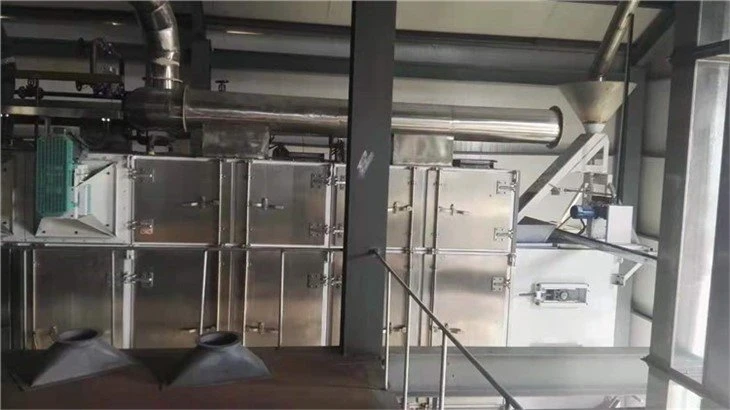

- Dusting: When powder materials are dried, fine particles can become airborne, creating a dust hazard. This not only poses a risk to the health of workers but can also cause problems with equipment and product quality.
- Agglomeration: Powders have a tendency to stick together and form clumps during the drying process. This can lead to uneven drying, as the outer layers of the agglomerates dry faster than the inner layers.
- Uneven Drying: Due to their small particle size, powders can be easily affected by the airflow and temperature distribution in the dryer. If the airflow is not evenly distributed, some areas of the powder may dry faster than others, resulting in uneven moisture content.
Solutions for Drying Powder Materials in a Belt Dryer
Now that we know the challenges, let's look at some solutions to overcome them.
1. Proper Material Handling
- Pre - treatment: Before the powder material enters the belt dryer, it's a good idea to pre - treat it. This could involve sieving the powder to remove any large particles or agglomerates that may already be present. For example, using a vibrating sieve can help break up small clumps and ensure a more uniform particle size distribution.
- Feeding System: Use a consistent and accurate feeding system to ensure that the powder is evenly distributed on the belt. A screw feeder or a vibratory feeder can be great options as they can control the flow rate of the powder and spread it evenly across the belt.
2. Controlling Dust
- Dust Collection System: Install an effective dust collection system to capture the airborne particles. A cyclone separator can be used to remove larger dust particles, while a bag filter can be used to capture finer particles. This not only helps to keep the working environment safe but also improves the quality of the final product.
- Sealing: Make sure the belt dryer is well - sealed to prevent dust from escaping. Check for any gaps or leaks in the dryer housing and use gaskets or seals to close them up.
3. Preventing Agglomeration
- Agitation: Incorporate an agitation mechanism in the dryer. For example, you can use a set of paddles or brushes that gently stir the powder as it moves along the belt. This helps to break up any emerging agglomerates and ensures more even drying.
- Temperature and Humidity Control: Adjust the temperature and humidity inside the dryer to prevent the powder from sticking together. If the temperature is too high, the powder may start to melt or fuse, while if the humidity is too low, static electricity can cause the particles to clump.
4. Ensuring Even Drying
- Airflow Design: Optimize the airflow design in the belt dryer. Use a well - designed air distribution system to ensure that the hot air is evenly distributed across the entire width and length of the belt. This can be achieved by using adjustable air vents or baffles.
- Multiple Zones: Divide the belt dryer into multiple temperature and airflow zones. This allows you to control the drying process more precisely, adjusting the conditions in each zone according to the moisture content and drying requirements of the powder.
Our Belt Dryer Solutions
At our company, we offer a variety of belt dryers that are specifically designed to handle powder materials. Our Food Belt Dryer and Feed Belt Dryer are equipped with advanced features to tackle the challenges of drying powder materials.
- Customizable Design: We understand that every customer has different needs. That's why our belt dryers can be customized to meet your specific requirements. Whether you need a certain belt width, length, or a particular airflow pattern, we can design a dryer that fits your needs.
- Advanced Controls: Our belt dryers come with state - of - the - art control systems that allow you to monitor and adjust the temperature, airflow, and other drying parameters in real - time. This ensures that you can achieve the best drying results for your powder materials.
- High - Quality Components: We use only high - quality components in our belt dryers to ensure durability and reliability. This means less downtime for maintenance and more productivity for your business.
Contact Us for Your Belt Dryer Needs
If you're facing problems with drying powder materials or are looking to upgrade your current drying equipment, we're here to help. Our team of experts has years of experience in the belt dryer industry and can provide you with the best solutions for your specific needs. Don't hesitate to reach out to us for a consultation or to discuss your procurement options. We're confident that our belt dryers can solve your drying problems and take your business to the next level.
References
- Smith, J. (2020). Principles of Industrial Drying. Publishing House.
- Brown, A. (2019). Belt Dryer Technology: Advancements and Applications. Academic Press.