

As a seasoned provider of counterflow coolers, I've spent years understanding the intricate details of these remarkable machines. One aspect that often goes unnoticed but plays a crucial role in the overall performance of a counterflow cooler is the packing material. In this blog post, I'll delve into the importance of packing material in a counterflow cooler, its functions, and how it impacts the efficiency and effectiveness of the cooling process.
Understanding Counterflow Coolers
Before we discuss the role of packing material, let's briefly touch on what a counterflow cooler is. A counterflow cooler is a vital piece of equipment in the feed processing industry, specifically designed to cool hot feed pellets produced by a pellet mill. The principle behind a counterflow cooler is based on the counterflow heat exchange, where the hot pellets move downward through the cooler while the cooling air moves upward. This design ensures efficient heat transfer, allowing the pellets to cool rapidly and evenly.
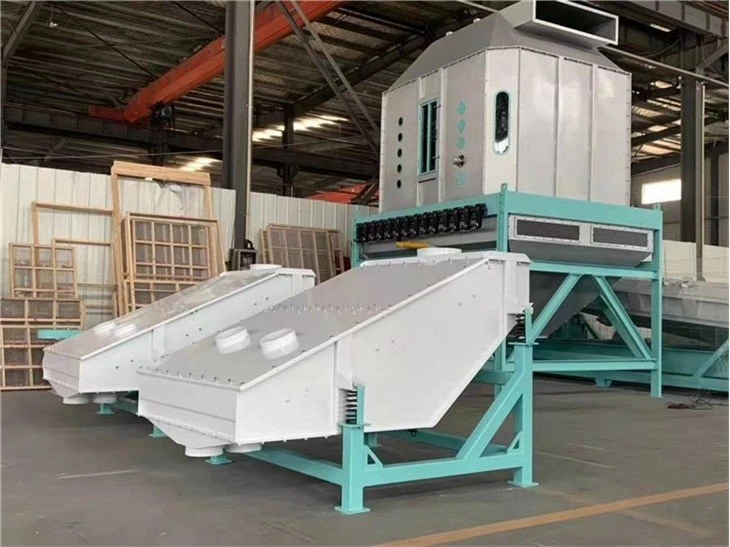
Two popular models of counterflow coolers we offer are the Counterflow Feed Pellet Cooler and the SKLN Counterflow Cooler. These coolers are known for their high efficiency, reliability, and quality construction, making them a preferred choice for many feed processing plants around the world.
The Role of Packing Material in a Counterflow Cooler
1. Enhancing Heat Transfer
The primary function of the packing material in a counterflow cooler is to enhance the heat transfer between the hot pellets and the cooling air. The packing material provides a large surface area for the hot pellets to come into contact with the cooling air, facilitating the transfer of heat from the pellets to the air. This increased surface area allows for more efficient heat exchange, resulting in faster and more uniform cooling of the pellets.
For example, if we consider a simple scenario where the hot pellets are simply stacked on top of each other without any packing material, the air would have a difficult time reaching the inner layers of the pellets. As a result, the cooling process would be slow and uneven, leading to pellets with inconsistent moisture content and temperature. However, with the use of packing material, the air can flow freely through the spaces between the pellets, ensuring that all the pellets are exposed to the cooling air and experience uniform cooling.
2. Promoting Air Distribution
Another important role of the packing material is to promote even air distribution throughout the cooler. In a counterflow cooler, the cooling air is introduced from the bottom and flows upward through the bed of pellets. The packing material helps to guide the air flow and prevent it from channeling through the pellets in an uneven manner. This ensures that the cooling air is evenly distributed across the entire cross-section of the cooler, which is essential for achieving uniform cooling of the pellets.
Proper air distribution also helps to prevent the formation of hot spots in the cooler, which can lead to overheating of the pellets and affect their quality. By using an appropriate packing material, we can ensure that the cooling air is evenly distributed, resulting in consistent cooling of the pellets and better overall product quality.
3. Preventing Pellet Breakage
The packing material in a counterflow cooler also plays a role in preventing pellet breakage during the cooling process. As the hot pellets move through the cooler, they are subject to mechanical forces and vibrations. The packing material provides a cushioning effect, reducing the impact of these forces on the pellets and preventing them from breaking.
In addition, the packing material helps to keep the pellets in place and prevent them from moving around too much during the cooling process. This reduces the likelihood of the pellets colliding with each other and breaking, which is important for maintaining the integrity and quality of the pellets.
4. Controlling Moisture Removal
The packing material can also influence the moisture removal process in a counterflow cooler. As the hot pellets cool down, the moisture in the pellets evaporates and is carried away by the cooling air. The packing material helps to control the rate of moisture removal by adjusting the air flow and providing a surface for the moisture to condense on.
By selecting the appropriate packing material, we can ensure that the moisture is removed from the pellets at a controlled rate, preventing the pellets from drying out too quickly or retaining too much moisture. This is crucial for maintaining the quality and stability of the pellets, as excessive moisture can lead to mold growth and spoilage, while too little moisture can cause the pellets to become brittle and break easily.
Factors to Consider When Choosing Packing Material
When selecting packing material for a counterflow cooler, several factors need to be considered, including the type of pellets being cooled, the cooling requirements, the operating conditions of the cooler, and the cost. Here are some of the key factors to keep in mind:

1. Material Properties
The material properties of the packing material, such as its porosity, surface area, and thermal conductivity, play a crucial role in determining its effectiveness in enhancing heat transfer and air distribution. For example, a packing material with high porosity and a large surface area will provide more contact points between the pellets and the cooling air, resulting in better heat transfer. Similarly, a material with high thermal conductivity will facilitate the transfer of heat from the pellets to the air more efficiently.
2. Chemical Resistance
The packing material should be resistant to the chemicals and contaminants present in the feed pellets and the cooling air. This is important to ensure that the packing material does not degrade or react with the pellets, which could affect the quality of the pellets and the performance of the cooler.
3. Durability
The packing material should be durable enough to withstand the mechanical forces and vibrations during the operation of the cooler. It should also be able to resist wear and tear over time, ensuring a long service life and reducing the need for frequent replacement.
4. Cost
The cost of the packing material is also an important consideration. While high-quality packing materials may offer better performance, they may also be more expensive. Therefore, it is important to find a balance between the cost and the performance of the packing material to ensure that the overall cost of operating the cooler is minimized.
Conclusion
In conclusion, the packing material in a counterflow cooler plays a crucial role in enhancing the efficiency and effectiveness of the cooling process. It helps to improve heat transfer, promote air distribution, prevent pellet breakage, and control moisture removal. By selecting the appropriate packing material, feed processing plants can achieve better cooling results, improve the quality of their pellets, and reduce operating costs.
If you're in the market for a counterflow cooler or need more information about the role of packing material, feel free to reach out to us. Our team of experts is always ready to assist you in finding the best solutions for your feed processing needs. Contact us today to start a discussion about your requirements and explore how our counterflow coolers can benefit your business.
References
- [List of relevant industry standards and technical documents]
- [Research papers on counterflow cooling technology]
- [Manufacturer's specifications and product literature]