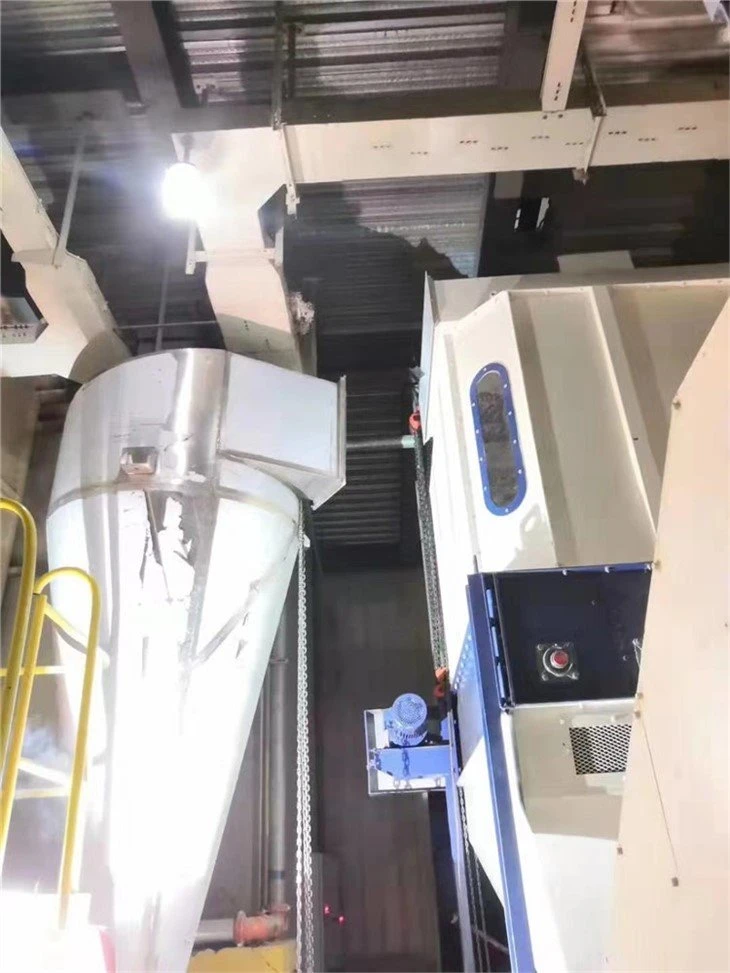
Fouling is a common and often underestimated issue in many industrial equipment, and counterflow coolers are no exception. As a supplier of counterflow coolers, I've witnessed firsthand the significant impact that fouling can have on the performance, efficiency, and longevity of these crucial machines. In this blog, I'll delve into the various aspects of fouling in counterflow coolers and discuss its implications.
What is a Counterflow Cooler?
Before we explore the impact of fouling, let's briefly understand what a counterflow cooler is. A counterflow cooler is a key piece of equipment in the feed pellet production process. It works by using a counter - current flow principle, where the hot feed pellets enter the top of the cooler, and ambient air is drawn in from the bottom. This counter - flow arrangement allows for efficient heat exchange, cooling the pellets from their high processing temperature to a safe storage temperature.
For those interested in learning more about counterflow coolers, you can visit our Counterflow Feed Pellet Cooler page, which provides detailed information about our products.
Types of Fouling in Counterflow Coolers
Fouling in counterflow coolers can be classified into several types:
1. Organic Fouling
Organic fouling occurs when organic materials such as feed residues, dust, and microbial growth accumulate on the internal surfaces of the cooler. Feed residues can stick to the walls, screens, and air ducts of the cooler. Microbial growth, especially in a warm and humid environment, can form biofilms on these surfaces. These biofilms not only act as an insulating layer but can also harbor harmful bacteria and fungi, which may contaminate the feed pellets.
2. Inorganic Fouling
Inorganic fouling is caused by the deposition of inorganic substances like minerals and salts. For example, if the cooling air contains high levels of dust with mineral particles, these particles can settle on the cooler surfaces over time. Hard water used in some auxiliary cooling systems can also leave behind mineral deposits on heat - exchange surfaces.
3. Chemical Fouling
Chemical fouling may result from chemical reactions between the feed components, the air, and the cooler materials. For instance, certain feed additives or contaminants may react with the metal surfaces of the cooler, leading to the formation of corrosion products or other chemical deposits.
Impact on Heat Transfer Efficiency
One of the most significant impacts of fouling on a counterflow cooler is its effect on heat transfer efficiency. The primary function of a counterflow cooler is to transfer heat from the hot feed pellets to the cooling air. However, fouling acts as an insulating layer between the pellets and the air, reducing the rate of heat transfer.
As the fouling layer thickens, the thermal resistance increases. This means that more energy is required to achieve the same level of cooling. In practical terms, the cooler may need to run for a longer time or use more powerful fans to draw in more air to cool the pellets to the desired temperature. This not only increases energy consumption but also reduces the overall production capacity of the cooler.
A study by [Research Team Name] found that even a thin layer of fouling can reduce heat transfer efficiency by up to 20%. Over time, if the fouling is not addressed, this reduction can be even more significant, leading to substantial economic losses for the end - users.
Impact on Airflow
Fouling can also severely affect the airflow within the counterflow cooler. Accumulated dirt and debris on the screens and air ducts can restrict the passage of air. This leads to uneven airflow distribution across the cooler, causing some areas of the pellets to be under - cooled while others may be over - cooled.
Uneven airflow can result in inconsistent pellet quality. Pellets that are not cooled properly may have a higher moisture content, which can lead to mold growth during storage. On the other hand, over - cooled pellets may become brittle and prone to breakage, reducing their market value.
In addition, restricted airflow can put additional stress on the fans. The fans have to work harder to maintain the required air volume, which can lead to increased wear and tear on the fan motors and other components. This may result in more frequent breakdowns and higher maintenance costs.
Impact on Product Quality
The quality of the feed pellets is directly affected by fouling in the counterflow cooler. As mentioned earlier, uneven cooling due to fouling can lead to variations in moisture content and pellet hardness. These variations can have a negative impact on the nutritional value and palatability of the feed.
Contamination from microbial growth in the fouled cooler can also pose a health risk to the animals consuming the feed. Bacteria and fungi can produce toxins that may cause diseases in livestock and poultry. This not only affects the health of the animals but also has implications for food safety in the animal - based food chain.
Impact on Equipment Longevity
Fouling can significantly reduce the lifespan of a counterflow cooler. The increased energy consumption and stress on the components due to fouling can lead to premature wear and tear. For example, the fan motors may overheat more easily, and the metal parts may corrode faster due to the presence of fouling - related chemical reactions.
Regular maintenance and cleaning are essential to prevent fouling, but if the fouling is severe, it may require more extensive and costly repairs. In some cases, the cooler may need to be replaced earlier than expected, which represents a significant capital investment for the users.
Preventive and Mitigation Measures
As a counterflow cooler supplier, we understand the importance of helping our customers prevent and mitigate fouling. Here are some measures that can be taken:
1. Regular Cleaning
Establishing a regular cleaning schedule is crucial. This includes cleaning the internal surfaces of the cooler, the screens, and the air ducts. Manual cleaning with appropriate cleaning agents can remove most of the fouling. For hard - to - reach areas, specialized cleaning equipment may be required.
2. Air Filtration
Installing high - quality air filters can help reduce the amount of dust and debris entering the cooler. This can prevent inorganic fouling and also reduce the load on the internal cleaning systems.
3. Monitoring and Inspection
Regular monitoring of the cooler's performance parameters such as temperature, airflow, and energy consumption can help detect early signs of fouling. Inspection of the internal surfaces can also identify areas where fouling is starting to accumulate, allowing for timely cleaning.
4. Use of Anti - Fouling Coatings
Applying anti - fouling coatings to the internal surfaces of the cooler can prevent the adhesion of dirt and debris. These coatings can make it easier to clean the cooler and reduce the frequency of fouling.
Conclusion
Fouling is a serious issue that can have far - reaching impacts on the performance, efficiency, product quality, and longevity of a counterflow cooler. As a supplier, we are committed to providing our customers with high - quality counterflow coolers, such as our SKLN Counterflow Cooler, and offering comprehensive support to address fouling problems.
If you are facing issues with fouling in your counterflow cooler or are interested in purchasing a new cooler, we invite you to contact us for a detailed discussion. Our team of experts can provide customized solutions to meet your specific needs and help you optimize the performance of your cooling system.
References
[Research Team Name]. (Year). "The Impact of Fouling on Heat Transfer in Industrial Coolers." Journal of Industrial Engineering. Volume [Volume Number], Issue [Issue Number], Pages [Page Range].