

Yo! I'm a supplier of Horizontal Mixers, and I often get asked about how to crank up the mixing efficiency of these machines. Well, you're in the right place because I've got some solid tips and tricks to share.
Let's first understand the importance of mixing efficiency. In industries that rely on horizontal mixers, like the feed industry, food production, and chemical manufacturing, getting a homogeneous mixture quickly and effectively can save a ton of time and money. A well - mixed product ensures consistent quality, which is super important for customer satisfaction.
1. Choose the Right Horizontal Mixer
The first step in improving mixing efficiency is to pick the right type of horizontal mixer for your specific needs. There are different models out there, such as the Twin - shaft Paddle Mixer. This type of mixer is great for quickly blending a variety of materials. The twin shafts with paddles rotate in opposite directions, creating a high - intensity mixing action that can cut down mixing times significantly.
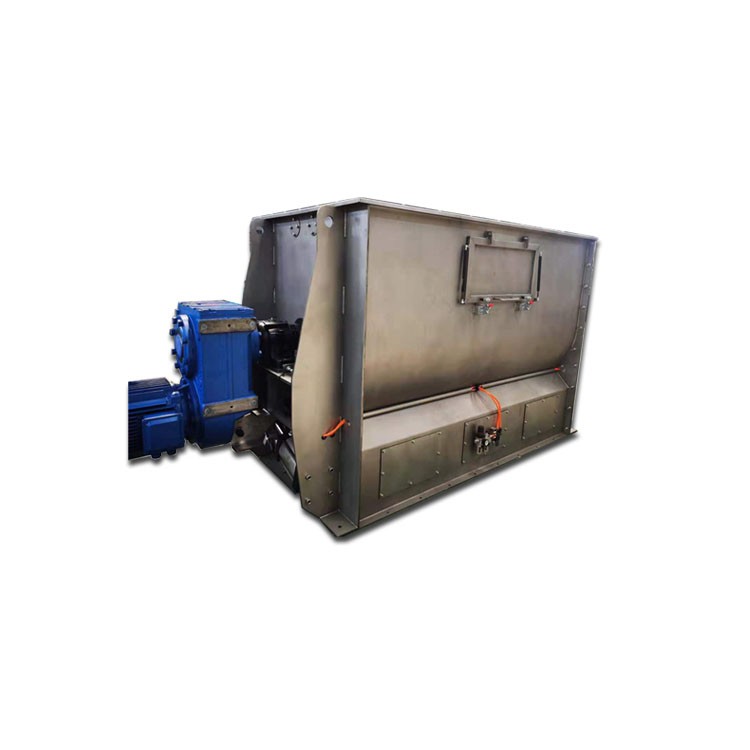

If you need a mixer for more general - purpose applications, a standard Horizontal Mixer might do the job. It's versatile and can handle different types of powders and granular materials. When selecting a mixer, consider factors like the volume of material you need to mix, the type of materials (e.g., sticky, abrasive), and the required mixing time.
2. Proper Loading of the Mixer
Loading the mixer correctly is crucial for efficient mixing. Overloading the mixer can lead to uneven mixing because the mixer might not be able to move the materials around properly. On the other hand, under - loading can also be inefficient as the mixer may not be operating at its optimal capacity.
Before loading, make sure the materials are properly pre - measured. If you're mixing multiple ingredients, it's a good idea to load the larger volume components first. This helps to create a base in the mixer, allowing the smaller volume ingredients to be more easily incorporated. For example, in a feed - mixing process, you might start by loading the grains and then add the vitamin and mineral supplements.
3. Adjust Mixing Parameters
Mixing parameters like speed and time play a huge role in efficiency. Most modern horizontal mixers allow you to adjust the mixing speed. Higher speeds generally result in faster mixing, but they can also generate more heat and wear on the mixer components. So, you need to find the sweet spot.
Start by running the mixer at a lower speed for a short period to get the materials moving around. Then, increase the speed gradually. Keep an eye on the consistency of the mixture. You can test the mix by taking samples at different intervals. As for mixing time, it should be long enough to achieve a homogeneous mixture but not too long to waste energy. Different materials have different optimal mixing times, so it's a good idea to do some trials to find out what works best for your product.
4. Maintenance of the Mixer
Regular maintenance is a must - do if you want to keep your mixer running efficiently. Check the mixer's blades or paddles regularly for wear and tear. Damaged blades can't mix the materials properly, which will reduce efficiency. Replace any worn - out parts as soon as possible.
Lubricate the moving parts according to the manufacturer's recommendations. This reduces friction, which not only helps the mixer run smoothly but also extends its lifespan. Clean the mixer after each use to prevent the build - up of materials. Material build - up can affect the mixer's performance and lead to clogging.
5. Use of Additives and Pre - Blending
In some cases, using additives can improve mixing efficiency. For example, in the feed industry, anti - caking agents can be added to prevent the formation of clumps, making it easier for the mixer to blend the materials. However, be careful with the amount of additives you use, as too much can affect the quality of the final product.
Pre - blending some of the ingredients before putting them into the horizontal mixer can also speed up the overall mixing process. For instance, if you have some very fine powders that are difficult to disperse, pre - blending them with a small amount of a carrier material can make them easier to mix in the main mixer.
6. Incorporating Quality Control Measures
Implementing quality control measures during the mixing process can help you catch any issues early and make adjustments to improve efficiency. This can involve taking regular samples of the mixture and analyzing them for homogeneity, particle size distribution, and other relevant parameters.
If you find that the mixture isn't meeting the required standards, you can go back and adjust the mixing parameters or the way you're loading the materials. By doing this, you can avoid wasting time and resources on a batch that won't meet the quality requirements.
Partner with a Reputable Pellet Die Manufacturer
If you're in the feed industry, working with a reliable Pellet Die Manufacturer can also indirectly improve the mixing efficiency. A high - quality pellet die ensures that the mixed feed can be formed into pellets smoothly. This way, any inefficiencies in the pelleting process that could potentially affect the overall productivity due to improper mixing won't be a problem.
Reach Out for More Efficiency
I hope these tips have given you a good idea of how to improve the mixing efficiency of your horizontal mixer. If you're looking for a top - notch horizontal mixer or have any questions about the mixing process, don't hesitate to reach out. We're here to help you boost your efficiency and get the best results from your mixing operations.
References
- "Handbook of Industrial Mixing: Science and Practice" by Edward L. Paul,Victor A. Atiemo - Obeng, Suzanne M. Kresta
- "Mixing in the Process Industries" by J. Y. Oldshue