

Determining the optimal number of mixing blades for a horizontal mixer is a crucial aspect that can significantly impact the efficiency and quality of the mixing process. As a supplier of horizontal mixers, I've encountered numerous clients seeking guidance on this matter. In this blog, I'll share some insights on how to figure out the right number of mixing blades for your horizontal mixer.
Understanding the Basics of Horizontal Mixers
Before we dive into the number of mixing blades, let's quickly go over what horizontal mixers are. Horizontal mixers are widely used in various industries, such as feed production, chemical processing, and food manufacturing. They work by rotating a series of blades or paddles inside a horizontal trough to blend different materials together.
There are different types of horizontal mixers, like the SJHS Paddle Mixer, Twin - shaft Paddle Mixer, and SLHY Horizontal Mixer. Each type has its own design and characteristics, but the principle of using mixing blades to achieve uniform mixing remains the same.
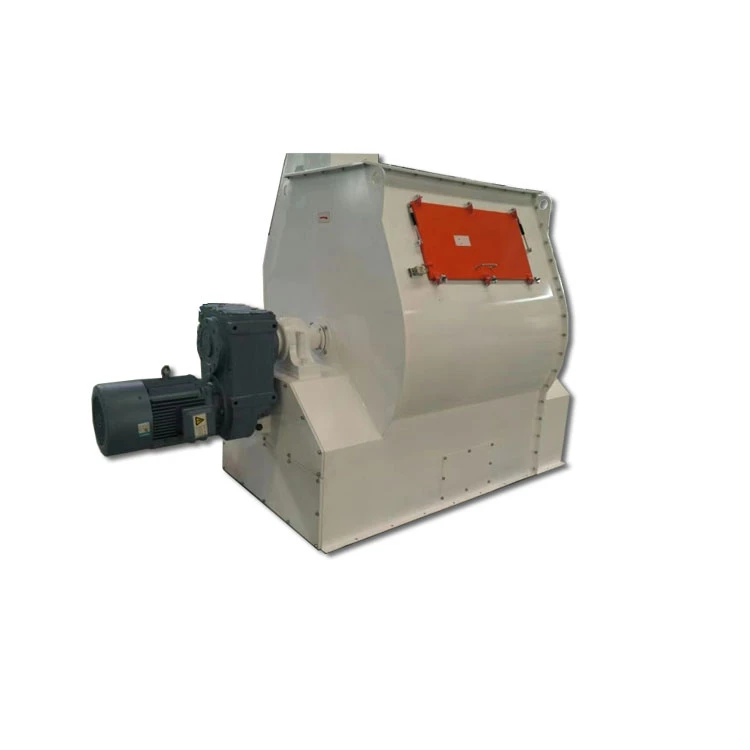
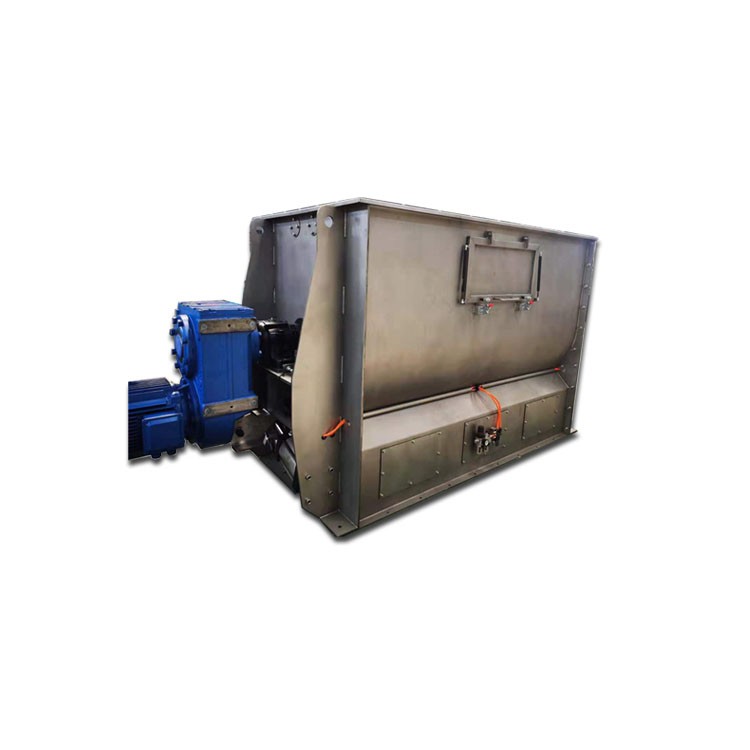
Factors Affecting the Optimal Number of Mixing Blades
1. Material Characteristics
The properties of the materials you're mixing play a huge role. If you're dealing with dry, free - flowing materials like grains or powders, you might not need as many blades. These materials are relatively easy to mix, and a smaller number of well - designed blades can do the job efficiently.
On the other hand, if you're mixing sticky, viscous materials or materials with a wide range of particle sizes, more blades may be required. Sticky materials tend to clump together, and having more blades can break up these clumps and ensure thorough mixing. For example, when mixing dough in the food industry or certain chemical pastes, a larger number of blades can help distribute the ingredients evenly.
2. Mixing Capacity
The size of the mixer and the amount of material you want to mix at one time also matter. A larger mixer with a high mixing capacity usually needs more blades. This is because a greater volume of material requires more agitation to achieve uniform mixing. If you try to mix a large quantity of material with too few blades, there may be areas in the mixer where the material doesn't get properly mixed, leading to inconsistent results.
Conversely, a small - scale mixer used for laboratory or pilot - scale production may not need as many blades. The smaller volume of material can be effectively mixed with a fewer number of blades, which also helps to reduce energy consumption and wear on the mixer.
3. Mixing Time
The time you have available for the mixing process is another factor. If you need to complete the mixing quickly, more blades can speed up the process. More blades mean more contact points with the material, which increases the rate of mixing. However, if time is not a critical factor, you may be able to get away with a smaller number of blades and still achieve the desired level of mixing.
4. Desired Mixing Uniformity
The level of uniformity you need in the final mixture is crucial. In some industries, like pharmaceuticals or high - precision chemical manufacturing, a very high degree of uniformity is required. To achieve this, you'll likely need more blades. The additional blades can ensure that every particle of the material is thoroughly mixed with the others, reducing the variance in the mixture's composition.
In less demanding applications, such as mixing some types of animal feed, a lower level of uniformity may be acceptable, and fewer blades can be used.
Calculating the Optimal Number of Mixing Blades
There's no one - size - fits - all formula for determining the optimal number of mixing blades. However, here are some general steps you can follow:
Step 1: Analyze the Material
First, understand the physical and chemical properties of the materials you'll be mixing. Consider factors like particle size, density, viscosity, and stickiness. You can conduct some preliminary tests on a small scale to observe how the material behaves during mixing.
Step 2: Determine the Mixing Requirements
Decide on the mixing capacity, mixing time, and desired level of uniformity. These requirements will guide you in choosing the appropriate number of blades.
Step 3: Consider the Mixer Design
Take into account the design of the horizontal mixer, including the shape and size of the trough, the speed of the rotating shaft, and the type of blades available. Different mixer designs can accommodate different numbers of blades effectively.
Step 4: Conduct Trials
It's often a good idea to conduct trials with different numbers of blades. Start with a conservative estimate based on the above factors and gradually adjust the number of blades in subsequent trials. Measure the quality of the mixture after each trial using appropriate methods, such as sampling and analyzing the composition of the mixture.
Practical Examples
Let's say you're a feed manufacturer using a SLHY Horizontal Mixer to mix different types of grains and additives. If you're mixing a relatively small batch of free - flowing grains, you might start with a mixer equipped with 4 - 6 blades. This number can provide sufficient agitation to blend the grains evenly in a reasonable amount of time.
However, if you're adding molasses or other sticky additives to the feed, you may need to increase the number of blades to 8 - 10. The extra blades can break up the sticky clumps and ensure that the additives are evenly distributed throughout the feed.
Conclusion
Determining the optimal number of mixing blades for a horizontal mixer is a complex process that requires careful consideration of multiple factors. As a horizontal mixer supplier, I recommend that you take the time to understand your specific mixing requirements and conduct trials to find the best solution for your application.
If you're looking for more information on horizontal mixers or need help in choosing the right number of mixing blades for your needs, don't hesitate to reach out. We're here to assist you in making the most informed decision for your mixing process. Whether you're a small - scale producer or a large - scale industrial operation, we can provide the expertise and products to meet your requirements.
References
- Perry, R. H., & Green, D. W. (Eds.). (1997). Perry's Chemical Engineers' Handbook. McGraw - Hill.
- Mujumdar, A. S. (Ed.). (2007). Handbook of Industrial Drying. CRC Press.