

As a seasoned supplier of drag conveyors, I often receive inquiries about the transmission efficiency of the drive unit in these systems. This aspect is crucial as it directly impacts the overall performance, energy consumption, and cost - effectiveness of the conveyor. In this blog, I will delve into what transmission efficiency means in the context of a drag conveyor's drive unit, the factors that affect it, and how it can be optimized.
Understanding Transmission Efficiency
Transmission efficiency refers to the ratio of the useful power output of a drive unit to the power input. In the case of a drag conveyor, the drive unit is responsible for converting electrical or mechanical energy into the motion required to move the conveyor chain and the material being transported. A high - efficiency drive unit means that a larger proportion of the input power is effectively used to move the conveyor, while a low - efficiency one results in significant energy losses, often in the form of heat.
Let's take a simple example. Suppose a drive unit of a drag conveyor consumes 100 kilowatts (kW) of electrical power. If the useful power output, which is used to move the conveyor chain and the material, is 80 kW, then the transmission efficiency is 80% (80 kW / 100 kW). The remaining 20 kW is lost, typically due to factors such as friction, mechanical inefficiencies in the gearbox, and electrical losses in the motor.
Factors Affecting Transmission Efficiency
1. Type of Drive System
There are different types of drive systems used in drag conveyors, such as electric motors coupled with gearboxes, hydraulic drives, and pneumatic drives. Electric motor - gearbox combinations are the most common. The efficiency of an electric motor can vary depending on its design and quality. High - quality, energy - efficient motors can have efficiencies of up to 95% or more. However, the gearbox also plays a significant role. Helical gearboxes generally offer higher efficiency compared to worm gearboxes. Worm gearboxes, while having the advantage of high torque and compact design, can have relatively lower efficiencies, often in the range of 50 - 80%.
2. Load Characteristics
The load on the drag conveyor has a direct impact on the transmission efficiency of the drive unit. If the conveyor is overloaded, the drive unit has to work harder, which can lead to increased losses. For example, when the conveyor is filled beyond its rated capacity, the motor has to draw more current to maintain the required speed. This can cause the motor to operate at a lower efficiency point on its performance curve. On the other hand, if the load is too light, the motor may also operate inefficiently as it is not operating at its optimal load level.
3. Maintenance and Wear
Proper maintenance is essential for maintaining high transmission efficiency. Over time, components such as bearings, chains, and gears can wear out. Worn bearings can increase friction, which in turn reduces the efficiency of the drive unit. Regular lubrication of moving parts is also crucial. Insufficient lubrication can lead to increased wear and higher frictional losses. For example, if the chain in the drag conveyor is not properly lubricated, the motor has to work harder to overcome the additional friction, resulting in lower efficiency.
4. Belt or Chain Tension
In a drag conveyor, the tension of the chain or belt is important. If the chain is too loose, it can slip, causing the drive unit to waste energy in trying to maintain the required speed. Conversely, if the chain is too tight, it can increase the load on the drive unit and cause premature wear of components. Maintaining the correct chain tension is therefore critical for optimal transmission efficiency.
Optimizing Transmission Efficiency
1. Selecting the Right Drive System
When designing or upgrading a drag conveyor, it is important to select the most appropriate drive system. As mentioned earlier, high - efficiency electric motors and well - designed gearboxes should be chosen. For applications where high torque is required, a combination of a high - efficiency motor and a helical gearbox may be the best choice. Additionally, variable frequency drives (VFDs) can be used to control the speed of the motor. VFDs allow the motor to operate at the most efficient speed for the given load, reducing energy consumption and improving overall efficiency.
2. Proper Sizing of the Drive Unit
The drive unit should be properly sized for the specific application. This involves accurately calculating the required power based on factors such as the conveyor length, the weight of the material being transported, and the desired speed. An oversized drive unit will operate inefficiently at light loads, while an undersized one will be overloaded, leading to reduced efficiency and potential damage to the components.
3. Regular Maintenance
Implementing a regular maintenance schedule is crucial. This includes checking and replacing worn components, lubricating moving parts, and adjusting chain tension. By keeping the conveyor in good working condition, the transmission efficiency can be maintained at a high level. For example, replacing a worn - out bearing can significantly reduce friction and improve the overall efficiency of the drive unit.
4. Monitoring and Control
Installing monitoring systems can help in detecting any changes in the performance of the drive unit. For example, sensors can be used to measure the motor current, temperature, and speed. By analyzing this data, any inefficiencies or potential problems can be identified early. If the motor current suddenly increases, it may indicate an issue such as an overloaded conveyor or a worn - out component.
Our Drag Conveyor Offerings
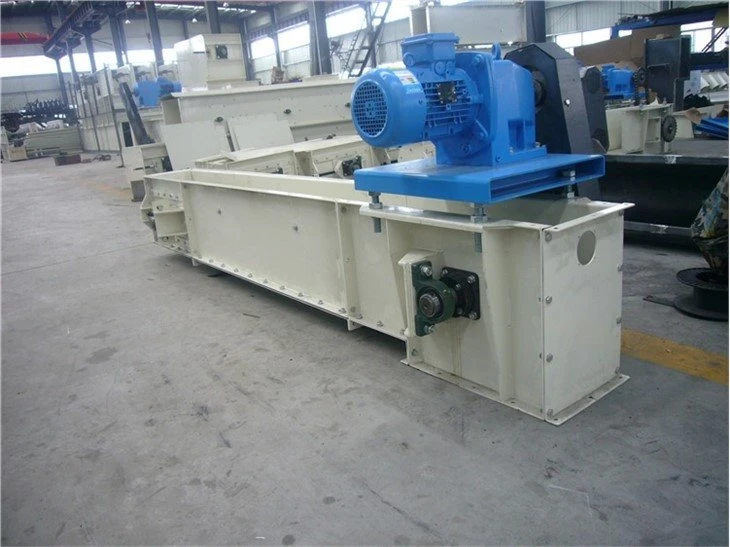
As a leading supplier of drag conveyors, we offer a wide range of products designed to provide high transmission efficiency. Our Drag Chain Conveyor is a reliable solution for various industrial applications. It is equipped with high - efficiency drive units that are carefully selected and sized to ensure optimal performance.
Our TGSSP Series Level Drag Conveyor is another excellent option. This series is designed with advanced features to minimize energy losses and maximize transmission efficiency. We use high - quality components and follow strict manufacturing standards to ensure the long - term reliability and efficiency of our conveyors.

Conclusion
The transmission efficiency of the drive unit in a drag conveyor is a critical factor that affects the overall performance and cost - effectiveness of the system. By understanding the factors that influence efficiency and implementing the appropriate optimization strategies, significant energy savings can be achieved. As a supplier, we are committed to providing our customers with high - efficiency drag conveyors that meet their specific needs. If you are interested in learning more about our products or have any questions regarding the transmission efficiency of our drag conveyors, please feel free to contact us for a detailed discussion and potential procurement. We look forward to working with you to find the best conveyor solution for your business.
References
- ASME (American Society of Mechanical Engineers) standards on conveyor design and efficiency.
- IEEE (Institute of Electrical and Electronics Engineers) publications on electric motor efficiency.
- Manufacturer's manuals for conveyor components such as motors, gearboxes, and chains.