

Hey there! As a supplier of grain dryers, I often get asked this question: Can grain dryers be used for drying seeds? Well, let's dig into this topic and find out.
First off, let's understand the basics. Grain dryers are machines designed to remove moisture from grains like wheat, corn, and rice. Their main goal is to reduce the moisture content to a level where the grains can be safely stored without spoilage. Seeds, on the other hand, are used for planting, and they have a different set of requirements.
Now, the short answer is yes, grain dryers can be used for drying seeds. But there are some important things to keep in mind.
Similarities between Grains and Seeds
Grains and seeds are both agricultural products that need to have their moisture levels controlled. When it comes to moisture, both can be negatively affected by high humidity. Excess moisture can lead to mold growth, which can ruin the product. Whether it's a batch of wheat grains or a packet of vegetable seeds, keeping the moisture in check is crucial.
Most grain dryers work on the principle of hot - air circulation. They blow warm air through the grains or seeds, causing the moisture to evaporate. This basic mechanism can be applied to both grains and seeds. For example, if you have a small - scale farm and you're growing both grains for consumption and seeds for the next season, a single grain dryer can potentially serve both purposes.
Differences between Grains and Seeds
However, there are significant differences between grains and seeds that we need to consider. Seeds are living organisms. They need to maintain their viability, which means they must be able to germinate when planted. Grains, on the other hand, are often used for food or animal feed, and their main concern is storage quality.
One of the key differences is the ideal moisture content. For grains, a moisture content of around 12 - 14% is usually suitable for long - term storage. But for seeds, the ideal moisture content can vary widely depending on the type of seed. Some seeds, like those of legumes, can tolerate a relatively higher moisture content, while others, such as some flower seeds, need to be dried to a very low moisture level, sometimes as low as 5 - 7%.
Another important factor is the drying temperature. Grains can generally withstand higher drying temperatures without significant damage. But seeds are more sensitive to heat. If the temperature is too high during the drying process, it can damage the embryo inside the seed, reducing its ability to germinate. For example, a high - temperature setting that works well for drying corn grains might be too harsh for delicate lettuce seeds.
Using Grain Dryers for Seeds
If you're planning to use a grain dryer for seeds, here are some tips to ensure success.
First, you need to adjust the drying parameters. Lower the temperature to a level that is safe for the seeds. You might need to do some research on the specific type of seeds you're drying to find out the optimal temperature. Also, the drying time should be carefully monitored. It's better to dry the seeds slowly over a longer period rather than subjecting them to a short, intense drying cycle.
It's also important to ensure uniform drying. Uneven drying can lead to some seeds being over - dried while others are still too moist. To achieve uniform drying, you can stir the seeds gently during the drying process or use a dryer with a good air - distribution system.
Other Equipment in the Process
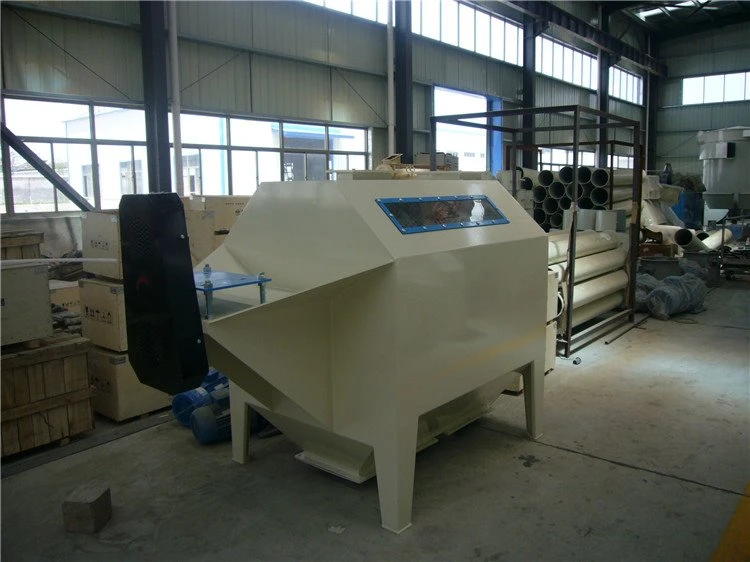
In addition to grain dryers, there are other pieces of equipment that can be useful in the seed - handling process. For example, the SCQZ Conical Drum Pre - cleaner can be used to remove impurities from the seeds before drying. This helps in getting a cleaner batch of seeds and can also improve the efficiency of the drying process.
If you're involved in the production of aquafeed or other types of feed, the Aquafeed Single Screw Extruder can be a valuable addition to your setup. It can process the dried grains or seeds into a more usable form.
And for those who are working on a smaller scale, perhaps in a research or experimental setting, the Pellet Mill Lab - size can be used to convert the dried materials into pellets, which can be easier to handle and store.
Conclusion
In conclusion, grain dryers can indeed be used for drying seeds, but it requires careful consideration and adjustment of the drying process. By understanding the differences between grains and seeds and taking the necessary precautions, you can use your grain dryer effectively for seed drying.
If you're interested in learning more about grain dryers or need help in choosing the right equipment for your seed - drying needs, feel free to reach out. We're here to assist you in making the best decision for your agricultural operations. Whether you're a small - scale farmer or a large - scale agricultural business, we have the expertise and the products to meet your requirements. Let's start a conversation and see how we can work together to improve your seed - drying process.

References
- Agricultural Handbook No. 66: The Storage of Agricultural Commodities, United States Department of Agriculture
- Seed Technology and its Biological Basis, by Brian M. Priestly, Terry D. Roberts, and E. H. Roberts