

Hey there! As a supplier of SJHS Paddle Mixers, I often get asked about the speed range of the paddles in these machines. It's a crucial question because the paddle speed can significantly impact the mixing efficiency and the quality of the final product. So, let's dive right into it.
First off, the SJHS Paddle Mixer is a top - notch piece of equipment used in various industries, especially in the feed - making business. The speed range of the paddles in this mixer is carefully designed to meet different mixing requirements.
Typically, the paddle speed in the SJHS Paddle Mixer can range from around 20 to 80 revolutions per minute (RPM). This wide range allows for a high degree of flexibility when it comes to mixing different types of materials.
For instance, when you're dealing with light and fluffy materials like some types of powders, a lower paddle speed, say around 20 - 30 RPM, might be sufficient. At this speed, the paddles gently move through the material, preventing excessive dust generation and ensuring a gentle yet thorough mixing process. The slow movement also helps in preventing the segregation of different components in the mixture.
On the other hand, when you have denser materials or materials that are more difficult to mix, a higher paddle speed is required. Speeds in the range of 60 - 80 RPM can be used to create a more vigorous mixing action. The faster - moving paddles can break up clumps, disperse additives more evenly, and ensure that all the components are well - integrated.
The variable speed feature of the SJHS Paddle Mixer is a real game - changer. It gives operators the ability to adjust the paddle speed according to the specific needs of each batch. This is especially important in industries where different recipes are used regularly. For example, in a feed mill, one day you might be mixing a high - protein feed for poultry, and the next day, a high - fiber feed for cattle. Each of these mixtures has different characteristics and requires a different mixing approach.
Now, let's talk about how the paddle speed affects the mixing time. Generally, a lower paddle speed will require a longer mixing time to achieve the same level of homogeneity as a higher paddle speed. However, in some cases, a longer mixing time at a lower speed can be beneficial. It can reduce the risk of over - mixing, which can sometimes lead to the degradation of certain ingredients.
When it comes to the design of the SJHS Paddle Mixer, the paddles are engineered to work efficiently within this speed range. The shape and size of the paddles are optimized to create a smooth and effective mixing flow. They are also made from high - quality materials that can withstand the wear and tear associated with continuous operation at different speeds.

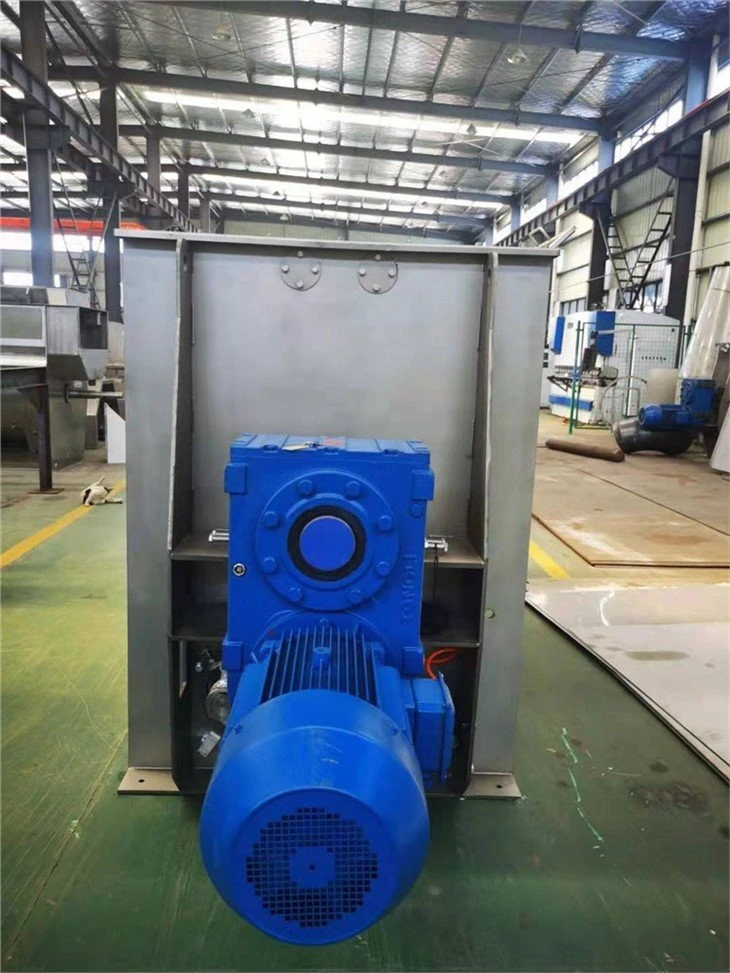
If you're in the market for a reliable paddle mixer, you might also want to check out some related products. For example, there are Pellet Die Manufacturer options available that can work in conjunction with the SJHS Paddle Mixer in a feed - production line. Also, the Twin - shaft Paddle Mixer offers a different mixing mechanism that might be suitable for some specific applications. And if you're looking for a horizontal mixer, the SLHY Horizontal Mixer is another great option.
In conclusion, the speed range of the paddles in the SJHS Paddle Mixer provides a lot of flexibility for different mixing tasks. Whether you're a small - scale feed producer or a large - scale industrial operation, this mixer can be adjusted to meet your specific needs. If you're interested in learning more about our SJHS Paddle Mixers or have any questions about the paddle speed or other features, don't hesitate to reach out. We're always here to help you make the best choice for your business. Let's start a conversation about how our equipment can improve your mixing process and boost your productivity.
References
- Manufacturer's specifications of SJHS Paddle Mixer
- Industry research on paddle mixer performance and speed optimization