

Hey there! I'm a supplier of Feed Mill Crumblers, and today I wanna talk about a super important topic: What is the maximum moisture content that a Feed Mill Crumbler can tolerate?
First off, let's understand why moisture content matters so much in the feed - milling process. When it comes to animal feed, the moisture level can have a huge impact on the quality of the final product. If the moisture content is too high, it can lead to all sorts of problems, like mold growth, clumping, and reduced shelf - life. On the other hand, if it's too low, the feed might be too dry and brittle, which isn't great for the animals either.
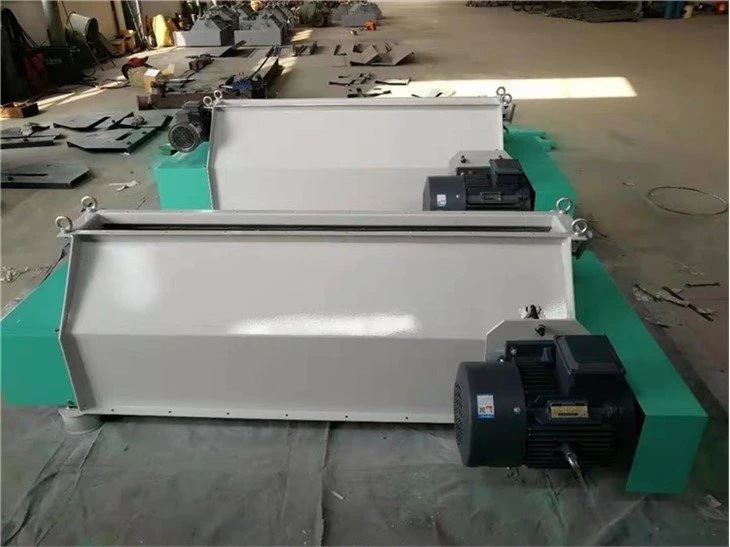
Now, for a Feed Mill Crumbler, the maximum moisture content it can handle depends on several factors. One of the main factors is the design of the crumbler itself. Different models of Pellet Crumbler have different capabilities. Some crumblers are built with more advanced technology that allows them to handle higher moisture levels more efficiently.

The type of feed being processed also plays a big role. For example, if you're dealing with a feed that has a high fat content, it might be more sensitive to moisture. Fats can act as a barrier, preventing the evaporation of moisture, which means that the feed might need to have a lower moisture content when it goes into the crumbler.
In general, most Feed Mill Crumblers can tolerate a moisture content of around 12% - 15%. But this is just a ballpark figure. Some high - end Pellet Crumbler Machine can handle up to 18% moisture content. However, when the moisture content gets close to or exceeds this range, there are some potential issues that we need to be aware of.
One of the biggest problems with high - moisture feed in a crumbler is the increased risk of clogging. When the feed is too wet, it can stick to the components of the crumbler, such as the rollers or the screens. This not only reduces the efficiency of the crumbler but can also cause damage to the machine over time. You might find yourself having to stop the production line more frequently to clean the crumbler, which can be a real pain in the neck.
Another issue is the quality of the crumbled feed. High - moisture feed might not crumble as evenly as dry feed. You could end up with larger chunks in the final product, which might not be suitable for all animals. Some animals, especially young ones, need a more uniform particle size in their feed for proper digestion.
To ensure that the Feed Mill Crumbler can operate at its best, it's crucial to control the moisture content of the feed before it enters the machine. There are several ways to do this. One common method is to use a dryer. A dryer can reduce the moisture content of the feed to an acceptable level. You can adjust the temperature and the airflow in the dryer to achieve the desired moisture content.
Another option is to use a moisture meter. A moisture meter is a handy tool that can quickly and accurately measure the moisture content of the feed. By regularly checking the moisture content, you can make adjustments to the drying process or the feed formulation as needed.
If you're in the market for a Crumbler for Animal Feed, it's important to choose a crumbler that can handle the moisture content of the feed you typically produce. When you're talking to suppliers, ask them about the maximum moisture content their crumblers can tolerate. Also, find out what kind of support they offer in terms of moisture control and troubleshooting.
As a Feed Mill Crumbler supplier, I know how important it is to get the moisture content right. That's why we've designed our crumblers to be as versatile as possible. Our machines can handle a wide range of moisture levels, but we also provide our customers with advice on how to optimize the moisture content for the best results.
If you're facing issues with high - moisture feed in your current crumbler or if you're looking to upgrade your equipment, I'd love to have a chat with you. We can discuss your specific needs and see if our Feed Mill Crumblers are the right fit for your operation. Whether you're a small - scale farm or a large - scale feed production facility, we've got solutions that can work for you.
In conclusion, while most Feed Mill Crumblers can tolerate a moisture content of around 12% - 15%, it's important to consider the specific factors of your operation. By controlling the moisture content and choosing the right crumbler, you can ensure a high - quality, efficient feed - production process. If you're interested in learning more about our Feed Mill Crumblers or have any questions about moisture content, don't hesitate to reach out. Let's work together to make your feed - milling operation a success!
References
- Feed Milling Technology Handbook
- Journal of Animal Feed Science and Technology