

Hey there! As a supplier of feed mill mixers, I often get asked about the loading capacity of these machines per batch. It's a crucial question because the right loading capacity can make a huge difference in the efficiency and productivity of your feed production.
First off, let's understand what we mean by loading capacity. The loading capacity of a feed mill mixer per batch refers to the maximum amount of feed ingredients that the mixer can handle in one mixing cycle. This capacity is usually measured in kilograms (kg) or pounds (lbs).
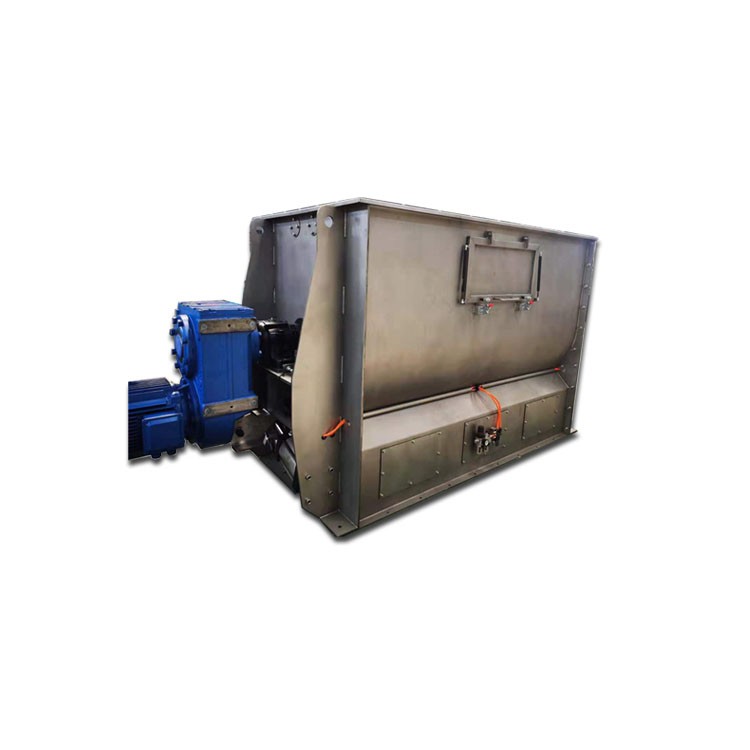
There are several factors that can influence the loading capacity of a feed mill mixer. One of the most important factors is the size and design of the mixer. For example, larger mixers generally have a higher loading capacity. Our SLHY Horizontal Mixer is a great example. It's designed with a spacious mixing chamber, which allows it to handle a relatively large amount of feed ingredients per batch.
Another factor is the type of feed ingredients. Different ingredients have different densities and flow characteristics. For instance, powdery ingredients like flour may require a different loading capacity compared to granular ingredients like corn. A good feed mill mixer should be able to handle a variety of ingredients effectively. Our Horizontal Mixer is engineered to work well with different types of feed ingredients, ensuring a consistent and thorough mixing regardless of the ingredient composition.
The mixing mechanism also plays a role in determining the loading capacity. Some mixers use a simple paddle - type mechanism, while others have more advanced ribbon or twin - shaft designs. The more efficient the mixing mechanism, the better it can handle larger batches. Our Horizontal Mixer features a state - of - the - art mixing mechanism that can quickly and evenly mix large volumes of feed ingredients.

Now, let's talk about the typical loading capacities you can expect from different types of feed mill mixers. Small - scale feed mill mixers, which are often used by small farms or home - based feed producers, may have a loading capacity of around 50 - 200 kg per batch. These mixers are compact and easy to operate, making them ideal for small - volume production.
Medium - sized feed mill mixers are suitable for medium - scale feed production facilities. They usually have a loading capacity ranging from 200 - 1000 kg per batch. These mixers offer a good balance between capacity and cost, and they can meet the production needs of many medium - sized farms and feed mills.
Large - scale feed mill mixers, on the other hand, are designed for industrial - level feed production. They can have a loading capacity of 1000 kg or more per batch. These mixers are built to handle high - volume production and are often used by large feed manufacturing companies.
When choosing a feed mill mixer based on its loading capacity, you need to consider your production requirements. If you have a small farm with a limited number of animals, a small - capacity mixer may be sufficient. But if you're running a large - scale feed production business, you'll definitely need a high - capacity mixer to keep up with the demand.
It's also important to note that overloading a feed mill mixer can lead to several problems. It can cause uneven mixing, which means that the feed may not have a consistent nutrient distribution. This can affect the health and growth of the animals. Overloading can also put extra stress on the mixer's motor and other components, leading to premature wear and tear and potentially costly repairs.
On the other hand, under - utilizing the loading capacity of a mixer can be inefficient. You're not making the most of the machine's capabilities, and it can increase your production costs per unit of feed.
So, how do you determine the right loading capacity for your specific needs? First, calculate your daily feed production requirements. Consider the number of animals you have, their age, species, and the feeding regime. Then, decide how many batches you want to produce per day. Based on these calculations, you can choose a feed mill mixer with an appropriate loading capacity.
In addition to the loading capacity, you should also look at other features of the feed mill mixer, such as its mixing time, power consumption, and ease of cleaning. A mixer that can mix the feed quickly and evenly, consumes less power, and is easy to clean will help you run a more efficient and cost - effective feed production operation.
As a feed mill mixer supplier, we're committed to providing high - quality mixers with the right loading capacities for different customers. Whether you're a small - scale farmer or a large - scale feed manufacturer, we have a mixer that can meet your needs.
If you're interested in learning more about our feed mill mixers or want to discuss your specific requirements, don't hesitate to reach out. We're here to help you make the best choice for your feed production business. Contact us today to start the procurement discussion and take your feed production to the next level.
References
- Feed Mill Technology Handbook, various industry experts
- Studies on Feed Mixing Efficiency, academic research papers