

Hey there! As a supplier of belt dryers, I've seen firsthand how air temperature can have a huge impact on the drying process. Today, I'm gonna break down what that effect is and why it matters for anyone looking to use a belt dryer.
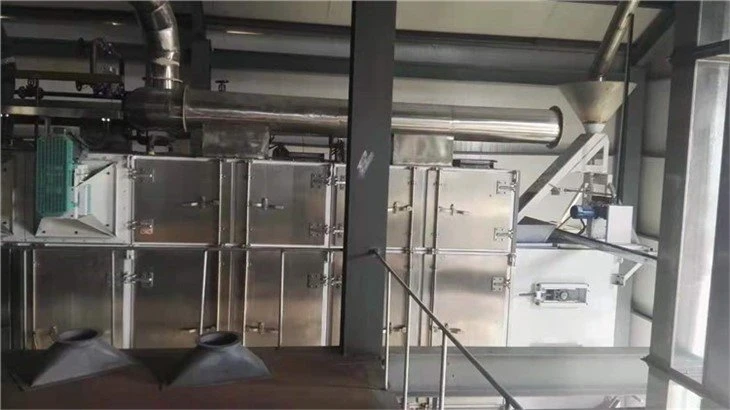
First off, let's talk about what a belt dryer is. It's a type of industrial dryer that uses a continuous belt to move materials through a drying chamber. The belt is usually made of mesh or perforated metal, which allows hot air to pass through and dry the material as it moves along. Belt dryers are commonly used in a variety of industries, including food processing, agriculture, and chemical manufacturing.
Now, let's get into the nitty-gritty of how air temperature affects the drying process in a belt dryer. The basic principle is pretty simple: the higher the air temperature, the faster the drying process. This is because heat energy causes the water molecules in the material to evaporate more quickly. When the water evaporates, it turns into vapor and is carried away by the hot air.
But it's not just about speed. The quality of the dried product can also be affected by air temperature. If the temperature is too high, the material can overheat and become damaged. This can lead to a loss of nutrients, flavor, and texture in food products, or a change in the chemical properties of other materials. On the other hand, if the temperature is too low, the drying process will be slower and less efficient, which can increase energy costs and reduce productivity.
So, how do you find the right air temperature for your belt dryer? Well, it depends on a few factors, including the type of material you're drying, the moisture content of the material, and the desired final moisture content. For example, some materials, like fruits and vegetables, are more sensitive to heat and require a lower temperature to prevent damage. Other materials, like grains and seeds, can tolerate higher temperatures and may dry more quickly at a higher setting.
In general, it's a good idea to start with a lower temperature and gradually increase it as needed. This allows you to monitor the drying process and make adjustments as necessary to ensure that the material is drying evenly and without damage. You can also use a moisture sensor to measure the moisture content of the material as it dries, which can help you determine when the drying process is complete.
Another important factor to consider is the airflow in the drying chamber. The hot air needs to be evenly distributed across the belt to ensure that all of the material is dried uniformly. If the airflow is too weak or uneven, some areas of the material may dry more slowly than others, which can lead to inconsistent results. To ensure proper airflow, it's important to clean the filters and ducts regularly and to make sure that the fans are working properly.
Now, let's talk about some of the specific effects of air temperature on different types of materials.
Food Products
When it comes to drying food products, air temperature plays a crucial role in preserving the quality and nutritional value of the final product. As I mentioned earlier, some foods are more sensitive to heat than others. For example, fruits and vegetables are often dried at a relatively low temperature (around 50-60°C) to prevent them from losing their color, flavor, and nutrients. On the other hand, meats and fish can be dried at a higher temperature (around 70-80°C) to kill any bacteria and extend their shelf life.
Using a Feed Belt Dryer or a Food Belt Dryer can be a great option for food processing companies. These dryers are designed to provide precise temperature control and even airflow, which helps to ensure that the food is dried evenly and without damage.
Grains and Seeds
Grains and seeds are another common material that is dried using belt dryers. The ideal air temperature for drying grains and seeds depends on the type of grain and the moisture content. In general, grains can be dried at a higher temperature (around 80-100°C) than seeds, which are more sensitive to heat.
One of the main challenges when drying grains and seeds is to prevent them from cracking or splitting. If the temperature is too high or the drying process is too fast, the grains can expand and crack, which can reduce their quality and market value. To prevent this from happening, it's important to control the air temperature and the drying time carefully.
Chemical Products
In the chemical industry, belt dryers are often used to dry powders, granules, and other solid materials. The air temperature required for drying chemical products depends on the specific properties of the material. Some chemicals are heat-sensitive and require a low temperature to prevent decomposition or other chemical reactions. Other chemicals can tolerate higher temperatures and may dry more quickly at a higher setting.
When drying chemical products, it's important to ensure that the drying process is carried out in a safe and controlled environment. This may involve using special equipment and following strict safety protocols to prevent the release of harmful chemicals or dust.
In conclusion, air temperature is a critical factor in the drying process in a belt dryer. By understanding how air temperature affects the drying process and the specific requirements of different materials, you can optimize the performance of your belt dryer and achieve the best possible results. Whether you're drying food products, grains and seeds, or chemical products, choosing the right air temperature and airflow can help you save energy, improve productivity, and ensure the quality of your final product.
If you're interested in learning more about our belt dryers or have any questions about the drying process, please don't hesitate to get in touch. We'd be happy to discuss your specific needs and help you find the right solution for your business.
References

- Smith, J. (2018). Industrial Drying Technology. New York: Wiley.
- Jones, A. (2019). Food Drying: Principles and Practice. London: Elsevier.
- Brown, C. (2020). Chemical Engineering Handbook. Chicago: McGraw-Hill.