

Hey there! I'm a supplier of Feed Hammer Mills, and today I wanna chat about the capacity of a typical feed hammer mill. It's a topic that many folks in the feed industry are curious about, so let's dive right in.
First off, what's a feed hammer mill? Well, it's a machine that's super important in the feed - making process. It uses high - speed rotating hammers to crush various raw materials like grains, corn, and soybeans into smaller particles. These crushed materials are then used to make different types of animal feeds.
The capacity of a feed hammer mill can vary widely, and it depends on several factors. One of the main factors is the size of the mill. Generally speaking, larger mills tend to have higher capacities. A small - scale feed hammer mill, which might be suitable for a small farm or a home - based feed production, could have a capacity of around 100 - 500 kilograms per hour. These mills are usually compact and easy to operate. They're great for farmers who only need to produce a small amount of feed for their own livestock.
On the other hand, large - scale commercial feed hammer mills can have capacities that are much higher. Some of these industrial - grade mills can process 5 - 20 tons of raw materials per hour or even more. These big boys are used in large feed manufacturing plants where high - volume production is required to meet the demands of the market.
Another factor that affects the capacity is the type of raw material being processed. Different materials have different physical properties, such as hardness, moisture content, and particle size. For example, if you're processing soft grains like wheat, the mill can usually handle a larger volume compared to when you're dealing with hard materials like sorghum. Moisture content also plays a crucial role. If the raw material has a high moisture content, it can be more difficult to crush, and the mill's capacity may decrease.
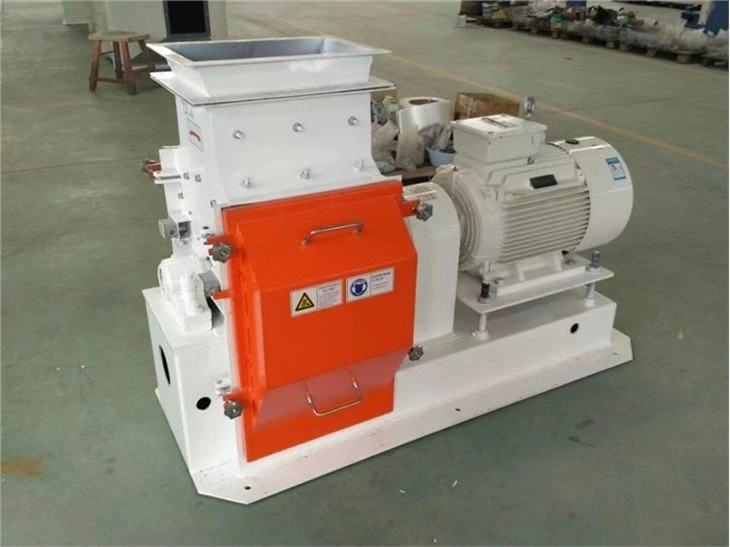
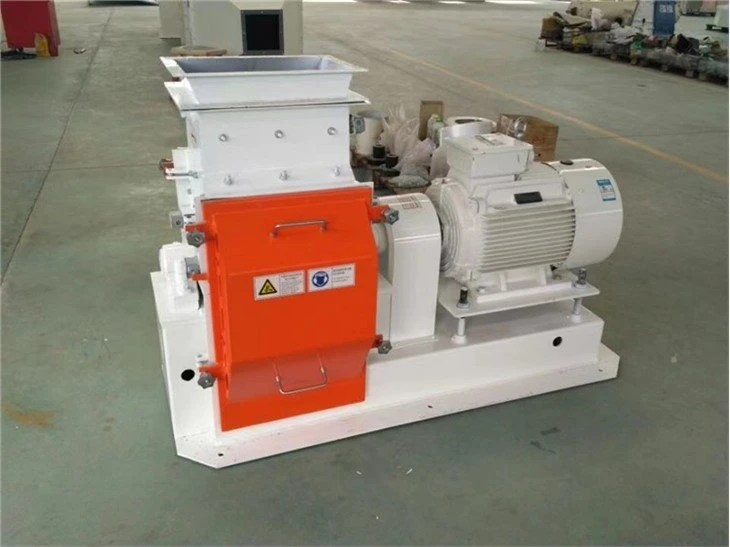
The design and technology of the hammer mill also matter. Modern feed hammer mills are often equipped with advanced features like adjustable hammers, efficient screening systems, and powerful motors. These features can significantly improve the mill's performance and increase its capacity. For instance, a mill with an adjustable hammer system can be optimized for different types of raw materials, allowing it to work more efficiently and handle a larger volume.
Let's talk about some specific applications. If you're in the business of making fish feed, a Fish Feed Hammer Mill is a great choice. Fish feed requires a very fine particle size, and a well - designed fish feed hammer mill can achieve this while maintaining a good capacity. These mills are usually designed to be more precise in crushing to meet the specific requirements of fish nutrition.
For those who are focused on animal feed in general, an Animal Feed Crushing Machine is what you need. It can handle a wide variety of raw materials and is suitable for different types of animals, from poultry to pigs. The capacity of these machines can be adjusted according to your production needs.
If you're mainly raising cattle, a Hammer Mill for Cattle is tailored to your requirements. Cattle feed often consists of coarser particles, and the hammer mill for cattle is designed to crush the raw materials into the right size and texture. It can process a significant amount of feed per hour to keep your cattle well - fed.
Now, when you're considering the capacity of a feed hammer mill for your business, you need to think about your production goals. If you're just starting out and have a small number of animals, a low - capacity mill might be sufficient. But if you're planning to expand your business in the future, it's a good idea to invest in a mill with a higher capacity right from the start.
It's also important to consider the maintenance and operation of the mill. A high - capacity mill may require more maintenance and a more skilled operator. You need to make sure that you have the resources and knowledge to keep the mill running smoothly.
In conclusion, the capacity of a typical feed hammer mill can range from a few hundred kilograms per hour for small - scale operations to several tons per hour for large - scale commercial production. The type of raw material, the mill's design, and your production goals all play important roles in determining the right capacity for you.
If you're interested in learning more about our feed hammer mills or if you want to discuss your specific needs, don't hesitate to reach out. We're here to help you find the perfect feed hammer mill for your business. Whether you're a small - time farmer or a large - scale feed manufacturer, we've got the solutions for you.
References:
- Feed Manufacturing Handbook
- Agricultural Machinery and Equipment Guide