

Properly loading ingredients into a feed mill mixer is crucial for ensuring high - quality feed production. As a reputable feed mill mixer supplier, I have witnessed first - hand how different loading methods can significantly impact the efficiency and outcome of the mixing process. In this blog, I will explore the best ways to load ingredients into a feed mill mixer.
Understanding the Basics of Feed Mill Mixers
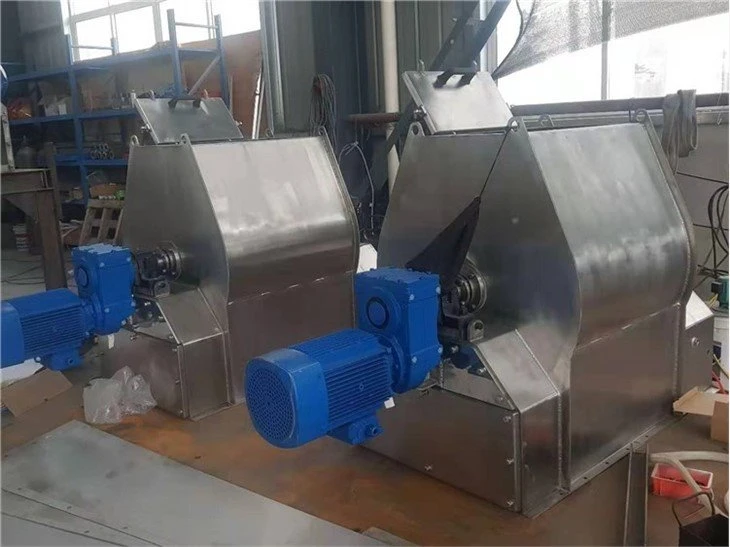
Before delving into the loading methods, it's essential to understand the different types of feed mill mixers available in the market. For instance, the Feed Mill Paddle Mixer is a popular choice. It uses paddles to move and blend the ingredients, providing a gentle yet effective mixing action. The Twin - shaft Paddle Mixer features two parallel shafts with paddles that rotate in opposite directions, creating a more intense mixing environment and reducing mixing time. The Double - circle Paddle Mixer is designed to provide a comprehensive mixing effect by using a unique double - circle motion.
Each type of mixer has its own characteristics, and the loading method should be adjusted accordingly to fully leverage its advantages.
Factors to Consider Before Loading
- Ingredient Characteristics: Different ingredients have different physical properties. Powders, for example, can be more prone to dust formation and may require special handling to avoid losses. Grains and pellets have different flow rates, and their particle sizes can also vary. Understanding these characteristics helps in determining the order and manner of loading.
- Mixer Capacity: Overloading a mixer can lead to inefficient mixing and may even cause damage to the equipment. It's important to know the maximum capacity of the mixer and ensure that the total volume of ingredients does not exceed this limit.
- Desired Mixing Time: Some feed formulations may require longer mixing times to achieve a uniform blend. The loading method can influence the mixing time. For example, if the ingredients are loaded in a way that they are already well - distributed at the start, the overall mixing time can be reduced.
Best Loading Methods
1. Pre - blending Small Ingredients
Before loading all the ingredients into the main mixer, it is advisable to pre - blend small - quantity ingredients. This includes additives, vitamins, and minerals. These ingredients are often required in minute amounts, and pre - blending them with a small portion of a major ingredient, such as a grain, ensures that they are evenly dispersed throughout the entire batch. For example, you can mix a small amount of vitamins with 10 - 20% of the total grain volume in a small container. Then, load this pre - blended mixture into the main feed mill mixer. This method helps to prevent the formation of pockets of concentrated additives in the final feed product.

2. Sequential Loading Based on Density
Loading ingredients based on their density can also improve the mixing process. Start by loading the denser ingredients first. For instance, if you are using grains and a powder additive, load the grains into the mixer first. The denser ingredients will form a base on which the lighter ingredients can be evenly distributed. Next, add the lighter powder additives. This way, the mixing paddles can more effectively incorporate the lighter ingredients into the denser ones, reducing the time required to achieve a homogeneous mixture.
3. Using Loading Aids
There are several loading aids available that can help improve the efficiency of the loading process. Conveyor belts, for example, can be used to transport large quantities of ingredients from storage bins to the mixer. They provide a consistent and controlled flow of ingredients, reducing the risk of spillage and over - loading. Additionally, automated dosing systems can be used to precisely measure and load the required amounts of each ingredient. These systems can be programmed to dispense the right quantity of different ingredients at the appropriate times, ensuring accuracy in the feed formulation.
4. Ensuring Uniform Distribution
When loading ingredients, it's important to distribute them evenly across the mixer. This can be achieved by using multiple discharge points or by spreading the ingredients manually if necessary. If the ingredients are concentrated in one area of the mixer, it will take longer for the mixer to achieve a uniform blend. For larger feed mill mixers, it may be beneficial to use a distributor device at the inlet to ensure that the ingredients are evenly spread across the mixing chamber.
Challenges and Solutions in Loading
- Dust Formation: When loading dry ingredients, especially powders, dust formation can be a significant problem. Dust not only poses a health risk to workers but can also lead to ingredient losses. To address this issue, use dust collection systems at the loading points. These systems capture the dust particles and prevent them from escaping into the environment. Additionally, consider using wetting agents or pre - moistening the ingredients slightly to reduce dust generation.
- Blockages: Sometimes, ingredients can cause blockages in the loading mechanisms, such as chutes or hoppers. To prevent blockages, ensure that the equipment is properly maintained and cleaned regularly. Use anti - blocking devices, such as vibrating hoppers or air cannons, to dislodge any stuck ingredients. Also, inspect the ingredients for any large clumps or foreign objects that could cause blockages before loading them into the mixer.
The Importance of Monitoring the Loading Process
Monitoring the loading process is essential for quality control. Keep track of the quantity of each ingredient loaded to ensure that it matches the feed formulation. Use weighing scales or other measurement devices during the loading process. Additionally, visually inspect the loading process to ensure that the ingredients are being loaded correctly and that there are no issues such as spillage or blockages. Regularly check the mixer during operation to ensure that it is functioning properly and that the ingredients are being mixed effectively.
Conclusion
In conclusion, the best way to load ingredients into a feed mill mixer involves a combination of understanding the mixer type, considering the ingredient characteristics, and using appropriate loading methods. By pre - blending small ingredients, loading based on density, using loading aids, and ensuring uniform distribution, you can achieve a high - quality, homogeneous feed product with minimal mixing time.
As a feed mill mixer supplier, I am committed to providing you with not only high - quality mixers but also the knowledge and support you need for optimal feed production. If you have any questions about loading ingredients into our Feed Mill Paddle Mixer, Twin - shaft Paddle Mixer, or Double - circle Paddle Mixer, or if you are interested in discussing a potential procurement, I encourage you to reach out to me. I look forward to helping you improve your feed production process and achieve the best results.
References
- Animal Feed Science and Technology. Various issues on feed mixing and ingredient handling.
- Feed Manufacturing Handbook. Different editions focusing on practical aspects of feed production and mixer operation.