

Hey there! As a supplier of U - Drag Conveyors, I've been getting a lot of questions lately about the flow - control methods that can be used for these conveyors. So, I thought I'd sit down and write this blog to share some insights on this topic.
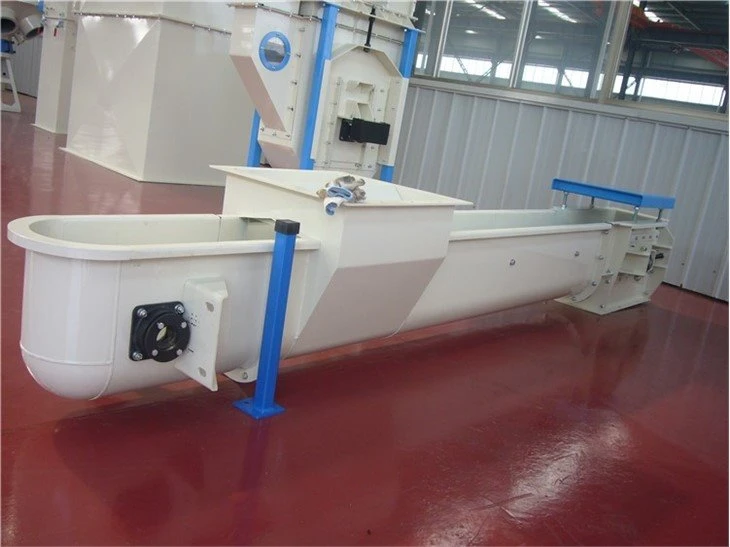
First off, let's quickly talk about what U - Drag Conveyors are. If you're interested in learning more, you can check out our Series U-Drag Conveyor and U-drag Chain Conveyor pages. These conveyors are great for moving all sorts of materials, like powders, granules, and even some small chunks. They're known for their efficiency and reliability, which is why they're so popular in various industries.
Now, let's dive into the flow - control methods.
Variable Speed Drives
One of the most common and effective flow - control methods for U - Drag Conveyors is using variable speed drives (VSDs). With a VSD, you can adjust the speed of the conveyor motor. This is super handy because it allows you to control how fast or slow the material moves along the conveyor.
For example, if you're dealing with a very delicate material that can easily break or get damaged, you can set the conveyor to a slower speed. On the other hand, if you need to move a large volume of material quickly, you can crank up the speed. It's all about finding that sweet spot based on the type of material and your production requirements.
The great thing about VSDs is that they're relatively easy to install and operate. You can usually adjust the speed either manually using a control panel or automatically through a programmable logic controller (PLC). This flexibility makes them a top choice for many businesses.
Gate Valves
Gate valves are another useful flow - control option. These valves are placed at the inlet or outlet of the U - Drag Conveyor. When you open the gate valve, material can flow onto or off the conveyor. By adjusting how far you open the valve, you can control the amount of material that enters or leaves the conveyor.
There are different types of gate valves, like slide gates and knife gates. Slide gates are simple and easy to operate. You just slide the gate open or closed to control the flow. Knife gates, on the other hand, are better for handling sticky or abrasive materials. They have a sharp - edged blade that can cut through the material to open or close the flow path.
However, one thing to keep in mind with gate valves is that they need to be properly maintained. Over time, the valve can get clogged with material, which can affect its performance. Regular cleaning and inspection are essential to make sure the gate valve works as it should.
Feeders
Feeders are also an important part of flow control for U - Drag Conveyors. There are several types of feeders, such as screw feeders, belt feeders, and vibratory feeders.
Screw feeders work by using a rotating screw to move material into the conveyor. You can control the speed of the screw to regulate the amount of material being fed. They're great for handling dry, free - flowing materials.
Belt feeders use a moving belt to transport material. The speed of the belt can be adjusted to control the flow rate. Belt feeders are suitable for a wide range of materials, including those with irregular shapes.
Vibratory feeders use vibration to move material. By adjusting the amplitude and frequency of the vibration, you can control how fast the material moves. They're often used for small, granular materials.
Feeders can be especially useful when you need to ensure a consistent and precise flow of material into the U - Drag Conveyor. This is important in industries where accurate dosing is required, like the food or pharmaceutical industries.
Level Sensors
Level sensors can play a crucial role in flow control. These sensors are installed at different points along the conveyor or in the hopper feeding the conveyor. They can detect the level of material in the conveyor or hopper.
For example, if a level sensor in the hopper detects that the material level is getting too low, it can send a signal to a feeder to increase the flow of material. On the other hand, if the sensor detects that the conveyor is getting overloaded, it can signal the conveyor to slow down or stop.
There are different types of level sensors, such as ultrasonic sensors, capacitive sensors, and optical sensors. Each type has its own advantages and is suitable for different applications. Ultrasonic sensors are good for detecting the level of materials in large hoppers. Capacitive sensors can be used for both conductive and non - conductive materials. Optical sensors are often used for detecting the presence or absence of material at a specific point.
Baffles and Deflectors
Baffles and deflectors are simple but effective flow - control devices. Baffles are plates or barriers that are placed inside the conveyor to change the direction of the material flow. Deflectors are similar but are usually used to direct the material to a specific location.
By strategically placing baffles and deflectors, you can control how the material spreads out or concentrates on the conveyor. This can be useful for preventing material buildup in certain areas and ensuring a more even flow.
For example, if you notice that material tends to pile up on one side of the conveyor, you can install a baffle to redirect the flow and distribute the material more evenly.

In - Line Flow Meters
In - line flow meters can provide real - time information about the flow rate of the material in the U - Drag Conveyor. These meters can measure the mass or volume of the material passing through a specific point in the conveyor.
There are different types of in - line flow meters, such as Coriolis flow meters and electromagnetic flow meters. Coriolis flow meters are very accurate and can measure the mass flow rate of the material. They work based on the Coriolis effect, which causes a tube to twist when material flows through it. Electromagnetic flow meters are used for conductive materials and measure the flow rate based on the induced voltage in the material.
By using in - line flow meters, you can monitor the flow rate and make adjustments to the conveyor speed, feeder rate, or other flow - control devices as needed. This helps to ensure that you're getting the right amount of material moved at the right time.
In conclusion, there are several flow - control methods available for U - Drag Conveyors. Each method has its own advantages and is suitable for different applications. Whether you're looking to control the speed, the amount, or the direction of the material flow, there's a solution out there for you.
If you're in the market for a U - Drag Conveyor or need more information about flow - control methods, don't hesitate to reach out. We're here to help you find the best solution for your specific needs. Let's have a chat and see how we can optimize your material handling process.
References
- "Conveyor Handbook" - A comprehensive guide on conveyor systems and their components.
- Industry research papers on flow control in material handling systems.