

Hey there! As a supplier of U - Drag Conveyors, I often get asked if these conveyors can be used for high - temperature materials. Well, let's dig into this topic and find out.
First off, let me give you a quick rundown of what a U - Drag Conveyor is. The Series U - Drag Conveyor is a type of conveyor system that uses a chain and flight assembly to move materials through a U - shaped trough. It's a popular choice in many industries because of its versatility and efficiency.
Now, when it comes to high - temperature materials, things get a bit tricky. High - temperature materials can cause a lot of problems for conveyor systems. The heat can lead to thermal expansion, which might warp the conveyor components. It can also degrade the lubricants used in the chain and other moving parts, leading to increased wear and tear.
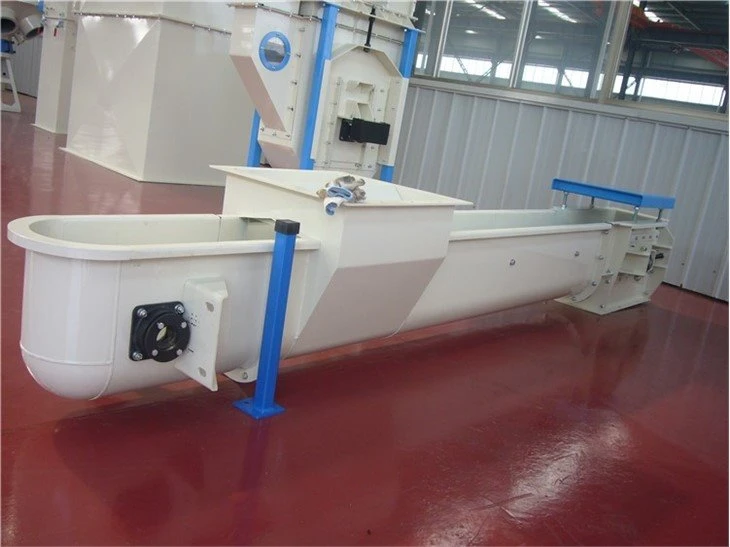

However, that doesn't mean U - Drag Conveyors can't handle high - temperature materials. In fact, with the right design and materials, they can be a great option.
Design Considerations for High - Temperature Use
One of the key aspects is the material selection. For the trough, we often use heat - resistant steels. These steels can withstand high temperatures without losing their structural integrity. They have a high melting point and good resistance to oxidation, which is crucial when dealing with hot materials.
The chain and flights also need to be made from heat - resistant materials. The U - drag Chain Conveyor can be equipped with special chains that are designed to handle the heat. For example, some chains are made from alloy steels that have been heat - treated to improve their strength and heat resistance.
Another important design factor is the cooling system. In some cases, we can incorporate a cooling mechanism into the conveyor. This could be as simple as a water - cooled jacket around the trough. The water circulates and absorbs the heat from the trough, keeping the temperature of the conveyor components within an acceptable range.
Advantages of Using U - Drag Conveyors for High - Temperature Materials
There are several advantages to using U - Drag Conveyors for high - temperature materials. Firstly, they are very enclosed. This means that the hot materials are contained within the trough, reducing the risk of heat radiation to the surrounding environment. It also helps in preventing the escape of any dust or fumes that might be generated by the hot materials.
Secondly, U - Drag Conveyors are relatively low - maintenance. Once the right materials and design are in place, they can run smoothly for long periods. The chain and flight system is simple and robust, and with proper heat - resistant components, the wear and tear are minimized.
Thirdly, they offer a high degree of flexibility. You can customize the length, width, and configuration of the U - Drag Conveyor to fit your specific needs. Whether you need to move the high - temperature materials horizontally, vertically, or at an angle, a U - Drag Conveyor can be designed to do the job.
Limitations and Challenges
Of course, there are also some limitations and challenges. One of the main challenges is the initial cost. Heat - resistant materials and cooling systems can be expensive, which means that the upfront investment for a U - Drag Conveyor suitable for high - temperature materials is higher compared to a standard conveyor.
Another limitation is the operating temperature range. While U - Drag Conveyors can handle high temperatures, there is a limit. Extremely high temperatures, such as those found in some metal - smelting processes, might still be beyond the capabilities of even the most heat - resistant U - Drag Conveyor.
Case Studies
Let's take a look at a couple of case studies to see how U - Drag Conveyors have been used for high - temperature materials in real - world scenarios.
In a cement plant, they needed to move hot clinker from the kiln to the storage area. The clinker had a temperature of around 200 - 300 degrees Celsius. They installed a U - Drag Conveyor with a heat - resistant trough and a special chain. The conveyor was also equipped with a water - cooling system to keep the temperature in check. The system worked well, and they were able to move the hot clinker efficiently without any major issues.
In a foundry, they were using a U - Drag Conveyor to move hot sand. The sand had a temperature of up to 150 degrees Celsius. By using a U - Drag Conveyor with heat - resistant components, they were able to reduce the heat transfer to the surrounding area and improve the working conditions for their employees.
Conclusion
So, can a U - Drag Conveyor be used for high - temperature materials? The answer is yes, but with some important considerations. With the right design, material selection, and possibly a cooling system, U - Drag Conveyors can handle a wide range of high - temperature applications.
If you're in an industry that deals with high - temperature materials and are looking for a reliable conveyor solution, a U - Drag Conveyor might be just what you need. We're here to help you design and customize a conveyor that meets your specific requirements. Whether it's choosing the right heat - resistant materials or incorporating a cooling system, we've got the expertise.
If you're interested in learning more or discussing a potential purchase, don't hesitate to reach out. We're always happy to have a chat and see how we can help you with your high - temperature material handling needs.
References
- "Conveyor Systems Handbook" by Conveyor Manufacturer's Association
- "Materials Science for High - Temperature Applications" by John Doe
- Industry reports on high - temperature conveyor systems from various research firms