

In the diverse realm of industrial processing, the question of whether a hammer mill can be used for chemical raw material processing is one that frequently arises. As a supplier of high - quality hammer mills, I've encountered numerous inquiries from clients in the chemical industry. In this blog, I'll delve into the feasibility, advantages, and considerations of using a hammer mill for chemical raw material processing.
Feasibility of Using a Hammer Mill for Chemical Raw Materials
Hammer mills are versatile machines that operate on a simple yet effective principle. They use a series of hammers attached to a rotating shaft within a chamber. As the raw material enters the chamber, the high - speed rotating hammers strike it, breaking it into smaller pieces. This mechanism makes hammer mills suitable for a wide range of materials, including many chemical raw materials.
Many chemical substances come in large chunks or irregular forms that need to be reduced to a more uniform and finer size for further processing. Whether it's inorganic chemicals like salts and oxides or organic compounds such as polymers and resins, a hammer mill can be employed to achieve the desired particle size reduction. For instance, in the production of fertilizers, raw materials like phosphate rock or potassium chloride often need to be ground into fine powders. A hammer mill can efficiently perform this task, ensuring that the particles are small enough for subsequent chemical reactions and proper blending.
Advantages of Using a Hammer Mill in Chemical Processing
1. High Efficiency
One of the primary advantages of a hammer mill is its high - speed operation. The rapid rotation of the hammers allows for quick and efficient size reduction. This means that large quantities of chemical raw materials can be processed in a relatively short period. In a chemical manufacturing plant where time is of the essence, this high - efficiency feature can significantly increase production rates and overall productivity.
2. Versatility
Hammer mills can handle a wide variety of chemical raw materials with different physical properties. They can process both brittle and fibrous materials. For example, they can crush hard, crystalline chemicals as well as softer, more flexible polymers. This versatility makes them a valuable asset in a chemical processing facility where multiple types of raw materials may be used.
3. Cost - Effectiveness
Compared to some other specialized grinding equipment, hammer mills are relatively inexpensive to purchase and maintain. They have a simple design with fewer complex components, which reduces the cost of manufacturing and repair. Additionally, the energy consumption of a hammer mill is relatively low, resulting in cost savings on electricity bills over time.
4. Uniform Particle Size
Hammer mills can produce a relatively uniform particle size distribution. This is crucial in chemical processing because the particle size of raw materials can significantly affect the chemical reactions and the quality of the final product. A consistent particle size ensures more predictable and reproducible chemical processes, leading to higher - quality end - products.
Considerations When Using a Hammer Mill for Chemical Raw Materials
1. Material Compatibility
Not all chemical raw materials are suitable for processing in a hammer mill. Some highly reactive or corrosive chemicals may react with the materials of the hammer mill, such as the hammers and the chamber walls. For example, strong acids or alkalis may corrode the metal parts of the mill. In such cases, special coatings or materials need to be used for the mill components to ensure compatibility and prevent damage.
2. Safety
Chemical raw materials often pose safety risks. Some may be flammable, explosive, or toxic. When using a hammer mill for chemical processing, proper safety measures must be in place. This includes installing explosion - proof motors, using appropriate ventilation systems to remove dust and fumes, and providing personal protective equipment for operators.
3. Dust Generation
The grinding process in a hammer mill generates a significant amount of dust. In the chemical industry, this dust can be hazardous if inhaled or if it comes into contact with the skin. Therefore, effective dust collection systems need to be installed to minimize the risk of dust exposure. Additionally, proper maintenance of the dust collection system is essential to ensure its continued effectiveness.
4. Particle Size Control
While hammer mills can produce a relatively uniform particle size, achieving a specific, very fine particle size may be challenging. In some chemical processes, extremely fine particles are required. In such cases, additional grinding or classification steps may be necessary after the hammer mill to obtain the desired particle size.
Related Products for Chemical Processing
In addition to hammer mills, there are other related products that can be useful in the chemical processing industry. For example, the Alfalfa Pellet Mill can be used in the production of certain chemical - based pellets. These pellet mills are designed to form materials into uniform pellets, which can be beneficial for storage, transportation, and further processing.
Another related product is the Cattle Pellet Machine. Although it is named for cattle feed production, its pelletizing mechanism can also be adapted for chemical raw materials. It can be used to transform powdered chemicals into more convenient pellet forms, which may improve handling and dosing in chemical processes.
Conclusion and Call to Action
In conclusion, a hammer mill can indeed be used for chemical raw material processing. It offers high efficiency, versatility, cost - effectiveness, and the ability to produce a relatively uniform particle size. However, careful consideration must be given to material compatibility, safety, dust generation, and particle size control.

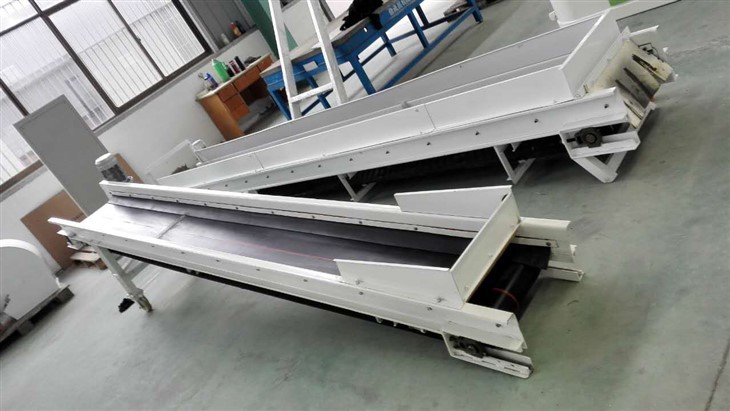
If you're in the chemical industry and are looking for a reliable solution for raw material processing, our hammer mills are a great option. We have a wide range of models to suit different production requirements. Our team of experts can also provide customized solutions based on your specific needs. Whether you're looking to process a small - scale batch or large - scale continuous production, we have the right equipment for you.
If you're interested in learning more about our hammer mills or would like to discuss your chemical processing needs, please reach out to us. We're eager to engage in discussions and provide you with the best possible solutions for your chemical raw material processing requirements.
References
- Perry, R. H., & Green, D. W. (1997). Perry's Chemical Engineers' Handbook. McGraw - Hill.
- Svarovsky, L. (1990). Solid - Liquid Separation. Butterworth - Heinemann.