

Hey there! As a supplier of Feed Mill Crumblers, I often get asked if there are any regulations for using these machines. Well, the answer is a bit complex, as it depends on various factors like the location, the type of feed being processed, and the scale of the operation. Let's dive into this topic and explore it in more detail.
Local and National Regulations
First off, local and national regulations play a huge role. Different countries and even different regions within a country can have their own set of rules regarding feed production equipment, including Feed Mill Crumblers. For example, in some areas, there are strict environmental regulations. These might require you to have proper dust collection systems in place to prevent air pollution. The dust generated during the crumbling process can contain fine particles of feed, which if released into the atmosphere, can be a health hazard and also contribute to environmental degradation.
Another aspect of local regulations could be related to noise pollution. Feed Mill Crumblers can be quite noisy, especially when they're running at full capacity. So, some places might have limits on the decibel level that your equipment can produce. You might need to invest in sound - proofing materials or install the machine in a way that minimizes the noise impact on the surrounding area.
In terms of national regulations, food safety is a major concern. Since the feed produced by these machines is going to be consumed by animals, it has to meet certain quality and safety standards. For instance, there could be regulations regarding the use of additives in the feed. Some additives might be restricted or banned altogether, and you need to make sure that your Feed Mill Crumbler is not being used to process feed with prohibited substances.
Industry - Specific Standards
The feed industry also has its own set of standards and best practices. If you're producing Poultry Feed Crumble Machine, there are specific requirements for the size and quality of the crumbles. Poultry have different nutritional needs at different stages of their growth, and the feed has to be formulated and processed accordingly. The crumbles should be of a size that is easy for the poultry to consume, and they should have a consistent texture.
Similarly, for Pellet Crumbler Machine, the industry standards focus on the conversion of pellets into crumbles. The machine should be able to break down the pellets evenly without creating too much dust or fines. The crumbles should retain the nutritional value of the original pellets, and there should be minimal loss of nutrients during the crumbling process.
When it comes to Crumbler for Animal Feed, the standards vary depending on the type of animal. For example, feed for cattle might have different requirements compared to feed for pigs. Cattle need a coarser feed, while pigs can consume finer crumbles. The industry standards ensure that the feed is suitable for the specific digestive systems of the animals.
Operator Training and Safety Regulations
Safety is of utmost importance when using a Feed Mill Crumbler. Operators need to be properly trained to use the machine. They should know how to start and stop the machine safely, how to adjust the settings for different types of feed, and how to perform basic maintenance tasks.
There are also safety regulations regarding the design and operation of the machine. For example, the machine should have proper guards and safety switches to prevent operators from getting injured. The moving parts of the machine, such as the rollers or blades, should be protected to avoid accidental contact.

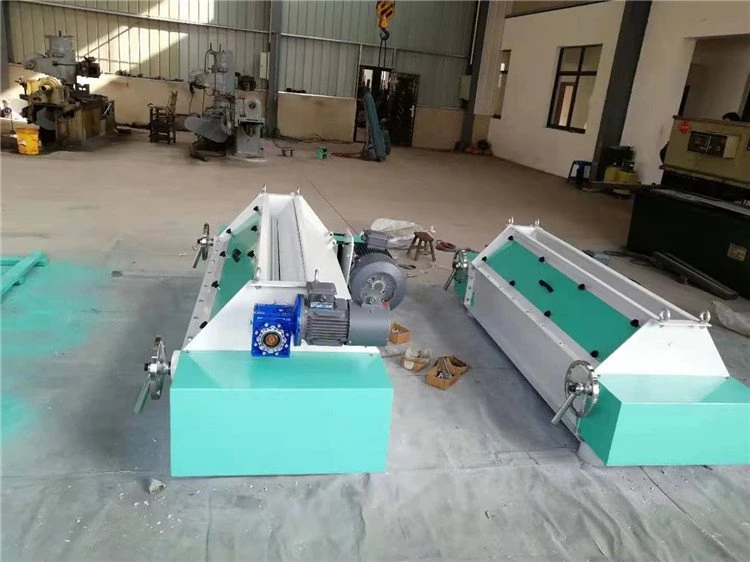
Regular safety inspections are also required. You need to check the machine for any signs of wear and tear, loose parts, or electrical problems. If any issues are found, they should be addressed immediately to prevent accidents.
Quality Control Regulations
Quality control is an essential part of using a Feed Mill Crumbler. You need to have a system in place to monitor the quality of the crumbles produced. This can involve regular sampling and testing of the feed. You might test for factors like moisture content, particle size distribution, and nutrient levels.
The moisture content of the feed is crucial because if it's too high, the feed can spoil quickly. On the other hand, if it's too low, the feed might be too dry and not palatable for the animals. The particle size distribution should be within a certain range to ensure that the animals can consume the feed easily.
Nutrient levels are also important. The feed should contain the right amount of proteins, carbohydrates, vitamins, and minerals. You need to make sure that the crumbling process doesn't affect the nutrient content of the feed.
Compliance and Certification
To ensure that you're meeting all the regulations and standards, it's a good idea to get your Feed Mill Crumbler and your operation certified. There are various certification bodies that can assess your equipment and processes and issue a certificate if you meet the requirements.
Having a certification can give your customers more confidence in your products. It shows that you're committed to producing high - quality, safe feed. It can also help you comply with regulations more easily, as the certification process often involves a thorough review of your operation.
Conclusion
So, to sum it up, there are definitely regulations for using a Feed Mill Crumbler. These regulations cover a wide range of areas, from environmental and safety concerns to industry - specific standards and quality control. As a supplier, I understand the importance of helping my customers navigate these regulations.
If you're in the market for a Feed Mill Crumbler and want to learn more about how to ensure compliance with all the relevant regulations, don't hesitate to reach out. We can have a detailed discussion about your specific needs and how our machines can meet them. Whether you're a small - scale farmer or a large - scale feed producer, we've got the right solution for you. Let's work together to produce high - quality feed that meets all the necessary standards.
References
- Various local and national government websites regarding environmental, food safety, and industrial regulations.
- Industry publications and research papers on feed production and equipment standards.
- Safety guidelines provided by equipment manufacturers.