

When it comes to transporting liquid materials, drag conveyors require a series of special designs to ensure efficient, safe, and reliable operation. As a seasoned drag conveyor supplier, we understand the unique challenges and requirements associated with liquid material transportation. In this blog post, we will explore the key special designs needed for a drag conveyor to handle liquid materials effectively.
Sealing and Leakage Prevention
One of the most critical aspects of transporting liquid materials is preventing leakage. Unlike solid materials, liquids can easily seep through small gaps or openings, leading to environmental contamination, loss of product, and potential safety hazards. Therefore, a drag conveyor for liquid materials must be designed with high - quality sealing mechanisms.
The conveyor trough should be fabricated with seamless construction or welded joints that are carefully sealed to prevent any liquid from escaping. Gaskets made of materials resistant to the specific liquid being transported, such as rubber or silicone, can be used at connection points, such as between trough sections or where the conveyor meets other equipment. Additionally, shaft seals at the drive and idler ends of the conveyor must be robust and capable of withstanding the pressure and chemical properties of the liquid.
Material Compatibility
The materials used in the construction of the drag conveyor must be compatible with the liquid being transported. Different liquids have varying chemical properties, such as acidity, alkalinity, and corrosiveness. For example, if the liquid is highly acidic, the conveyor components, including the chain, flight bars, and trough, should be made of corrosion - resistant materials like stainless steel or special alloys.
In some cases, the interior of the trough may need to be coated with a protective layer to further enhance its resistance to chemical attack. This coating can be a polymer or epoxy resin that provides a barrier between the liquid and the metal surface of the trough.
Flow Control and Distribution
To ensure uniform transportation of liquid materials, the drag conveyor needs to be designed with proper flow control and distribution mechanisms. Liquid materials tend to flow more freely than solids, and without proper control, they can accumulate in certain areas of the conveyor, leading to uneven loading and potential blockages.
One way to achieve better flow control is by using flight bars with specific shapes and configurations. For instance, flight bars with angled or curved surfaces can help guide the liquid along the trough in a more controlled manner. Additionally, baffles or dividers can be installed inside the trough to divide the flow and prevent excessive pooling.
Power and Drive System
Transporting liquid materials often requires more power compared to solid materials due to the higher resistance caused by the fluid's viscosity. The power and drive system of the drag conveyor must be sized appropriately to handle the additional load.
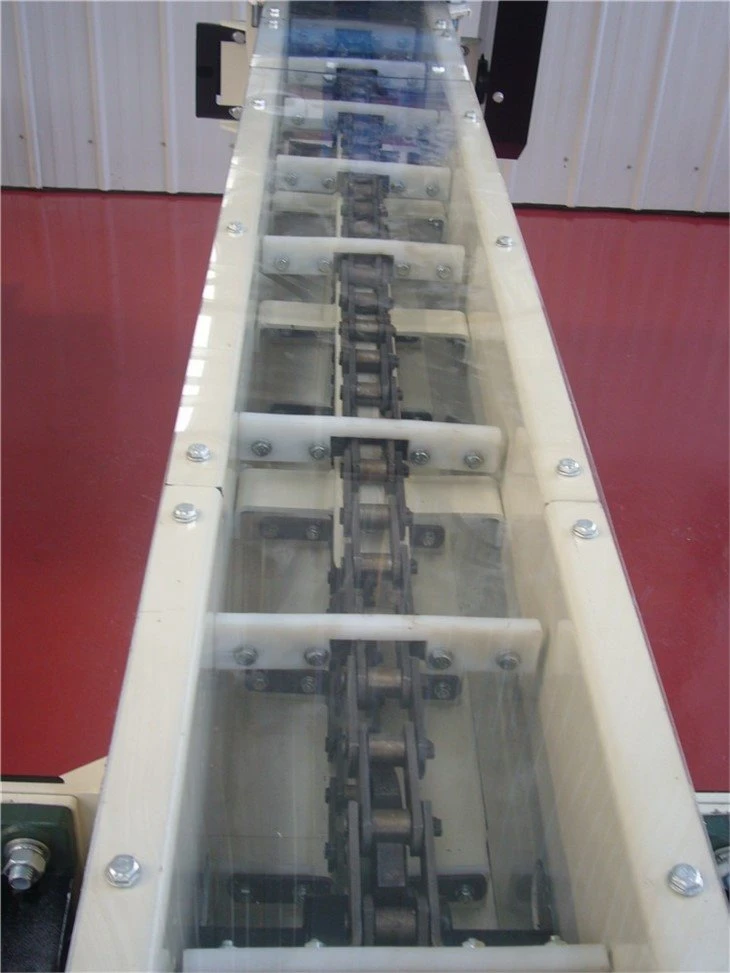
A more powerful motor may be required, and the gearbox should be selected to provide the necessary torque. The drive chain and sprockets also need to be designed to withstand the increased forces. For example, a heavier - duty chain with a larger pitch may be used to ensure reliable operation under the higher loads associated with liquid material transportation.
Cleaning and Maintenance
Liquid materials can leave residues inside the drag conveyor, which can lead to fouling, bacterial growth, and reduced performance over time. Therefore, the conveyor should be designed for easy cleaning and maintenance.
The trough should have access ports or inspection hatches at regular intervals to allow for visual inspection and cleaning. The chain and flight bars should be easy to remove and replace if necessary. Additionally, the conveyor can be designed with a self - cleaning feature, such as a flushing system that uses a cleaning solution to wash the interior of the trough.
Monitoring and Safety Features
Monitoring the operation of a drag conveyor transporting liquid materials is crucial for ensuring safety and efficiency. Sensors can be installed to monitor parameters such as liquid level, flow rate, temperature, and pressure.
For example, a level sensor can be used to prevent over - filling of the conveyor trough, which could lead to spillage. A flow rate sensor can help detect any blockages or irregularities in the liquid flow. Safety features such as emergency stop buttons and leak detection systems should also be incorporated into the conveyor design to protect personnel and the environment.
Examples of Our Specialized Drag Conveyors
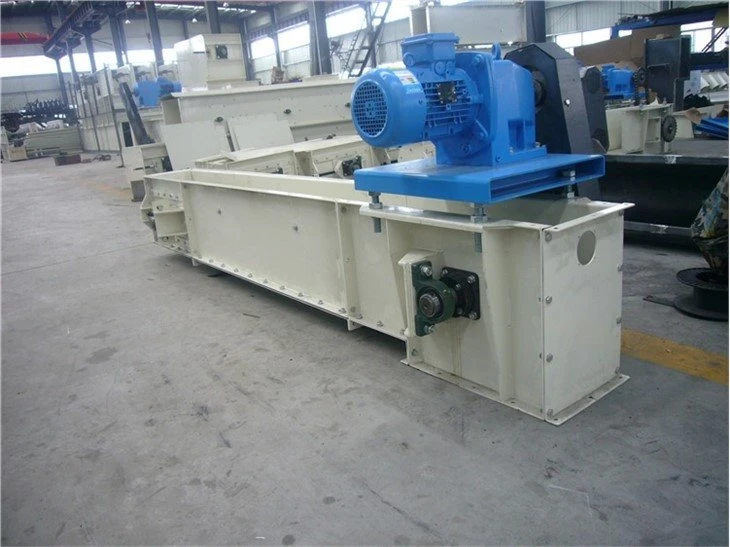
We offer a range of drag conveyors specifically designed for transporting liquid materials. Our Drag Chain Conveyor is a popular choice for many industries. It features a robust chain and flight bar system that can handle the high loads associated with liquid transportation. The trough is made of high - quality stainless steel and is sealed to prevent leakage.
Another option is our TGSSP Series Level Drag Conveyor. This conveyor is designed for horizontal transportation of liquid materials and is equipped with advanced flow control and distribution mechanisms to ensure uniform flow.
Conclusion
Transporting liquid materials with a drag conveyor requires a comprehensive set of special designs to address the unique challenges associated with liquids. From sealing and material compatibility to flow control and safety features, each aspect plays a crucial role in the efficient and reliable operation of the conveyor.
As a drag conveyor supplier, we have the expertise and experience to design and manufacture drag conveyors that meet the specific needs of liquid material transportation. If you are in need of a drag conveyor for your liquid material handling requirements, we invite you to contact us for a detailed consultation and to discuss your specific project needs. Our team of experts will work closely with you to provide a customized solution that meets your expectations.
References
- "Conveyor Equipment Handbook" by Conveyor Equipment Manufacturers Association
- "Chemical Resistance of Materials" by ASTM International
- "Fluid Mechanics for Engineers" by Robert W. Fox and Alan T. McDonald