

Hey there! As a supplier of Horizontal Mixers, I often get asked about how these nifty machines work. So, I thought I'd break it down for you in this blog post.
First off, let's talk about what a Horizontal Mixer is. It's a piece of equipment used in various industries, especially in the feed - milling sector. You can check out more about our Horizontal Mixer on our website. It's designed to blend different materials together evenly. Whether it's grains, powders, or even some liquid additives, a horizontal mixer can handle it all.
The Basic Design
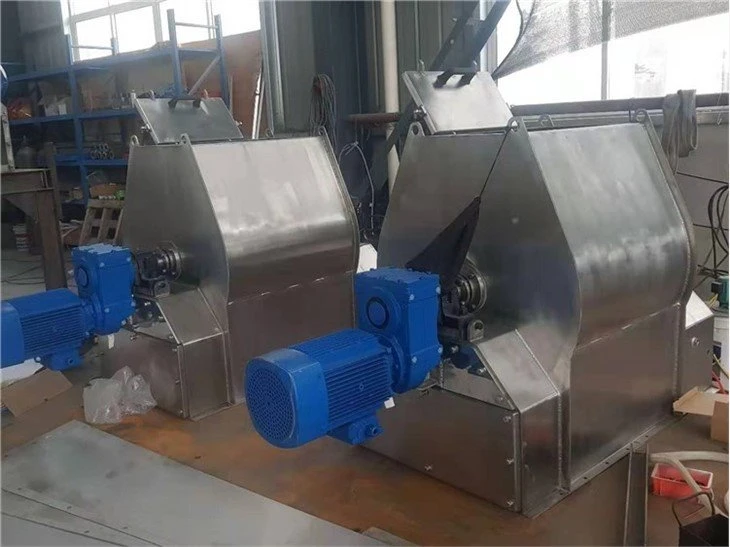
The horizontal mixer, as the name suggests, has a horizontal orientation. It typically consists of a long, cylindrical trough. Inside this trough, there are mixing elements, which are usually paddles or shafts. The shape of the trough and the design of the mixing elements play a crucial role in how well the mixer works.
How It All Starts: Loading the Materials
The process begins with loading the materials into the mixer. You can pour in dry ingredients like corn, soybeans, or different types of powders. If you're adding liquid additives, there are usually special ports or nozzles for that. The key here is to make sure that all the materials are distributed as evenly as possible at the start. This helps in achieving a more uniform mix later on.
The Mixing Action
Once the materials are loaded, the magic happens. The motor of the horizontal mixer starts up, and it begins to turn the mixing elements. There are different types of horizontal mixers, and each has its own way of mixing.
Feed Mill Paddle Mixer
One popular type is the Feed Mill Paddle Mixer. In this mixer, the paddles are attached to a central shaft. As the shaft rotates, the paddles move the materials around in the trough. The paddles are designed in such a way that they create a complex flow pattern. They lift the materials up from the bottom of the trough, move them across the length of the trough, and then let them fall back down. This constant up - and - down and side - to - side movement ensures that all the particles come into contact with each other multiple times.
The speed of the paddle rotation is also important. If it's too slow, the mixing might not be thorough enough. On the other hand, if it's too fast, it could cause the materials to separate or even damage some of the more delicate ingredients. So, there's a sweet spot for the rotation speed that depends on the type of materials being mixed.
Twin - shaft Paddle Mixer
Another type is the Twin - shaft Paddle Mixer. As the name implies, it has two shafts with paddles. The two shafts usually rotate in opposite directions. This creates a very intense mixing action. The materials are caught between the two sets of paddles, and they get sheared and blended together at a much faster rate compared to a single - shaft paddle mixer.
The counter - rotating action also helps in reducing the mixing time. It can achieve a high level of homogeneity in a relatively short period. This is great for large - scale operations where time is of the essence.
The Role of Mixing Time
The mixing time is a critical factor in getting a good mix. It depends on several things, such as the type of materials, the volume of the materials, and the design of the mixer. For example, if you're mixing fine powders, they might blend more quickly than larger grains. Also, if you have a large amount of material in the mixer, you'll probably need a longer mixing time.
It's important to note that over - mixing can be a problem too. If you mix the materials for too long, it could lead to the degradation of some of the ingredients. For instance, some vitamins or enzymes in animal feed could lose their effectiveness if they're over - mixed. So, it's all about finding that perfect balance.
Discharge of the Mixed Materials
Once the mixing is complete, it's time to get the mixed materials out of the mixer. Most horizontal mixers have a discharge gate at the bottom of the trough. When the gate is opened, the mixed materials flow out due to gravity. Some mixers might also have additional mechanisms to help with the discharge, like a screw conveyor or a pneumatic system.
Advantages of Horizontal Mixers
Horizontal mixers have several advantages that make them a popular choice in many industries. Firstly, they offer a high degree of mixing uniformity. This is crucial, especially in the feed - milling industry, where animals need a balanced diet. If the feed is not mixed properly, some animals might not get all the necessary nutrients.
Secondly, they are relatively easy to clean. Since the trough is horizontal, it's easier to access all parts of the mixer for cleaning. This is important to prevent cross - contamination between different batches of materials.
Thirdly, horizontal mixers are versatile. They can handle a wide range of materials, from dry powders to wet pastes. This makes them suitable for different applications, whether it's in the food industry, chemical industry, or animal feed production.
Maintenance
Like any piece of equipment, horizontal mixers need regular maintenance. This includes checking the motor, the bearings, and the mixing elements. The bearings should be lubricated regularly to ensure smooth operation. The mixing elements should be inspected for wear and tear, and replaced if necessary.
It's also important to keep the mixer clean. After each use, the trough should be emptied and cleaned to remove any残留 materials. This helps in preventing corrosion and ensuring the longevity of the mixer.
In Conclusion
So, there you have it! That's the working principle of a horizontal mixer in a nutshell. Whether you're in the business of making animal feed, producing chemicals, or any other industry that requires mixing, a horizontal mixer can be a great addition to your production line.
If you're interested in learning more about our horizontal mixers or if you're looking to purchase one for your business, feel free to reach out. We'd be more than happy to discuss your specific needs and find the perfect mixer for you. Let's start a conversation and see how we can help you improve your mixing process.

References
- "Industrial Mixing Equipment Handbook"
- "Feed Mill Technology and Operations"