

In the intricate landscape of feed production, the feed mill crumbler stands as a pivotal piece of equipment, transforming feed pellets into crumbles that are more palatable and digestible for various animals. At the heart of this operation lies the feeder, a component whose role is often underestimated but is, in fact, crucial for the overall efficiency and quality of the crumbler's output. As a leading supplier of Crumbler for Animal Feed, Pellet Crumbler Machine, and Poultry Feed Crumble Machine, I have witnessed firsthand the significant impact that the feeder has on the performance of the feed mill crumbler.
1. Feeder: The Gatekeeper of Material Flow
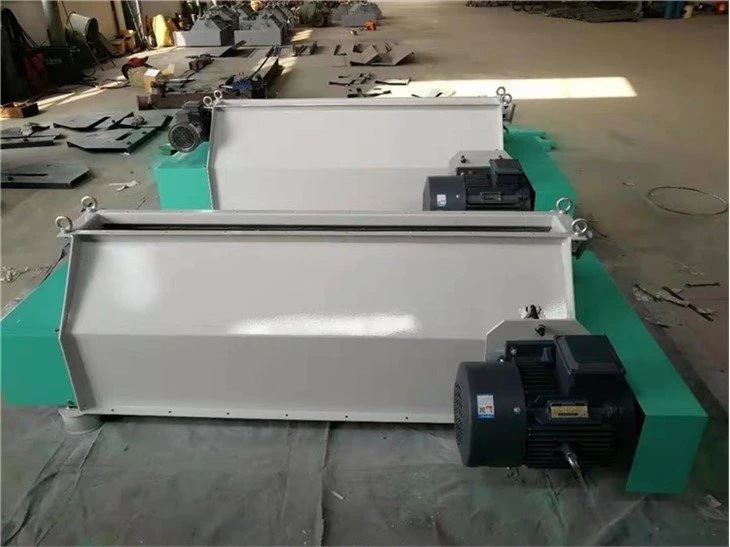
The primary function of the feeder in a feed mill crumbler is to regulate the flow of feed pellets into the crumbler. This is akin to a gatekeeper controlling the entry of cars into a busy highway. Just as an improper flow of traffic can lead to congestion and inefficiency, an irregular or excessive flow of pellets into the crumbler can cause a host of problems.
If the feeder allows too many pellets to enter the crumbler at once, the crumbler may become overloaded. This can result in uneven crumbling, with some pellets being crushed too finely while others remain only partially crumbled. Overloading can also put excessive stress on the crumbler's components, leading to premature wear and tear and potentially costly breakdowns. On the other hand, if the flow of pellets is too slow, the crumbler may not operate at its optimal capacity, reducing overall productivity.
To ensure a consistent and appropriate flow of pellets, modern feeders are equipped with advanced control systems. These systems can adjust the feeding rate based on various factors, such as the size and density of the pellets, the desired output of the crumbler, and the current operating conditions. For example, if the pellets are larger or denser, the feeder can slow down the feeding rate to allow the crumbler more time to process each pellet effectively.
2. Ensuring Uniformity in Crumbling
Another crucial role of the feeder is to promote uniformity in the crumbling process. Uniformity is essential because it directly affects the quality of the final feed product. Animals, especially young or sensitive ones, require a consistent diet to ensure proper growth and development. If the crumbled feed has a wide range of particle sizes, some animals may selectively eat the finer particles, leaving the coarser ones behind. This can lead to nutritional imbalances and reduced feed efficiency.
The feeder contributes to uniformity by distributing the pellets evenly across the width of the crumbler's inlet. This ensures that all parts of the crumbler's crushing mechanism are utilized equally, resulting in a more consistent crumbling effect. Some feeders are designed with special features, such as vibrating trays or rotating augers, to help spread the pellets evenly. These features prevent the formation of clumps or uneven piles of pellets, which could otherwise lead to inconsistent crumbling.
In addition, the feeder can help maintain uniformity by ensuring a continuous supply of pellets. A sudden interruption in the pellet flow can cause the crumbler to produce inconsistent results, as the crushing mechanism may need to adjust to the change in load. By providing a steady stream of pellets, the feeder allows the crumbler to operate smoothly and produce a more uniform product.
3. Protecting the Crumbler from Contaminants
The feeder also plays a role in protecting the crumbler from contaminants. In a feed mill environment, there is always a risk of foreign objects, such as metal fragments, stones, or pieces of wood, entering the feed stream. These contaminants can cause significant damage to the crumbler's components, such as the rolls or the bearings, if they are not removed before reaching the crumbler.
Many feeders are equipped with screening or magnetic separation devices to remove contaminants from the pellet stream. Screening devices use a mesh or sieve to separate larger particles from the pellets, while magnetic separators use magnets to attract and remove metal objects. By removing these contaminants at the feeder stage, the risk of damage to the crumbler is significantly reduced, ensuring the longevity and reliability of the equipment.
4. Enhancing Operational Efficiency
From an operational perspective, the feeder can enhance the overall efficiency of the feed mill crumbler. By regulating the pellet flow and ensuring uniformity, the feeder helps the crumbler operate at its maximum capacity. This means that more feed can be processed in a shorter amount of time, increasing productivity and reducing production costs.
Moreover, the feeder's ability to protect the crumbler from contaminants and excessive wear and tear reduces the need for frequent maintenance and repairs. This not only saves time and money but also minimizes downtime, allowing the feed mill to operate continuously and meet production targets.
In addition, modern feeders are designed to be energy-efficient. They use advanced motor control systems and low-power consumption components to reduce energy usage without sacrificing performance. This is an important consideration for feed mills, as energy costs can be a significant portion of the overall production expenses.
5. Integration with the Feed Mill System
The feeder in a feed mill crumbler is not an isolated component but rather an integral part of the entire feed mill system. It needs to be seamlessly integrated with other equipment, such as the pellet mill, the conveyor belts, and the control system, to ensure smooth and efficient operation.
For example, the feeder can be synchronized with the pellet mill to receive the pellets as soon as they are produced. This eliminates the need for intermediate storage and reduces the risk of pellet degradation. The feeder can also communicate with the conveyor belts to ensure a continuous flow of pellets from the storage area to the crumbler.
Furthermore, the feeder can be connected to the feed mill's control system, allowing operators to monitor and adjust the feeding rate remotely. This provides greater flexibility and control over the production process, enabling operators to respond quickly to changes in production requirements or operating conditions.

Conclusion
In conclusion, the feeder in a feed mill crumbler plays a multifaceted and indispensable role. It regulates the flow of pellets, ensures uniformity in crumbling, protects the crumbler from contaminants, enhances operational efficiency, and integrates seamlessly with the feed mill system. As a supplier of high-quality Crumbler for Animal Feed, Pellet Crumbler Machine, and Poultry Feed Crumble Machine, we understand the importance of a well-designed and reliable feeder. Our feeders are engineered to meet the highest standards of performance and durability, ensuring that your feed mill crumbler operates at its best.
If you are in the market for a feed mill crumbler or looking to upgrade your existing equipment, we invite you to contact us for a detailed discussion. Our team of experts is ready to assist you in selecting the right feeder and crumbler combination for your specific needs. Let us work together to improve the quality and efficiency of your feed production process.
References
- Feed Mill Technology Handbook, various authors
- Journal of Animal Feed Science and Technology, multiple issues
- Proceedings of International Feed Industry Conferences, various years