

As a supplier of Impeller Feeders, I often get asked about the relationship between the impeller diameter and the feeding capacity. It's a crucial topic that can significantly impact the efficiency and performance of your feeding system. So, let's dive right in and explore this relationship in detail.
First off, what exactly is an impeller feeder? Well, it's a device that uses a rotating impeller to dispense materials at a controlled rate. These feeders are commonly used in various industries, including agriculture, food processing, and chemical manufacturing, to name a few. They're great for handling powders, granules, and other dry materials, ensuring a consistent and accurate flow.
Now, let's talk about the impeller diameter. The diameter of the impeller is one of the most important factors that determine the feeding capacity of an impeller feeder. In simple terms, the larger the impeller diameter, the greater the feeding capacity. This is because a larger impeller can move more material in a single rotation compared to a smaller one.
Think of it like a scoop. If you have a big scoop, you can pick up more ice cream in one go than a small scoop. Similarly, a larger impeller can pick up and transport more material in each revolution, resulting in a higher feeding rate.
But it's not as straightforward as just getting the biggest impeller you can find. There are other factors that come into play, too. For example, the speed of the impeller rotation also affects the feeding capacity. The faster the impeller spins, the more material it can move. However, there's a limit to how fast you can spin the impeller. If it spins too fast, the material may not be able to keep up, leading to inconsistent feeding or even clogging.

Another factor is the type of material being fed. Different materials have different flow properties. Some materials flow easily, like fine powders, while others are more difficult to handle, like sticky or fibrous materials. The impeller diameter needs to be chosen based on the characteristics of the material to ensure optimal feeding performance.
For instance, if you're feeding a free-flowing powder, a smaller impeller with a higher rotational speed might work well. On the other hand, if you're dealing with a sticky material, a larger impeller may be needed to prevent clogging and ensure a steady flow.
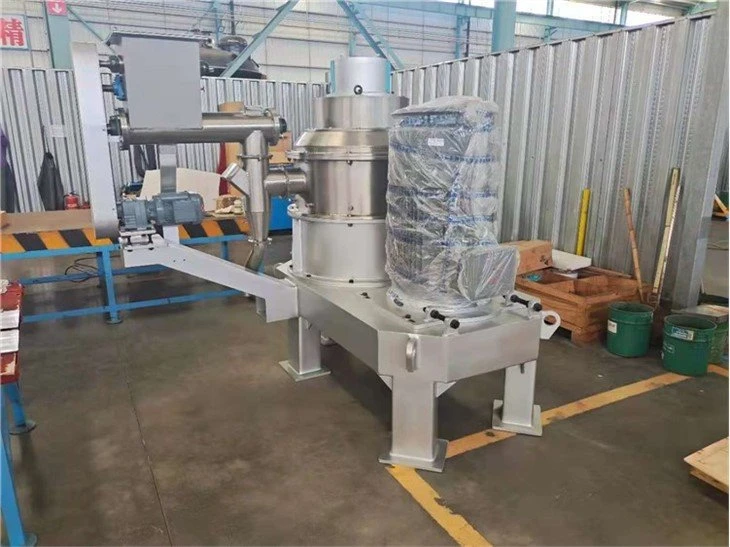
Let's take a look at some practical examples. Say you're using an impeller feeder in a SWFL Series Ultra-fine Pulverizer. This type of pulverizer is designed to produce ultra-fine particles, and it requires a precise and consistent feeding of the raw material. In this case, you need to choose an impeller diameter that can provide the right amount of material to the pulverizer without overloading it.
If the impeller diameter is too small, the feeding capacity may be insufficient, leading to a slow production rate. On the other hand, if the impeller diameter is too large, it may feed too much material at once, causing the pulverizer to jam or produce inconsistent results.
Similarly, in an Ultra-fine Pulverizer, the relationship between the impeller diameter and the feeding capacity is crucial for achieving the desired particle size and production efficiency. The impeller needs to be sized correctly to ensure a smooth and continuous flow of material into the pulverizer.
In a Poultry Feed Hammer Mill, the impeller feeder is responsible for delivering the feed ingredients to the mill at a consistent rate. The impeller diameter should be chosen based on the capacity of the mill and the type of feed being processed. A proper impeller diameter will ensure that the mill operates efficiently and produces high-quality feed.
To determine the optimal impeller diameter for your specific application, you need to consider several factors. These include the desired feeding rate, the characteristics of the material, the speed of the impeller, and the capacity of the downstream equipment. It's often a good idea to consult with an expert or the manufacturer of the impeller feeder to get the right advice.
At our company, we have a wide range of impeller feeders with different impeller diameters to suit various applications. We can help you choose the right feeder based on your specific requirements. Our team of experts has years of experience in the industry and can provide you with valuable insights and recommendations.
If you're looking to improve the feeding capacity of your system or upgrade your existing impeller feeder, we're here to help. We offer high-quality impeller feeders that are designed to provide reliable and efficient performance. Our feeders are built to last, with durable materials and precision engineering.
Whether you're in the agricultural, food processing, or chemical industry, we have the right impeller feeder for you. Don't hesitate to reach out to us to discuss your needs and get a quote. We're always happy to answer your questions and help you find the best solution for your business.
In conclusion, the relationship between the impeller diameter and the feeding capacity is a complex one that depends on several factors. By understanding these factors and choosing the right impeller diameter for your application, you can ensure a consistent and efficient feeding process. If you have any questions or need more information, feel free to contact us. We're here to support you every step of the way.
References
- "Handbook of Powder Technology: Volume 1, Particle Size Analysis" by Allen, T.
- "Powder Handling and Processing Handbook" by Beddow, J. K.
- "Industrial Feeding Technology" by Pietsch, W.