

What is the noise level of a Counterflow Cooler?
As a supplier of counterflow coolers, I often receive inquiries from customers about various aspects of our products, and one question that comes up quite frequently is about the noise level of a counterflow cooler. In this blog post, I'll delve into this topic in detail, explaining what factors affect the noise level, typical noise levels you can expect, and how we ensure our counterflow coolers operate with minimal noise.
Factors Affecting the Noise Level of a Counterflow Cooler
-
Fan Operation
The fans in a counterflow cooler play a crucial role in the cooling process. They are responsible for drawing in ambient air and forcing it through the cooler to cool down the hot feed pellets. The size, speed, and design of the fans can significantly impact the noise level. Larger fans running at high speeds tend to generate more noise compared to smaller, more efficient fans. Additionally, the blade design of the fans can also affect the noise. Fans with well - designed blades that are aerodynamically optimized can reduce turbulence and thus lower the noise level. -
Motor Vibration
The motors that drive the fans and other moving parts in the counterflow cooler can be a source of noise. Motor vibration can cause rattling and humming sounds. The quality of the motor and its mounting can make a big difference. High - quality motors with proper vibration isolation mounts can minimize the transmission of vibration to the cooler structure, reducing the overall noise level. -
Airflow Turbulence
When air flows through the cooler, turbulence can occur. This can happen at various points, such as when the air enters the cooler, passes through the pellet bed, or exits the cooler. Turbulent airflow creates noise, similar to the sound of wind blowing through a narrow passage. The design of the cooler's air ducts and the arrangement of the internal components can influence the airflow pattern and reduce turbulence. -
Structural Resonance
The structure of the counterflow cooler itself can resonate at certain frequencies, amplifying the noise. If the cooler is not properly designed or constructed, it may have natural frequencies that coincide with the frequencies generated by the fans or motors. This resonance can lead to louder noise levels. Proper structural design and the use of damping materials can help prevent resonance.
Typical Noise Levels of Counterflow Coolers
The noise level of a counterflow cooler can vary depending on its size, capacity, and the specific design features. In general, smaller counterflow coolers with lower capacities tend to have lower noise levels, usually in the range of 60 - 70 decibels (dB). These are comparable to the noise level of normal conversation in a quiet room.
Larger counterflow coolers with higher capacities, which are often used in industrial - scale feed production facilities, may have noise levels in the range of 70 - 80 dB. This is similar to the noise level of a busy office or a vacuum cleaner.
It's important to note that these are just approximate ranges, and the actual noise level can be affected by the factors mentioned above. For example, a well - designed large - capacity counterflow cooler with advanced noise - reduction features may have a noise level closer to the lower end of the range.
Our Approach to Reducing Noise in Counterflow Coolers
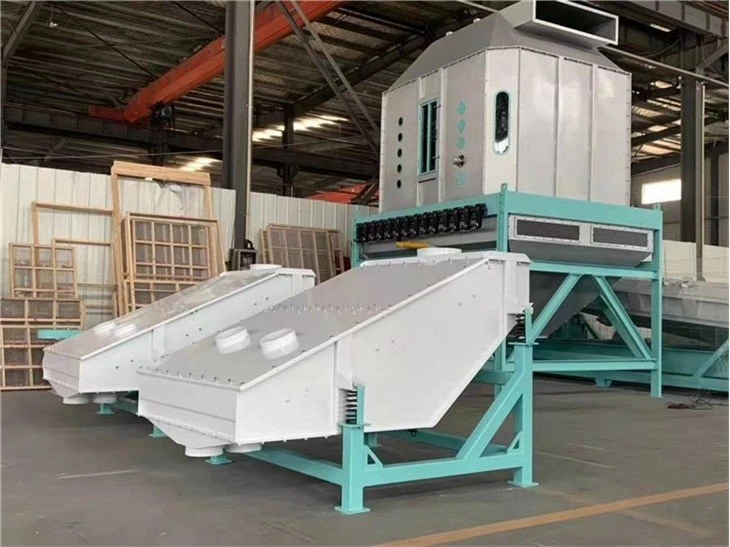
At our company, we understand that noise can be a concern for our customers, especially in facilities where workers are in close proximity to the coolers. That's why we take several measures to ensure our counterflow coolers operate as quietly as possible.

-
Fan Selection and Design
We carefully select fans that are not only efficient in terms of airflow but also designed to minimize noise. Our fans have aerodynamically optimized blades that reduce turbulence and noise. We also use variable - speed fans in some of our models. This allows us to adjust the fan speed according to the cooling requirements, reducing the noise when full - speed operation is not necessary. -
Motor Quality and Mounting
We use high - quality motors from reputable manufacturers. These motors are designed to operate smoothly with minimal vibration. Additionally, we install vibration isolation mounts to prevent the motor vibration from being transmitted to the cooler structure. This significantly reduces the noise generated by the motors. -
Airflow Optimization
Our engineers pay close attention to the airflow design in our counterflow coolers. We use computational fluid dynamics (CFD) simulations to analyze and optimize the airflow pattern. By reducing turbulence and ensuring a smooth airflow through the cooler, we can minimize the noise associated with airflow. -
Structural Design and Damping
We design our counterflow coolers with a focus on preventing structural resonance. We use advanced engineering techniques to calculate the natural frequencies of the cooler structure and ensure that they do not coincide with the frequencies generated by the fans or motors. We also incorporate damping materials in the cooler structure to absorb vibrations and reduce noise.
The Importance of Low - Noise Counterflow Coolers
In addition to providing a more comfortable working environment for employees, low - noise counterflow coolers offer several other benefits.
-
Compliance with Regulations
Many countries and regions have regulations regarding noise levels in industrial facilities. By using low - noise counterflow coolers, our customers can ensure that their operations are in compliance with these regulations, avoiding potential fines and legal issues. -
Improved Productivity
Excessive noise can be a distraction for workers, leading to reduced productivity. A quieter working environment allows employees to focus better on their tasks, resulting in higher efficiency and fewer errors. -
Enhanced Reputation
Companies that prioritize the well - being of their employees and the environment by using low - noise equipment can enhance their reputation. This can be an important factor in attracting and retaining customers, as well as in building a positive brand image.
Our Counterflow Cooler Products
We offer a range of counterflow coolers to meet the diverse needs of our customers. Our Counterflow Feed Pellet Cooler is designed specifically for cooling feed pellets. It features advanced noise - reduction technologies, ensuring quiet operation even in high - capacity applications.
Another popular product is our SKLN Counterflow Cooler. This cooler is known for its energy efficiency and low noise level. It has a compact design, making it suitable for smaller feed production facilities where space is limited.
Contact Us for Purchase and Negotiation
If you're interested in our counterflow coolers and would like to learn more about their noise levels, performance, or pricing, we encourage you to contact us. Our team of experts is ready to assist you with any questions you may have and to guide you through the purchasing process. Whether you're a small - scale feed producer or a large industrial facility, we have the right counterflow cooler solution for you.
References
- ASHRAE Handbook - HVAC Systems and Equipment. American Society of Heating, Refrigerating and Air - Conditioning Engineers.
- Industrial Noise Control and Acoustics. C. M. Harris, McGraw - Hill.
- Principles of Feed Pelleting. R. C. Newkirk, Feed Pelleting Technology.