

Hey there! As a supplier of counterflow coolers, I often get asked about the maximum temperature difference these machines can handle. It's a crucial question, especially for those in the feed pellet industry where efficient cooling is key to producing high - quality products.
Let's first understand what a counterflow cooler is. A counterflow cooler, like the SKLN Counterflow Cooler and Counterflow Feed Pellet Cooler, works on the principle of counter - current flow. That means the hot feed pellets move down through the cooler while the cool air moves up. This design allows for efficient heat transfer, ensuring that the pellets are cooled effectively.
Now, back to the main question: what's the maximum temperature difference a counterflow cooler can handle? Well, it depends on several factors.
Design and Construction
The design of the cooler plays a huge role. A well - designed counterflow cooler with proper insulation and a good air distribution system can handle larger temperature differences. For example, if the cooler has a thick insulation layer, it can prevent heat from leaking out during the cooling process. This helps in maintaining a large temperature gradient between the hot pellets and the cool air.
The size of the cooler also matters. Larger coolers generally have more space for the heat exchange to take place. They can accommodate a greater volume of hot pellets and a larger amount of cool air, which means they can handle a larger temperature difference. A big cooler can slowly cool the pellets, allowing for a more efficient heat transfer.
Airflow and Ventilation
The airflow rate and ventilation in the cooler are crucial. A high - velocity airflow can quickly remove the heat from the hot pellets. If the air is circulated properly, it can maintain a large temperature difference between the inlet and the outlet of the cooler. However, if the airflow is too low, the heat transfer will be inefficient, and the cooler may not be able to handle a large temperature difference.
Proper ventilation is also necessary to ensure that the hot air is removed from the system. If the hot air is not vented out, it will accumulate in the cooler, reducing the temperature difference and making the cooling process less effective.
Pellet Characteristics
The type and characteristics of the pellets being cooled also affect the maximum temperature difference the cooler can handle. Different types of feed pellets have different heat capacities. For example, pellets made from high - protein ingredients may have a higher heat capacity than those made from grains. This means that they require more energy to cool down, and the cooler may need to work harder to achieve a large temperature difference.
The moisture content of the pellets is another important factor. Pellets with a high moisture content will release more latent heat during the cooling process. This can make the cooling process more complex and may limit the maximum temperature difference the cooler can handle.
Real - World Examples
In most industrial applications, a well - designed counterflow cooler can handle a temperature difference of around 30 - 50 degrees Celsius. For instance, if the hot pellets enter the cooler at a temperature of 80 degrees Celsius, the cooler can cool them down to around 30 - 50 degrees Celsius, depending on the factors mentioned above.

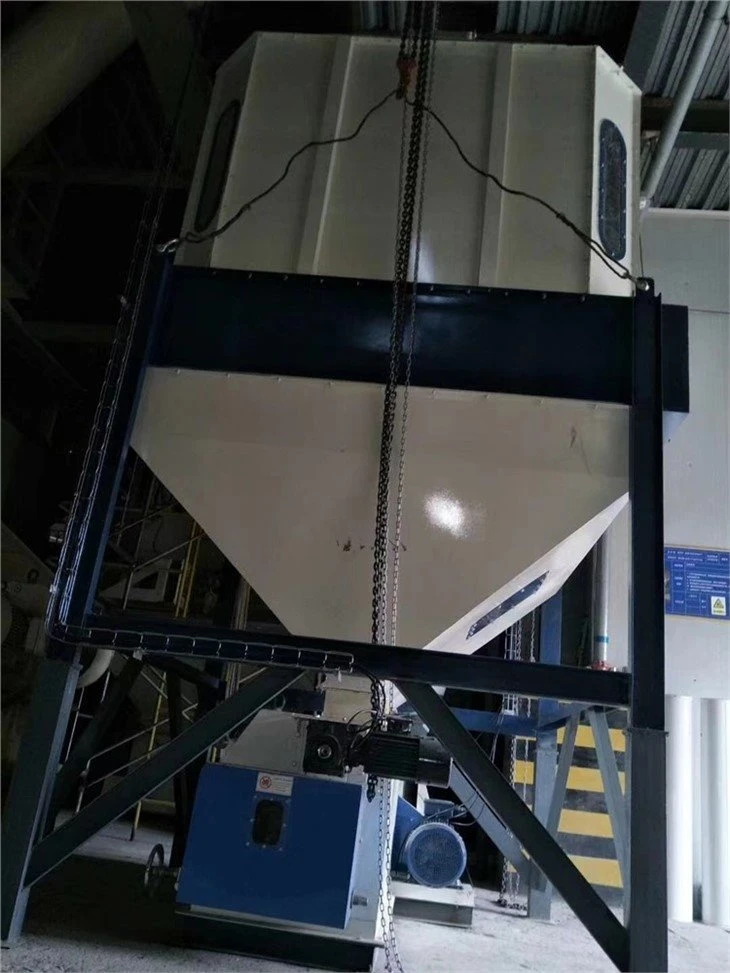
However, in some cases, with advanced technology and optimal operating conditions, it's possible to achieve even larger temperature differences. Some high - end counterflow coolers can handle temperature differences of up to 60 degrees Celsius or more. But this usually requires a very precise control of the airflow, ventilation, and pellet characteristics.
Importance of Handling High Temperature Differences
Handling a large temperature difference is important for several reasons. Firstly, it ensures that the pellets are cooled quickly and efficiently. This helps in reducing the time required for the cooling process, which can increase the overall production rate.
Secondly, proper cooling helps in maintaining the quality of the pellets. If the pellets are not cooled properly, they may become soft or sticky, which can affect their storage and handling. A large temperature difference ensures that the pellets are cooled to the right temperature, making them hard and durable.
Tips for Maximizing Temperature Difference Handling
If you want to get the most out of your counterflow cooler and maximize its ability to handle temperature differences, here are some tips:
- Regular Maintenance: Keep the cooler clean and well - maintained. This includes checking the insulation, airflow systems, and ventilation ducts. A dirty or poorly maintained cooler will not be able to perform at its best.
- Optimal Airflow: Adjust the airflow rate according to the type and volume of the pellets being cooled. You can use dampers or fans to control the airflow and ensure that it is evenly distributed throughout the cooler.
- Pellet Quality Control: Ensure that the pellets have a consistent quality in terms of their composition and moisture content. This will make the cooling process more predictable and efficient.
Conclusion
So, in conclusion, the maximum temperature difference a counterflow cooler can handle depends on various factors such as design, airflow, pellet characteristics, and ventilation. While most coolers can handle a temperature difference of 30 - 50 degrees Celsius, it's possible to achieve larger differences with advanced technology and proper operation.
If you're in the market for a counterflow cooler and want to discuss how it can handle the temperature differences in your specific application, feel free to reach out. We're here to help you find the best solution for your cooling needs. Whether you're looking for a SKLN Counterflow Cooler or a Counterflow Feed Pellet Cooler, we've got you covered. Contact us today to start the procurement and negotiation process!
References
- "Industrial Cooling Systems: Principles and Applications" - A textbook on cooling systems in industrial settings.
- "Feed Pellet Production: Technology and Quality Control" - A book that discusses the production and cooling of feed pellets.