

What is the length range of a U - Drag Conveyor?
As a supplier of U - Drag Conveyors, I often get asked about the length range of these conveyors. U - Drag Conveyors are a popular choice in many industries due to their efficiency, reliability, and versatility in handling a wide variety of materials. In this blog post, I'll delve into the factors that influence the length of U - Drag Conveyors and explore the typical length ranges available.
Factors Affecting the Length of U - Drag Conveyors
Material Characteristics
The type of material being conveyed plays a crucial role in determining the appropriate length of a U - Drag Conveyor. For instance, materials with high abrasiveness can cause more wear and tear on the conveyor components, especially over longer distances. This may limit the practical length of the conveyor to ensure its longevity and reduce maintenance costs. On the other hand, free - flowing materials can be conveyed over longer distances more easily as they offer less resistance to the movement of the drag chain.
Conveyor Capacity
The required capacity of the conveyor also impacts its length. If a high volume of material needs to be transported within a specific time frame, a longer conveyor may be necessary to accommodate the flow. However, increasing the length also means that more power is required to drive the conveyor, which can lead to higher energy costs. Therefore, a balance must be struck between capacity and length to optimize the conveyor's performance and cost - effectiveness.
Drive System
The power and efficiency of the drive system are essential considerations when determining the length of a U - Drag Conveyor. A more powerful drive system can handle longer conveyors by providing sufficient force to move the material and the drag chain. However, the design and quality of the drive system also affect its reliability and maintenance requirements. For example, a well - designed drive system with proper lubrication and cooling mechanisms can operate smoothly over longer distances.
Installation Space
The available installation space is a practical constraint that often determines the maximum length of a U - Drag Conveyor. In industrial facilities, space may be limited, and the conveyor must be designed to fit within the available footprint. This may require the use of custom - designed conveyors or the incorporation of bends and curves to navigate around obstacles.
Typical Length Ranges of U - Drag Conveyors
Short - Length U - Drag Conveyors
Short - length U - Drag Conveyors typically range from a few meters to around 10 meters. These conveyors are commonly used in applications where the material needs to be transported over a relatively short distance, such as within a single production unit or between adjacent processing equipment. They are often used for feeding materials into crushers, mixers, or packaging machines.
Short - length conveyors are generally more compact and require less power to operate. They are also easier to install and maintain, making them a cost - effective solution for small - scale operations. For example, in a small food processing plant, a short U - Drag Conveyor can be used to transfer ingredients from a storage bin to a mixing tank.
Medium - Length U - Drag Conveyors
Medium - length U - Drag Conveyors usually have a length ranging from 10 meters to 30 meters. These conveyors are suitable for applications where the material needs to be transported across multiple production areas or between different floors of a building. They can handle a larger volume of material compared to short - length conveyors and are often used in industries such as mining, agriculture, and manufacturing.
In a mining operation, a medium - length U - Drag Conveyor can be used to transport ore from a crusher to a storage silo. The conveyor's length allows for efficient material handling over a greater distance while still maintaining a reasonable level of control and reliability.
Long - Length U - Drag Conveyors
Long - length U - Drag Conveyors can extend beyond 30 meters and are used in large - scale industrial applications where the material needs to be transported over significant distances. These conveyors are commonly found in industries such as power generation, cement production, and large - scale mining.
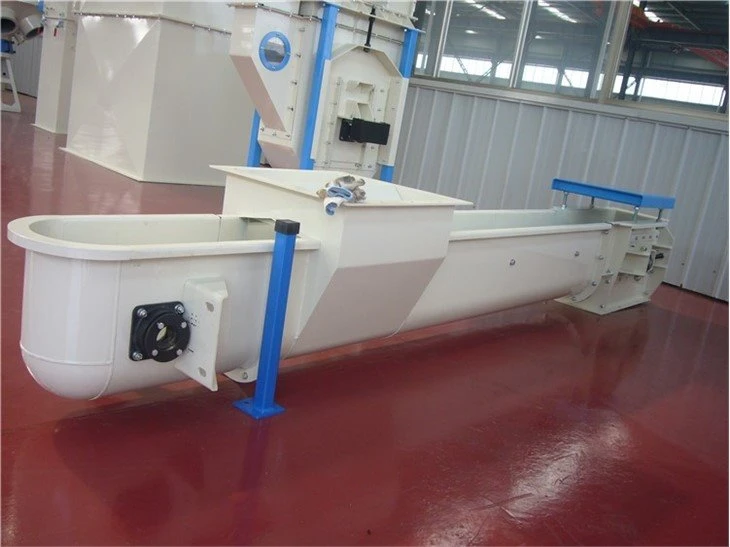

In a power plant, a long U - Drag Conveyor may be used to transport coal from the storage yard to the boiler. The conveyor's length enables continuous and efficient delivery of fuel, ensuring the smooth operation of the power generation process. However, long - length conveyors require more complex engineering and design to ensure proper tensioning of the drag chain, adequate support, and reliable power transmission.
Our U - Drag Conveyor Offerings
We offer a wide range of U - Drag Conveyors to meet the diverse needs of our customers. Our Series U - Drag Conveyor is designed with high - quality materials and advanced engineering to ensure optimal performance and durability. Whether you need a short - length conveyor for a small - scale application or a long - length conveyor for a large - scale industrial project, we can provide a customized solution.
Our U - drag Chain Conveyor is another popular option. It features a robust chain design that can handle heavy loads and abrasive materials. The chain is precisely engineered to ensure smooth operation and minimal wear, reducing maintenance costs and downtime.
Contact Us for Your U - Drag Conveyor Needs
If you're in the market for a U - Drag Conveyor, we'd love to hear from you. Our team of experts can help you determine the most suitable length and configuration for your specific application. We'll work closely with you to understand your requirements, provide detailed technical specifications, and offer competitive pricing.
Whether you're a small business looking for a cost - effective solution or a large corporation in need of a high - performance conveyor, we have the expertise and resources to meet your needs. Contact us today to start the conversation about your U - Drag Conveyor project.
References
- Conveyor Handbook: A Comprehensive Guide to Conveyor Design and Operation, 3rd Edition.
- Industrial Conveying Equipment: Principles and Applications, 2nd Edition.