

Hey there! As a supplier of U - Drag Conveyors, I often get asked about the height range of these nifty pieces of equipment. So, let's dive right in and talk about what you can expect when it comes to the height of a U - Drag Conveyor.
First off, it's important to understand that the height range of a U - Drag Conveyor isn't set in stone. There are a bunch of factors that can influence it, like the type of material you're conveying, the capacity you need, and the layout of your facility.
Factors Affecting the Height
Material Characteristics
The material you're moving through the conveyor plays a huge role. If you're dealing with lightweight, free - flowing materials like grains or powders, the conveyor can usually handle a wider height range. On the other hand, if you're conveying heavy, sticky, or abrasive materials, you might need to keep the height a bit more in check. For example, moving sand might require a different height setup compared to moving plastic pellets.
Capacity Requirements
How much material you need to move per hour also matters. Higher capacity conveyors might need to be designed with a different height to ensure smooth and efficient operation. If you're running a large - scale production line, you'll want to make sure the conveyor can handle the volume without any issues. A smaller - scale operation might be able to get away with a more flexible height range.
Facility Layout
The layout of your facility is another key factor. You need to consider where the conveyor will be installed, how it will fit in with other equipment, and any height restrictions in the area. Maybe you have low - ceilinged areas in your warehouse or need to connect the conveyor to other machinery at a specific height. All these things will impact the height range you can choose.
Typical Height Ranges
In general, U - Drag Conveyors can have a height range that varies quite a bit. For smaller, more compact models, the height can start as low as around 12 inches (30.5 cm). These are great for applications where space is limited or for use in smaller - scale operations.
On the other end of the spectrum, larger U - Drag Conveyors can reach heights of up to 10 feet (3.05 meters) or even more in some cases. These are often used in industrial settings where they need to transport materials over longer distances or to higher levels.
Let's take a closer look at some common height ranges based on different applications:
Small - Scale Operations
For small - scale food processing plants or small warehouses, you might find U - Drag Conveyors with heights ranging from 12 inches to 3 feet (0.3 - 0.91 meters). These conveyors are perfect for moving small amounts of materials like spices, small parts, or light packages. They're easy to install and can be customized to fit the specific needs of your operation.
Medium - Scale Operations
In medium - scale manufacturing facilities or medium - sized distribution centers, the height range typically falls between 3 feet and 6 feet (0.91 - 1.83 meters). These conveyors can handle a larger volume of materials and are often used to connect different parts of the production line. They can be adjusted to fit the layout of the facility and can be equipped with various accessories to improve efficiency.
Large - Scale Operations
Large - scale industrial plants, such as mines or large - scale grain processing facilities, often require U - Drag Conveyors with heights between 6 feet and 10 feet (1.83 - 3.05 meters) or more. These conveyors are designed to handle massive amounts of materials and can transport them over long distances or to high - elevation areas. They're built to be robust and reliable, with heavy - duty components that can withstand the rigors of continuous operation.
Customizing the Height
One of the great things about U - Drag Conveyors is that they can be customized to meet your specific height requirements. Whether you need a conveyor that fits into a tight space or one that can reach up to a high - level storage area, we can work with you to design the perfect solution.
We use advanced engineering techniques to ensure that the conveyor is not only the right height but also functions smoothly and efficiently. Our team of experts will take into account all the factors we mentioned earlier, such as material characteristics, capacity requirements, and facility layout, to come up with a customized design.
Benefits of Choosing the Right Height
Choosing the right height for your U - Drag Conveyor can have a number of benefits. First of all, it ensures that the conveyor operates at its best. If the height is too low, it might not be able to transport materials effectively, leading to blockages or slow - down in production. On the other hand, if the height is too high, it could put unnecessary stress on the conveyor components and increase the risk of breakdowns.
A properly - sized conveyor also improves safety in the workplace. It reduces the need for workers to reach or bend at awkward angles, which can help prevent injuries. Additionally, it can integrate better with other equipment in your facility, making the overall production process more streamlined.
U - Drag Conveyor Types and Their Height Considerations
There are different types of U - Drag Conveyors, each with its own height - related considerations.
U - drag Chain Conveyor
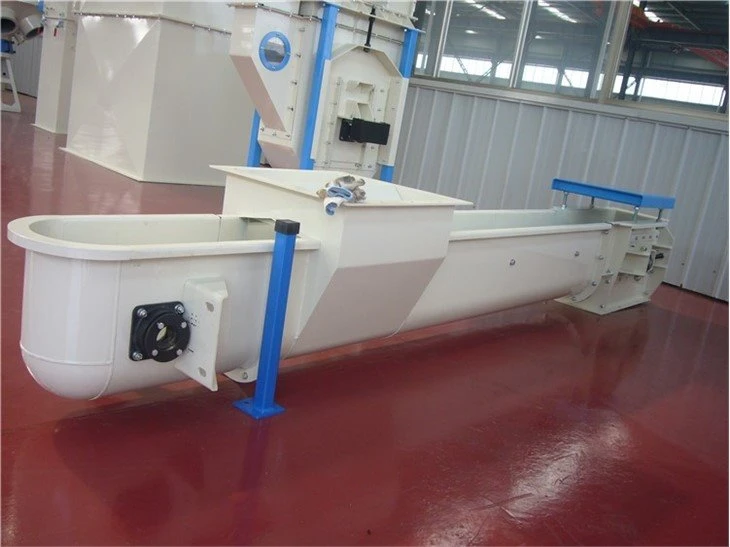
The U - drag Chain Conveyor is a popular choice for many applications. It uses a chain to move the material through the U - shaped trough. When it comes to height, the chain design allows for a relatively wide range. However, you need to make sure that the chain tension is properly adjusted at different heights to ensure smooth operation. The chain also needs to be strong enough to handle the weight of the material at the chosen height.
Series U - Drag Conveyor
The Series U - Drag Conveyor is another option. It's designed for specific series of applications and often comes with pre - engineered height options. These conveyors are known for their reliability and ease of use. When selecting a Series U - Drag Conveyor, you can choose from a range of heights that are optimized for the particular series of operations.
Wrapping Up
So, as you can see, the height range of a U - Drag Conveyor can vary widely depending on a number of factors. Whether you're looking for a small, compact conveyor or a large, industrial - grade one, there's a height option that will work for you.
If you're in the market for a U - Drag Conveyor and want to discuss your specific height requirements, don't hesitate to reach out. We're here to help you find the perfect solution for your operation. Our team of experts can guide you through the process, from design to installation, and ensure that you get a conveyor that meets all your needs.

Let's work together to make your material handling process more efficient and productive. Contact us today to start the conversation!
References
- Conveyor Handbook, Industry Standard Publications
- Material Handling Engineering Manual, Professional Engineering Resources