

Hey there! As a supplier of counterflow coolers, I often get asked about the differences between natural draft and forced draft counterflow coolers. So, I thought I'd take a moment to break it down for you in a way that's easy to understand.
Let's start with the basics. A counterflow cooler is a crucial piece of equipment in many industries, especially in the feed pellet manufacturing process. It's used to cool down hot pellets after they've been extruded, making them more stable and ready for storage or further processing. Now, when it comes to the type of draft, there are two main options: natural draft and forced draft.
Natural Draft Counterflow Cooler
A natural draft counterflow cooler relies on the natural movement of air to cool the pellets. You know how hot air rises? Well, that's the principle behind it. As the hot pellets enter the cooler, the warm air around them starts to rise. This creates a natural flow of air from the bottom of the cooler to the top. The cooler air from the outside is then drawn in through the bottom, and it moves up through the pellet bed, absorbing heat from the pellets as it goes.
One of the biggest advantages of a natural draft counterflow cooler is its simplicity. There are no fans or other mechanical devices required to move the air, which means there are fewer parts that can break down. This can lead to lower maintenance costs and less downtime. It's also a more energy - efficient option since it doesn't rely on electricity to move the air.
However, natural draft coolers do have their limitations. The cooling rate is often slower compared to forced draft coolers. The natural air movement is dependent on factors like temperature differences and air pressure, which can vary. In some cases, if the environmental conditions aren't ideal, the cooling process may not be as effective. For example, on a hot and humid day, the natural draft may not be strong enough to cool the pellets to the desired temperature.
Forced Draft Counterflow Cooler
On the other hand, a forced draft counterflow cooler uses fans to force air through the pellet bed. The fans blow air into the cooler at a controlled rate, ensuring a consistent and more powerful flow of air. This allows for a faster cooling rate compared to natural draft coolers.
The main advantage of a forced draft counterflow cooler is its ability to provide a more reliable and efficient cooling process. No matter what the environmental conditions are, the fans can keep the air moving through the pellets, ensuring that they reach the desired temperature quickly. This is especially important in large - scale production facilities where time is of the essence.
But, there are also some drawbacks. Forced draft coolers are more complex and have more mechanical components. This means that there's a higher risk of breakdowns, and maintenance can be more expensive. They also consume more energy since the fans need to be powered continuously.

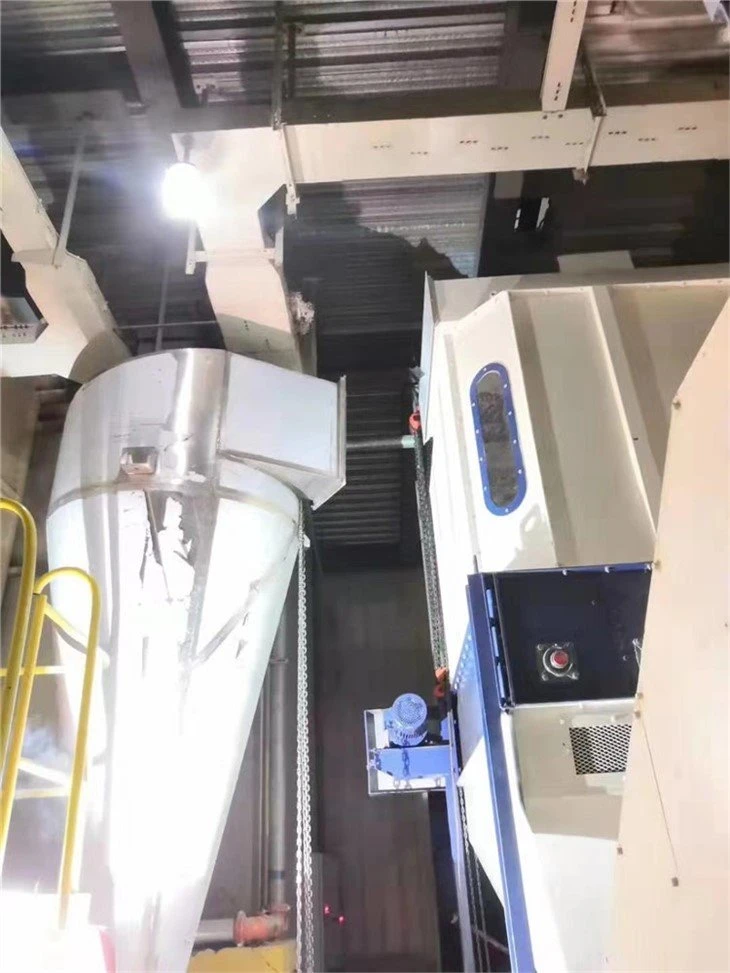
Comparison in Different Aspects
Cooling Efficiency
As mentioned earlier, forced draft coolers generally have a higher cooling efficiency. They can cool the pellets faster, which is great for high - volume production. Natural draft coolers, while they can do the job, may take longer to achieve the same level of cooling, especially in less - than - ideal conditions.
Energy Consumption
Natural draft coolers win in the energy consumption department. Since they don't use fans, they use significantly less energy. Forced draft coolers, with their fans running constantly, can be a major energy consumer. This is something to consider if you're looking to reduce your energy costs.
Maintenance
Natural draft coolers are simpler in design, so they typically require less maintenance. There are no fans to service or replace, and fewer moving parts mean fewer things that can go wrong. Forced draft coolers, on the other hand, need regular maintenance on the fans and other mechanical components to keep them running smoothly.
Cost
In terms of upfront cost, natural draft coolers are usually cheaper. They don't require the additional expense of fans and the associated control systems. However, when you factor in the long - term costs, including energy consumption and maintenance, the picture can be more complex. Forced draft coolers may have a higher initial cost, but their faster cooling rate can lead to increased production, which may offset the additional expenses over time.
Our Products
At our company, we offer both SKLN Counterflow Cooler and Counterflow Feed Pellet Cooler. Our SKLN Counterflow Cooler is a great option if you're looking for a reliable and efficient forced draft cooler. It's designed with high - quality fans and a robust control system to ensure consistent and fast cooling.
The Counterflow Feed Pellet Cooler, on the other hand, comes in both natural draft and forced draft versions. You can choose the one that best suits your needs based on your production volume, energy requirements, and budget.
Conclusion
So, in conclusion, the choice between a natural draft and forced draft counterflow cooler depends on your specific needs. If you have a small - scale operation and are looking for a simple, energy - efficient option, a natural draft cooler may be the way to go. But if you're running a large - scale production facility and need a fast and reliable cooling process, a forced draft cooler is probably the better choice.
If you're interested in learning more about our counterflow coolers or have any questions about which type is right for you, don't hesitate to get in touch. We're here to help you make the best decision for your business and ensure that you get the most out of your cooling equipment.
References
- "Principles of Pellet Cooling" - Feed Manufacturing Handbook
- "Comparative Study of Natural and Forced Draft Cooling Systems" - Journal of Industrial Engineering