

As a supplier of belt dryers, I often encounter customers who are confused about the differences between belt dryers and fluidized bed dryers. This blog post aims to provide a comprehensive comparison of these two types of dryers, helping you make an informed decision when choosing the right drying equipment for your needs.
Working Principle
The fundamental difference between a belt dryer and a fluidized bed dryer lies in their working principles.
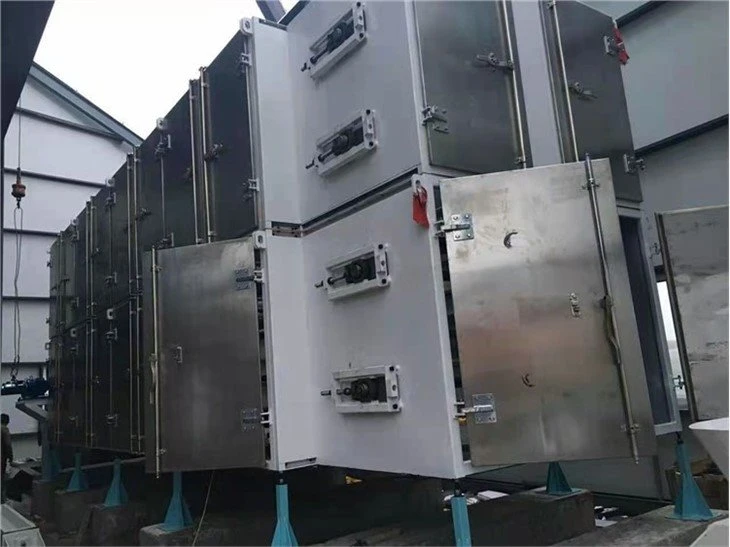
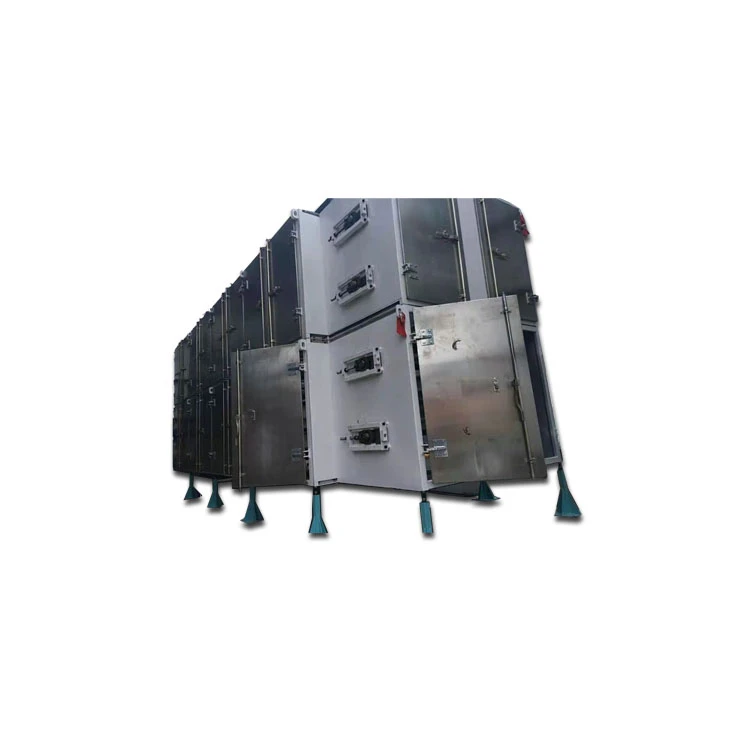
A belt dryer operates by conveying the material to be dried on a porous belt. Hot air is passed through the belt and the material layer, removing moisture from the material as it moves along the belt. The belt can be made of various materials such as mesh, fabric, or perforated metal, depending on the nature of the material and the drying requirements. The drying process can be divided into multiple stages, allowing for precise control of temperature, humidity, and residence time.
On the other hand, a fluidized bed dryer works by suspending the material in an upward - flowing stream of hot air. The air velocity is adjusted such that the solid particles behave like a fluid, with intense mixing and heat transfer occurring between the particles and the hot air. This fluidization process results in a high rate of mass and heat transfer, making fluidized bed dryers very efficient for drying small, free - flowing particles.
Drying Efficiency
In terms of drying efficiency, both dryers have their advantages.
Belt dryers are suitable for a wide range of materials, including those with irregular shapes, large particles, or high moisture content. The continuous operation of the belt allows for a relatively long residence time of the material in the dryer, which is beneficial for thorough drying. The multi - stage design also enables different drying conditions to be applied at each stage, optimizing the drying process. For example, in the initial stage, high - temperature air can be used to rapidly remove surface moisture, while in the later stages, lower - temperature air can be employed to prevent over - drying and damage to the material.
Fluidized bed dryers, however, offer extremely high heat and mass transfer rates due to the intense mixing of the particles in the fluidized state. This makes them highly efficient for drying small, uniform particles such as granules, powders, and crystals. The short residence time required in a fluidized bed dryer can lead to significant energy savings in some cases. Additionally, the fluidization process ensures that all particles are exposed to the hot air evenly, resulting in a more uniform drying effect.
Material Compatibility
The choice between a belt dryer and a fluidized bed dryer also depends on the compatibility with the material to be dried.
Belt dryers are very versatile and can handle a wide variety of materials, including food products, chemicals, pharmaceuticals, and agricultural products. For example, Feed Belt Dryer is specifically designed for drying animal feed, which may contain a mixture of grains, proteins, and other additives. The gentle handling of the material on the belt minimizes the risk of breakage and damage. Similarly, Food Belt Dryer is suitable for drying fruits, vegetables, and other food items, as it can maintain the quality and nutritional value of the products.
Fluidized bed dryers are more suitable for materials that are free - flowing and have a relatively narrow particle size distribution. Materials such as sand, fertilizers, and some chemical powders can be efficiently dried in a fluidized bed dryer. However, materials that are sticky, fibrous, or have a wide particle size range may cause problems in a fluidized bed dryer, such as agglomeration or uneven fluidization.
Equipment Complexity and Maintenance
The complexity and maintenance requirements of the two dryers are also different.
Belt dryers typically have a more complex structure compared to fluidized bed dryers. They consist of a conveyor belt system, heating system, ventilation system, and control system. The belt needs to be regularly inspected and replaced to ensure smooth operation. Additionally, the cleaning of the belt and the internal components of the dryer is essential to prevent cross - contamination and ensure product quality. However, with proper design and maintenance, belt dryers can have a long service life.
Fluidized bed dryers are relatively simpler in structure. They mainly consist of a fluidization chamber, air distribution plate, heating system, and cyclone separator. The maintenance of a fluidized bed dryer mainly involves checking the air distribution plate for blockages, cleaning the cyclone separator, and ensuring the proper operation of the fan. However, the high - velocity air in the fluidized bed can cause wear and tear on the internal components, and regular inspection is still necessary.
Energy Consumption
Energy consumption is an important consideration in any drying process.
Belt dryers generally have a relatively high energy consumption, especially when drying materials with high moisture content. The continuous operation of the belt and the need to heat a large volume of air require a significant amount of energy. However, the multi - stage design of belt dryers allows for some energy savings by using waste heat recovery systems. For example, the hot air discharged from the later stages of the dryer can be used to pre - heat the incoming air in the initial stages.
Fluidized bed dryers can be more energy - efficient in some cases. The high heat and mass transfer rates in the fluidized bed reduce the residence time of the material, resulting in lower energy consumption per unit of dried product. Additionally, the use of efficient air distribution systems and insulation can further improve the energy efficiency of fluidized bed dryers.
Conclusion
In conclusion, both belt dryers and fluidized bed dryers have their unique advantages and disadvantages. Belt dryers are more versatile, suitable for a wide range of materials, and offer gentle handling and precise drying control. Fluidized bed dryers, on the other hand, are highly efficient for drying small, free - flowing particles and can achieve rapid and uniform drying.
When choosing between a belt dryer and a fluidized bed dryer, you need to consider factors such as the nature of the material, drying efficiency requirements, equipment complexity, maintenance needs, and energy consumption. If you are still unsure which type of dryer is right for your application, please feel free to contact us. Our team of experts can provide you with professional advice and customized solutions based on your specific needs. We look forward to discussing your drying requirements and helping you select the most suitable drying equipment.
References
- Perry, R. H., & Green, D. W. (Eds.). (2007). Perry's Chemical Engineers' Handbook. McGraw - Hill.
- Mujumdar, A. S. (Ed.). (2014). Handbook of Industrial Drying. CRC Press.