

Hey there! As a supplier of Feed Pellet Mills, I often get asked about different technical aspects of these machines. One of the most frequently asked questions is about the compression ratio in a feed pellet mill. So, let's dive right into it and break down what this compression ratio is all about.
What the Heck is Compression Ratio?
In simple terms, the compression ratio in a feed pellet mill refers to the relationship between the diameter of the die hole and the length of the die hole. You can think of it as how much "squeezing" power the machine has to turn your raw feed materials into those nice, compact pellets.
Let's say you've got a die with a hole diameter of 3mm and a hole length of 30mm. To calculate the compression ratio, you'd divide the length of the hole by the diameter. In this case, 30 divided by 3 gives you a compression ratio of 10:1. This means that for every 1 unit of diameter, there are 10 units of length in the die hole, and the feed material gets compressed quite a bit as it passes through.
Why Does Compression Ratio Matter?
The compression ratio is super important because it directly affects the quality and characteristics of the pellets you produce.
Pellet Quality
A higher compression ratio generally results in denser and more durable pellets. When the feed material is compressed more, the particles bind together better, making the pellets less likely to crumble or break apart. This is especially crucial if you're planning to transport the pellets over long distances or store them for an extended period. For example, if you're producing Chicken Feed Pellet Mill for commercial chicken farms, you want the pellets to stay intact so that the chickens can easily consume them, and there's less waste.
Nutritional Value
The compression process also impacts the nutritional value of the feed. When the material is compressed under the right conditions, it can actually improve the digestibility of the feed. The heat generated during compression can break down some of the complex carbohydrates and proteins, making them easier for the animals to absorb. However, if the compression ratio is too high, it can lead to overheating and damage some of the heat-sensitive nutrients, like vitamins. So, finding the right balance is key.
Production Efficiency
Another factor to consider is production efficiency. A lower compression ratio allows the feed material to pass through the die more quickly, which can increase the production rate. But if the ratio is too low, the pellets may not be of good quality. On the other hand, a very high compression ratio can slow down the production process as the material takes longer to pass through the die, and it may also put more strain on the machine, leading to increased wear and tear.
Factors Affecting the Ideal Compression Ratio
There isn't a one-size-fits-all compression ratio for every type of feed pellet mill. Several factors come into play when determining the ideal ratio for your specific needs.
Feed Material
Different feed materials have different physical and chemical properties, which means they require different compression ratios. For example, if you're using fibrous materials like hay or straw, you may need a higher compression ratio to get the particles to bind together. On the other hand, materials that are already high in natural binders, like grains, may require a lower ratio.
Pellet Size
The size of the pellets you want to produce also affects the compression ratio. Smaller pellets generally need a higher compression ratio to ensure they hold their shape. If you're interested in making smaller pellets, you might want to check out our Small Pellet Making Machine, which can be adjusted to achieve the right compression for different pellet sizes.
Animal Species
The type of animals that will be consuming the pellets is another important consideration. Different animals have different dietary requirements and digestive systems. For instance, poultry, such as chickens and turkeys, need pellets that are easy to peck and digest. A Poultry Pellet Mill may require a specific compression ratio to produce pellets that are suitable for these birds.
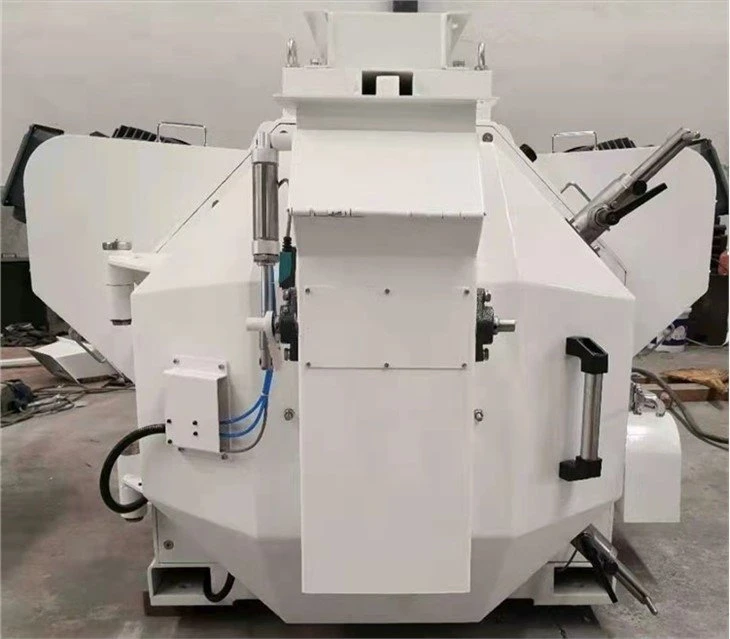

How to Choose the Right Compression Ratio
Choosing the right compression ratio can be a bit of a trial-and-error process, but here are some tips to help you get started.
Start with Recommendations
Most feed pellet mill manufacturers provide some general recommendations for compression ratios based on the type of feed materials and pellet sizes. You can start by following these guidelines and then make adjustments as needed.
Conduct Tests
It's a good idea to conduct some small-scale tests with different compression ratios to see how they affect the pellet quality and production efficiency. You can use a sample of your feed material and try different settings on your pellet mill. Pay attention to factors like pellet density, durability, and the amount of fines (broken pellet particles).
Consider Your Production Goals
Think about your long-term production goals. If you're aiming for high-quality pellets for a premium market, you may be willing to sacrifice some production speed for a higher compression ratio. On the other hand, if you need to produce a large volume of pellets quickly, you might opt for a slightly lower ratio.
Conclusion
So, there you have it – a breakdown of what the compression ratio in a feed pellet mill is and why it's so important. As a Feed Pellet Mill supplier, we understand that getting the compression ratio right is crucial for producing high-quality feed pellets. Whether you're a small-scale farmer or a large commercial operation, choosing the appropriate compression ratio can make a big difference in the success of your pellet production.
If you're interested in learning more about our feed pellet mills or have any questions about compression ratios, feel free to reach out. We're here to help you find the best solution for your specific needs and get the most out of your pellet production. Contact us to start a conversation about your feed pellet requirements, and let's work together to take your operation to the next level.
References
- Feed Pellet Mill Handbook
- Agricultural Engineering Research on Feed Pelletization
- Studies on the Impact of Compression Ratio on Feed Pellet Quality