

In the dynamic landscape of the feed industry, the feed mill crumbler stands as a pivotal piece of equipment. As a dedicated supplier of feed mill crumblers, I've witnessed firsthand the remarkable technological innovations that have transformed the design of these machines over the years. These advancements not only enhance the efficiency and performance of feed production but also contribute to the overall quality of the end - product.
1. Precision Cutting Mechanisms
One of the most significant technological breakthroughs in feed mill crumbler design is the development of precision cutting mechanisms. Traditional crumblers often relied on simple blade systems that could result in inconsistent particle sizes and over - or under - crumbling of the feed pellets. Modern crumblers, however, are equipped with advanced cutting technologies.
For instance, some of our latest Poultry Feed Crumble Machine models feature adjustable blade assemblies. These blades can be precisely set to achieve the desired particle size distribution, whether it's for young chicks that require finer crumbles or adult poultry that can tolerate coarser ones. The use of high - quality, sharp blades made from special alloys ensures a clean cut through the pellets, reducing the generation of fines and dust.
In addition, computer - controlled cutting systems have become increasingly common. These systems use sensors to monitor the flow of pellets and adjust the cutting speed and pressure in real - time. This level of automation not only improves the consistency of the crumbled feed but also reduces the need for manual intervention, saving both time and labor costs.
2. Energy - Efficient Design
In today's environmentally conscious world, energy efficiency is a top priority for feed mill operators. Technological innovations in feed mill crumbler design have focused on reducing energy consumption without sacrificing performance.
Newer crumbler models are designed with optimized motor systems. Variable frequency drives (VFDs) are now widely used to control the speed of the crumbler's motors. By adjusting the motor speed according to the load and production requirements, VFDs can significantly reduce energy consumption. For example, during periods of low - production, the motor can run at a lower speed, consuming less electricity.
Moreover, the mechanical design of the crumbler has been refined to minimize friction and energy losses. The use of high - quality bearings and smooth - running components ensures that the machine operates with maximum efficiency. The housing and internal structure of the crumbler are also designed to reduce heat generation, further contributing to energy savings.
3. Improved Material Handling and Flow
Efficient material handling is crucial for the smooth operation of a feed mill crumbler. Technological advancements have led to improvements in both the inlet and outlet systems of the crumbler.
At the inlet, modern crumblers are equipped with advanced feeding mechanisms. Vibratory feeders or screw conveyors are commonly used to ensure a consistent and uniform flow of pellets into the crumbler. These feeders can be adjusted to control the feed rate, preventing overloading of the crumbler and ensuring optimal performance.
On the outlet side, the design of the discharge system has been enhanced to improve the flow of the crumbled feed. Specialized chutes and baffles are used to direct the crumbles towards the next stage of the production process, such as packaging or storage. Some crumblers also feature self - cleaning discharge systems that prevent the accumulation of feed residues, reducing the risk of contamination and ensuring a continuous flow of product.
4. Enhanced Durability and Maintenance
Feed mill crumblers operate in a harsh environment, exposed to abrasive feed materials, high - speed rotating parts, and continuous wear and tear. Technological innovations have focused on improving the durability of the crumbler and reducing maintenance requirements.
The use of advanced materials in the construction of the crumbler is a key factor in enhancing its durability. For example, the housing of the crumbler may be made from heavy - duty stainless steel or reinforced polymers that are resistant to corrosion and abrasion. The cutting blades and other critical components are designed to withstand high - stress conditions and have a longer service life.
In terms of maintenance, modern crumblers are designed with easy - access panels and modular components. This allows for quick and convenient inspection, cleaning, and replacement of parts. Some crumblers are also equipped with self - diagnostic systems that can detect potential problems before they lead to major breakdowns. These systems can alert operators to issues such as worn - out bearings or blade dullness, enabling timely maintenance and reducing downtime.
5. Integration with Automation Systems
The trend towards automation in the feed industry has also influenced the design of feed mill crumblers. Many modern crumblers can be easily integrated into larger feed mill automation systems.
By connecting the crumbler to a central control system, operators can monitor and control all aspects of the crumbler's operation from a single interface. This includes adjusting the cutting parameters, monitoring the energy consumption, and receiving real - time alerts about any malfunctions. Integration with other equipment in the feed mill, such as pelletizers and mixers, allows for seamless production processes and better overall efficiency.
For example, in a fully automated feed mill, the crumbler can receive signals from the pelletizer to adjust its operation based on the quality and quantity of the incoming pellets. This level of integration ensures a coordinated and efficient production line, resulting in higher - quality feed products.
6. Hygiene and Sanitation
Maintaining high levels of hygiene and sanitation is essential in the feed industry to prevent the spread of diseases and ensure the safety of the feed products. Technological innovations in feed mill crumbler design have addressed these concerns.
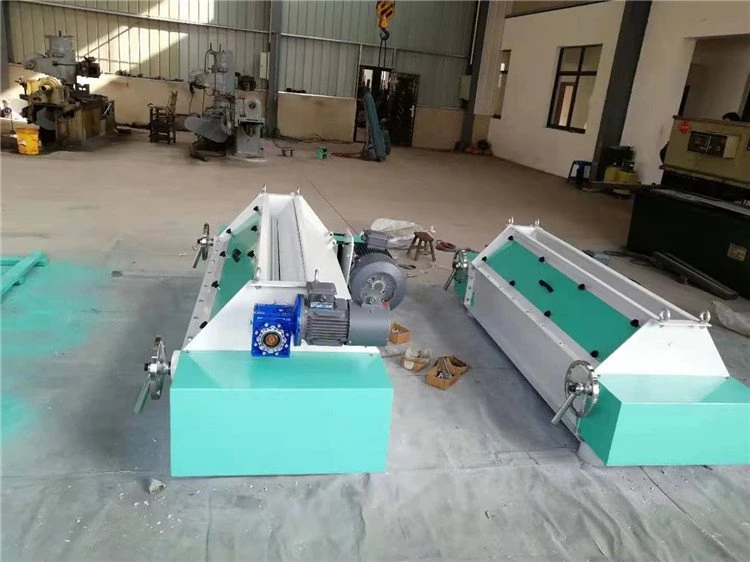
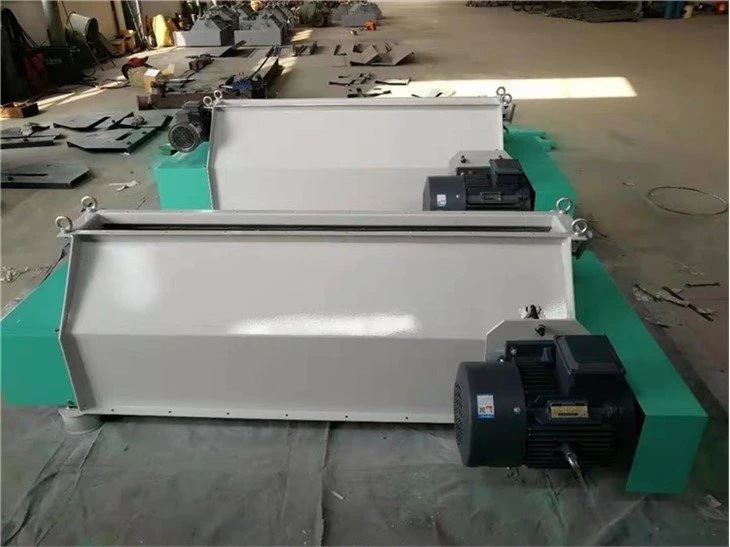
Modern crumblers are designed with smooth, non - porous surfaces that are easy to clean. The use of food - grade materials in the construction of the crumbler ensures that there is no risk of contamination from the machine itself. Some crumblers also feature quick - disconnect components, allowing for easy disassembly and thorough cleaning.
In addition, the design of the crumbler's internal structure has been optimized to prevent the accumulation of feed residues. Air - purging systems can be used to remove any dust or fines from the machine, reducing the risk of mold and bacteria growth.
Conclusion
The technological innovations in feed mill crumbler design have brought about significant improvements in the efficiency, performance, and quality of feed production. From precision cutting mechanisms and energy - efficient design to enhanced material handling and integration with automation systems, these advancements have transformed the way feed mill operators approach crumbled feed production.
As a supplier of Pellet Crumbler Machine and Crumbler for Animal Feed, we are committed to staying at the forefront of these technological developments. We continuously invest in research and development to bring the latest and most innovative crumbler solutions to our customers.
If you are a feed mill operator looking to upgrade your crumbler equipment or are in the process of setting up a new feed mill, we invite you to contact us for a detailed discussion about our products and how they can meet your specific needs. Our team of experts is ready to assist you in selecting the right crumbler for your operation and providing you with the support and service you deserve.
References
- Feed Manufacturing Technology Handbook, various editions
- Journal of Feed Science and Technology, multiple issues related to feed processing equipment
- Proceedings of International Feed Industry Conferences on recent technological advancements in feed mill equipment