

In today's era of increasing energy costs and growing environmental awareness, energy efficiency has become a crucial factor in the design and operation of industrial equipment. As a leading supplier of feed pellet mills, we understand the significance of energy-saving features in modern feed pellet mills. These features not only help our customers reduce operational costs but also contribute to a more sustainable and eco-friendly production process. In this blog post, we will explore the key energy-saving features of modern feed pellet mills and how they benefit our clients.
Advanced Motor Technology
One of the primary energy-consuming components in a feed pellet mill is the motor. Modern feed pellet mills are equipped with advanced motor technology that significantly improves energy efficiency. High-efficiency motors, such as permanent magnet synchronous motors (PMSMs), are now commonly used in our pellet mills. These motors offer several advantages over traditional induction motors.
PMSMs have a higher power density, which means they can deliver the same amount of power with a smaller and lighter motor. This reduces the overall energy consumption of the pellet mill. Additionally, PMSMs have a higher efficiency over a wider range of operating speeds and loads. They can maintain a high level of efficiency even when the pellet mill is operating at partial load, which is often the case in real-world applications.

Another energy-saving feature related to the motor is the use of variable frequency drives (VFDs). VFDs allow the motor to adjust its speed according to the actual demand of the pellet mill. For example, when the feed rate is low, the motor can run at a lower speed, consuming less energy. When the demand increases, the motor can quickly ramp up to the required speed. This dynamic control of the motor speed not only saves energy but also extends the lifespan of the motor and other components of the pellet mill.
Optimized Die and Roller Design
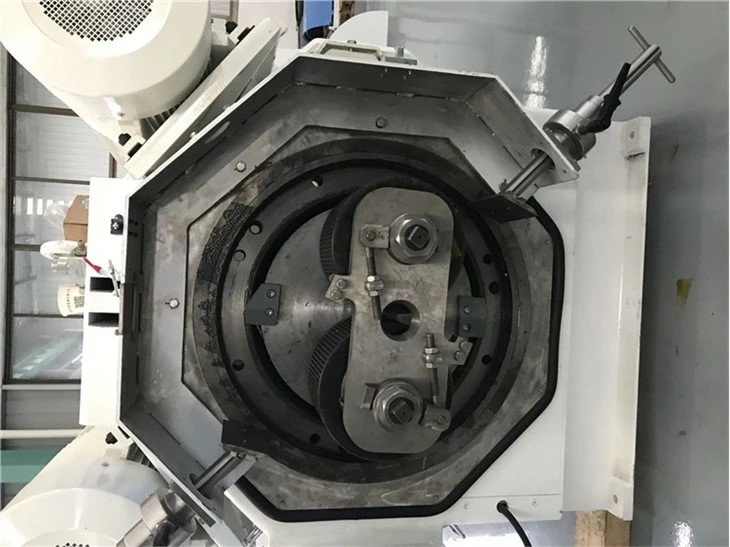
The die and roller are the core components of a feed pellet mill, responsible for compressing the feed material into pellets. The design of the die and roller has a significant impact on the energy consumption of the pellet mill. Modern feed pellet mills feature optimized die and roller designs that reduce the friction and resistance during the pelletizing process.
The surface of the die and roller is carefully engineered to have a smooth finish and the right amount of hardness. This reduces the amount of energy required to push the feed material through the die holes. Additionally, the shape and size of the die holes are designed to optimize the pelletizing process. The holes are usually tapered, which helps to gradually compress the feed material and reduces the energy needed for compaction.
Furthermore, the die and roller are made of high-quality materials that can withstand high pressures and wear. This ensures a longer service life and consistent performance, which in turn helps to maintain the energy efficiency of the pellet mill over time. By reducing the energy required for pelletizing, the optimized die and roller design not only saves energy but also improves the quality and productivity of the pellet production.
Efficient Heating and Conditioning Systems
Heating and conditioning are important steps in the feed pelletizing process. They help to improve the physical and chemical properties of the feed material, making it easier to form pellets. However, these processes can also consume a significant amount of energy. Modern feed pellet mills are equipped with efficient heating and conditioning systems that minimize energy consumption.
One of the key energy-saving features of these systems is the use of heat exchangers. Heat exchangers are used to recover and reuse the heat from the exhaust gases or other waste heat sources in the pellet mill. This recovered heat can be used to preheat the feed material or the conditioning steam, reducing the amount of external energy required for heating.
In addition, modern heating and conditioning systems are designed to provide precise control of the temperature and moisture content of the feed material. This ensures that the feed material is conditioned to the optimal state for pelletizing with the minimum amount of energy. For example, the steam injection system is carefully calibrated to deliver the right amount of steam at the right time, avoiding over - heating or over - conditioning of the feed material.
Intelligent Control Systems
Intelligent control systems are another important energy-saving feature of modern feed pellet mills. These systems use sensors and advanced algorithms to monitor and control various parameters of the pellet mill, such as the feed rate, motor speed, temperature, and moisture content. By continuously analyzing the data from the sensors, the control system can make real-time adjustments to optimize the operation of the pellet mill and reduce energy consumption.
For example, the control system can automatically adjust the feed rate based on the capacity of the pellet mill and the quality of the feed material. If the feed material is of high quality and easy to pelletize, the feed rate can be increased, while the motor speed and other parameters are adjusted accordingly to maintain the energy efficiency. On the other hand, if the feed material is difficult to pelletize, the control system can reduce the feed rate and adjust the other parameters to ensure a stable and energy - efficient operation.
Moreover, the intelligent control system can provide operators with detailed information about the energy consumption and performance of the pellet mill. This allows operators to make informed decisions about the operation of the mill and take measures to further improve energy efficiency. For example, the system can generate reports on the energy consumption per unit of pellet production, which can be used to identify areas for improvement and implement energy - saving measures.
Energy Recovery and Recycling
Modern feed pellet mills are also designed to recover and recycle energy from various sources within the production process. In addition to the heat recovery from the exhaust gases mentioned earlier, there are other ways to recover and reuse energy.
For example, some pellet mills are equipped with systems to recover the mechanical energy from the rotating components. This energy can be converted into electrical energy and used to power other parts of the pellet mill or the surrounding facilities. Another example is the recycling of the waste materials generated during the pelletizing process. These waste materials can be processed and reused as feedstock, reducing the need for new raw materials and the energy required for their production.
Case Studies and Customer Benefits
To illustrate the real - world impact of these energy - saving features, let's look at some case studies of our customers. One of our customers, a medium - sized poultry farm, installed our Chicken Feed Pellet Mill. After using the new pellet mill for several months, they reported a significant reduction in their energy costs. The advanced motor technology and intelligent control system allowed the pellet mill to operate more efficiently, especially during periods of low feed demand. The optimized die and roller design also improved the pellet quality and reduced the energy required for pelletizing.
Another customer, a research institution, purchased our Pellet Mill Lab - size for their experiments. The energy - saving features of the pellet mill were particularly important for them, as they needed to operate the mill for long periods of time with limited energy resources. The use of VFDs and heat exchangers helped them to reduce the energy consumption of the mill while maintaining a high level of performance.
Conclusion and Call to Action
In conclusion, modern feed pellet mills are equipped with a range of energy - saving features that can significantly reduce the energy consumption and operating costs of our customers. These features, including advanced motor technology, optimized die and roller design, efficient heating and conditioning systems, intelligent control systems, and energy recovery and recycling, not only benefit the environment but also improve the competitiveness of our customers in the market.
If you are interested in learning more about our energy - efficient feed pellet mills or have any questions about the energy - saving features, please feel free to contact us. Our team of experts is ready to provide you with detailed information and help you choose the right pellet mill for your specific needs. We are committed to providing high - quality, energy - efficient feed pellet mills and excellent customer service. Let's work together to achieve more sustainable and cost - effective feed pellet production.
References
- "Energy Efficiency in Industrial Motors and Drives", International Energy Agency
- "Advanced Materials for Feed Pellet Mill Dies and Rollers", Journal of Agricultural Engineering Research
- "Optimization of Feed Pelletizing Processes for Energy Savings", Proceedings of the International Conference on Animal Feed Technology