

In the realm of industrial machinery, the rotary distributor stands as a pivotal component, playing a crucial role in various sectors such as feed processing, powder handling, and grain distribution. As a dedicated supplier of rotary distributors, I am excited to delve into the diverse customization options available for these remarkable machines. This exploration will not only highlight the flexibility and adaptability of our products but also provide valuable insights for potential customers seeking tailored solutions to meet their specific needs.
Material Selection
One of the primary customization options for a rotary distributor lies in the choice of materials. The material used in the construction of a rotary distributor significantly impacts its performance, durability, and suitability for different applications. For instance, in the feed processing industry, where hygiene and corrosion resistance are paramount, stainless steel is often the material of choice. Stainless steel offers excellent resistance to rust and corrosion, ensuring a long service life and maintaining the integrity of the feed products. It is also easy to clean, which is essential for preventing the buildup of contaminants and ensuring food safety.
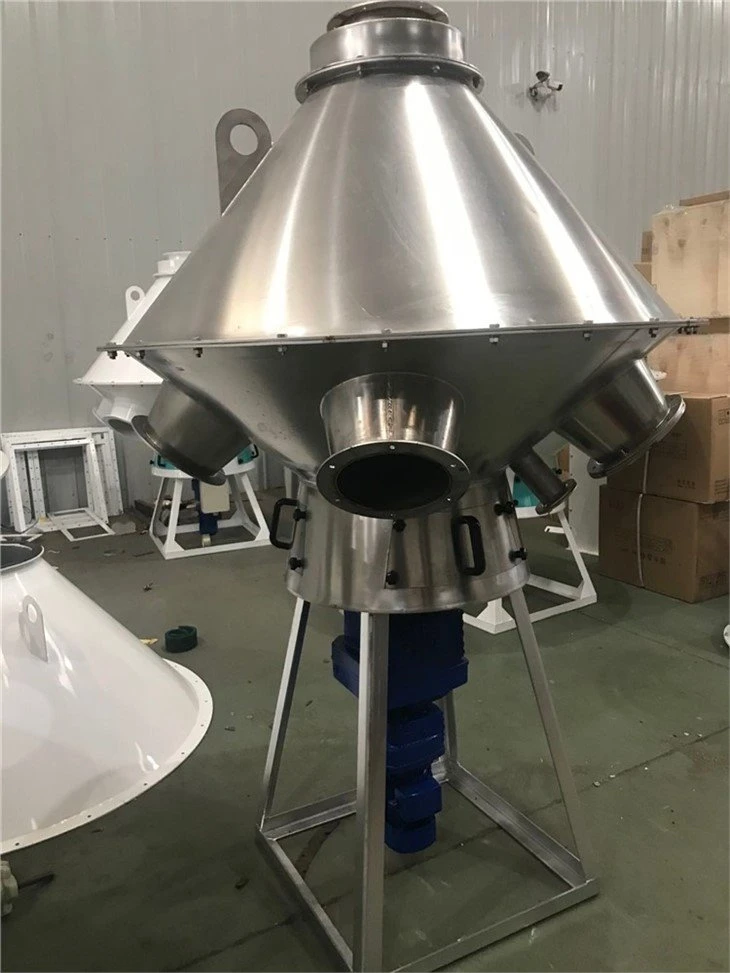

On the other hand, for applications involving abrasive materials such as powders or grains, carbon steel may be a more suitable option. Carbon steel is known for its high strength and wear resistance, making it capable of withstanding the harsh conditions associated with handling abrasive substances. Additionally, carbon steel can be coated with protective layers such as epoxy or zinc to further enhance its corrosion resistance.
In some cases, specialized materials may be required to meet specific application requirements. For example, in the chemical industry, where exposure to corrosive chemicals is common, materials such as Hastelloy or titanium may be used. These materials offer exceptional resistance to corrosion and chemical attack, ensuring the reliable operation of the rotary distributor in challenging environments.
Size and Capacity
Another important customization option is the size and capacity of the rotary distributor. The size of the distributor is typically determined by the throughput requirements of the application. For small-scale operations, a compact rotary distributor with a lower capacity may be sufficient. These distributors are often more cost-effective and require less space, making them ideal for applications with limited floor space.
On the other hand, large-scale industrial operations may require high-capacity rotary distributors capable of handling large volumes of materials. These distributors are designed with larger diameters and higher rotational speeds to ensure efficient and rapid distribution of materials. Additionally, the capacity of the distributor can be further increased by adding multiple discharge ports or by using a larger hopper.
When selecting the size and capacity of a rotary distributor, it is important to consider the future growth of the operation. Choosing a distributor with a slightly higher capacity than the current requirements can provide flexibility and allow for easy expansion in the future.
Discharge Configuration
The discharge configuration of a rotary distributor is another customizable feature that can be tailored to meet specific application needs. The most common discharge configurations include single discharge, multiple discharge, and adjustable discharge.
A single discharge rotary distributor is the simplest configuration, where the material is discharged through a single outlet. This configuration is suitable for applications where the material needs to be directed to a single location, such as a storage bin or a processing machine.
Multiple discharge rotary distributors, on the other hand, are designed with multiple outlets, allowing the material to be distributed to multiple locations simultaneously. This configuration is commonly used in applications where the material needs to be divided into different streams or where multiple processing machines need to be fed simultaneously.
Adjustable discharge rotary distributors offer the flexibility to change the discharge location or the flow rate of the material. These distributors are equipped with adjustable chutes or gates that can be manually or automatically adjusted to control the discharge of the material. This configuration is ideal for applications where the distribution requirements may change over time or where precise control of the material flow is required.
Drive System
The drive system of a rotary distributor is responsible for providing the power and torque required to rotate the distributor. There are several types of drive systems available, each with its own advantages and disadvantages.
The most common drive system for rotary distributors is the electric motor drive. Electric motors are reliable, efficient, and easy to control. They can be powered by either AC or DC power sources, depending on the application requirements. Electric motor drives are also available in different power ratings, allowing for customization based on the size and capacity of the distributor.
In some cases, hydraulic or pneumatic drive systems may be used. Hydraulic drives offer high torque and precise control, making them suitable for applications where heavy loads or high-speed operation is required. Pneumatic drives, on the other hand, are lightweight, compact, and suitable for applications where a clean and oil-free environment is required.
The choice of drive system depends on several factors, including the application requirements, the available power source, and the budget. It is important to consult with a qualified engineer or supplier to determine the most suitable drive system for your specific application.
Control System
The control system of a rotary distributor is responsible for monitoring and controlling the operation of the distributor. A well-designed control system can improve the efficiency, reliability, and safety of the distributor.
The most basic control system for a rotary distributor is a manual control system, where the operator manually adjusts the speed, direction, and discharge configuration of the distributor. Manual control systems are simple and cost-effective, but they require constant operator attention and may not be suitable for applications where precise control is required.
Automated control systems, on the other hand, offer greater flexibility and precision. These systems can be programmed to automatically adjust the speed, direction, and discharge configuration of the distributor based on the input from sensors or other control devices. Automated control systems can also be integrated with other process control systems, allowing for seamless operation and improved overall efficiency.
In addition to speed and discharge control, the control system can also include features such as overload protection, fault detection, and remote monitoring. Overload protection ensures that the distributor does not exceed its maximum load capacity, preventing damage to the equipment. Fault detection systems can detect and alert the operator to any potential problems with the distributor, allowing for timely maintenance and repair. Remote monitoring systems allow the operator to monitor the operation of the distributor from a remote location, providing real-time information and enabling quick response to any issues.
Additional Features
In addition to the above customization options, there are several additional features that can be added to a rotary distributor to enhance its performance and functionality. These features include:
- Anti-clogging devices: These devices are designed to prevent the material from clogging the distributor, ensuring continuous and efficient operation. Anti-clogging devices can include vibrating motors, air blowers, or mechanical agitators.
- Dust collection systems: Dust collection systems are used to capture and remove dust and other particulate matter generated during the operation of the distributor. These systems can improve the working environment and prevent the spread of dust, which can be a health hazard.
- Temperature and pressure sensors: Temperature and pressure sensors can be installed on the distributor to monitor the temperature and pressure of the material being distributed. This information can be used to ensure that the material is being processed under optimal conditions and to prevent any potential problems such as overheating or pressure buildup.
- Customized hoppers and chutes: Hoppers and chutes can be customized to match the specific requirements of the application. This can include the size, shape, and material of the hopper and chute, as well as the installation of additional features such as level sensors or flow control valves.
Conclusion
As a supplier of rotary distributors, I understand the importance of providing customized solutions to meet the unique needs of our customers. The customization options available for rotary distributors allow us to tailor these machines to specific applications, ensuring optimal performance, efficiency, and reliability.
Whether you are in the feed processing, powder handling, or grain distribution industry, our team of experts can work with you to design and manufacture a rotary distributor that meets your exact requirements. We offer a wide range of customization options, including material selection, size and capacity, discharge configuration, drive system, control system, and additional features.
If you are interested in learning more about our rotary distributors or would like to discuss your specific application requirements, please do not hesitate to contact us. We would be happy to provide you with more information and assist you in selecting the right rotary distributor for your needs.
References
- Perry, R. H., & Green, D. W. (Eds.). (2008). Perry's Chemical Engineers' Handbook. McGraw-Hill.
- Svarovsky, L. (1990). Solid-Liquid Separation. Butterworth-Heinemann.
- Woods, R. (2008). Handbook of Powder Technology. Elsevier.
For more information about our rotary distributors, please visit our website:
We look forward to hearing from you and discussing how our customized rotary distributors can benefit your operation.