

Operating a counterflow cooler in a corrosive environment presents a unique set of challenges that can significantly impact the performance, longevity, and efficiency of the equipment. As a counterflow cooler supplier, I have witnessed firsthand the difficulties that customers face when trying to maintain these machines in harsh conditions. In this blog post, I will delve into the various challenges associated with operating a counterflow cooler in a corrosive environment and discuss potential solutions to mitigate these issues.
Understanding Counterflow Coolers
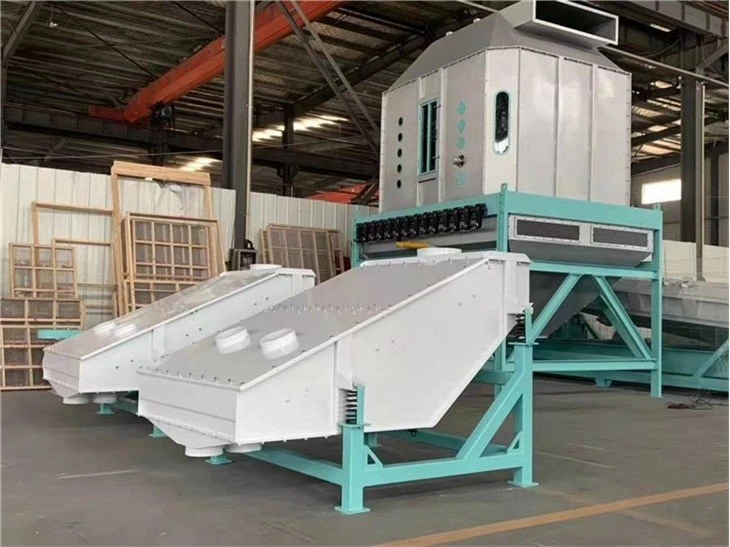
Before we explore the challenges, let's briefly understand what a counterflow cooler is. A counterflow cooler is a vital piece of equipment in the feed processing industry, particularly for cooling hot feed pellets. The Counterflow Feed Pellet Cooler operates on the principle of counterflow heat exchange, where cool air is drawn through the bed of hot pellets in the opposite direction of the pellet flow. This design ensures efficient cooling by maximizing the contact time between the air and the pellets, resulting in a more uniform and effective cooling process. The SKLN Counterflow Cooler is a prime example of a high - quality counterflow cooler that offers excellent performance and reliability under normal conditions.
Challenges in a Corrosive Environment
1. Material Degradation
One of the most significant challenges in a corrosive environment is material degradation. Corrosive agents such as acids, alkalis, and salts can react with the materials used in the construction of the counterflow cooler. For example, if the cooler is made of mild steel, it is highly susceptible to rusting in the presence of moisture and corrosive chemicals. Rust not only weakens the structural integrity of the cooler but also can flake off and contaminate the feed pellets. Over time, the constant corrosion can lead to holes and cracks in the cooler's walls, which can compromise its functionality and require costly repairs or even replacement.
2. Reduced Cooling Efficiency
Corrosion can also have a direct impact on the cooling efficiency of the counterflow cooler. As the internal surfaces of the cooler corrode, they become rough and uneven. This roughness disrupts the smooth flow of air through the cooler, creating turbulence and reducing the effectiveness of the heat exchange process. Additionally, corrosion products can accumulate on the heat transfer surfaces, acting as an insulating layer. This insulation reduces the rate of heat transfer from the hot pellets to the cool air, resulting in higher pellet temperatures at the outlet of the cooler.
3. Clogging of Air Vents and Ducts
In a corrosive environment, corrosion products and debris can build up in the air vents and ducts of the counterflow cooler. These blockages restrict the flow of air into and out of the cooler, causing a decrease in the volume of air available for cooling. As a result, the cooling capacity of the cooler is reduced, and the pellets may not reach the desired temperature. Clogged air vents can also lead to increased energy consumption as the fans have to work harder to force air through the restricted passages.
4. Impact on Moving Parts
Counterflow coolers often have moving parts such as fans, conveyor belts, and discharge gates. Corrosion can affect these moving parts in several ways. For instance, corrosion can cause the bearings of the fans to seize up, leading to a complete breakdown of the cooling system. On conveyor belts, corrosion can cause the belt to become brittle and break, disrupting the flow of pellets through the cooler. In the case of discharge gates, corrosion can prevent them from opening and closing properly, leading to inconsistent pellet discharge and potential over - filling of the cooler.
5. Contamination of Feed Pellets
Another critical challenge is the contamination of feed pellets. Corrosion products, such as rust particles and other metallic compounds, can mix with the feed pellets during the cooling process. These contaminants can be harmful to the animals consuming the feed, affecting their health and growth. Moreover, the presence of contaminants can also lead to non - compliance with feed quality standards, which can have legal and financial implications for feed manufacturers.
Solutions to Mitigate the Challenges
1. Material Selection
Choosing the right materials for the construction of the counterflow cooler is crucial in a corrosive environment. Stainless steel is a popular choice as it has excellent corrosion resistance properties. It can withstand exposure to a wide range of corrosive agents without significant degradation. Other corrosion - resistant materials such as fiberglass - reinforced plastics (FRP) can also be used for certain components of the cooler. FRP is lightweight, strong, and highly resistant to corrosion, making it suitable for applications in harsh environments.

2. Protective Coatings
Applying protective coatings to the surfaces of the counterflow cooler can provide an additional layer of protection against corrosion. Epoxy coatings, for example, can form a durable and chemical - resistant barrier on the metal surfaces of the cooler. These coatings prevent corrosive agents from coming into direct contact with the metal, thereby reducing the rate of corrosion. However, it is important to ensure that the coatings are properly applied and maintained to ensure their effectiveness over time.
3. Regular Maintenance and Inspection
Regular maintenance and inspection are essential for the proper operation of a counterflow cooler in a corrosive environment. This includes cleaning the cooler regularly to remove corrosion products and debris from the air vents, ducts, and internal surfaces. Inspections should be carried out to detect early signs of corrosion, such as rust spots or surface pitting. Any damaged or corroded parts should be replaced immediately to prevent further deterioration of the cooler.
4. Environmental Control
Controlling the environment in which the counterflow cooler operates can also help reduce the impact of corrosion. This can involve measures such as installing air purification systems to remove corrosive gases from the air, maintaining proper ventilation to reduce humidity levels, and implementing a strict cleaning and sanitation regime in the feed processing area.
Conclusion
Operating a counterflow cooler in a corrosive environment is a challenging task that requires careful consideration of the various factors involved. The challenges of material degradation, reduced cooling efficiency, clogging, impact on moving parts, and feed pellet contamination can significantly affect the performance and lifespan of the cooler. However, by implementing appropriate solutions such as material selection, protective coatings, regular maintenance, and environmental control, these challenges can be effectively mitigated.
As a counterflow cooler supplier, we are committed to providing our customers with high - quality products and comprehensive support to help them overcome these challenges. If you are facing difficulties operating your counterflow cooler in a corrosive environment or are considering purchasing a new cooler for such an environment, we encourage you to contact us for more information and to discuss your specific requirements. Our team of experts is ready to assist you in finding the best solutions for your feed processing needs.
References
- ASM Handbook Committee. (2004). ASM Handbook, Volume 13A: Corrosion: Fundamentals, Testing, and Protection. ASM International.
- Green, N. G., & Perry, R. H. (2008). Perry's Chemical Engineers' Handbook. McGraw - Hill Professional.
- Schütz, W., & Payer, J. H. (2002). Corrosion Under Insulation (CUI). NACE International.