

Hey there! As a supplier of belt dryers, I've been getting a lot of questions lately about how to control the material layer thickness in a belt dryer. It's a crucial aspect that can significantly impact the drying efficiency and the quality of the final product. So, I thought I'd share some insights on this topic.
Why Is Controlling Material Layer Thickness Important?
First off, let's talk about why it matters. The thickness of the material layer on the belt directly affects the drying time and the uniformity of drying. If the layer is too thick, the heat and airflow might not penetrate evenly, leading to some parts being under - dried while others are over - dried. On the other hand, if it's too thin, the dryer might not be operating at its full capacity, which can be a waste of energy and resources.
Factors Affecting Material Layer Thickness
There are several factors that can influence the material layer thickness in a belt dryer.
- Material Characteristics: Different materials have different densities, particle sizes, and flow properties. For example, fine powders tend to flow more easily and might spread out differently compared to coarse granules. A sticky material can clump together, making it harder to control the layer thickness evenly.
- Feeding System: The way the material is fed onto the belt plays a huge role. If the feeder is not calibrated correctly, it can result in an uneven or inconsistent layer. Some feeders use gravity, while others use mechanical or pneumatic means to deliver the material.
- Belt Speed: The speed at which the belt moves also affects the layer thickness. A faster - moving belt might not allow enough time for the material to build up to the desired thickness, while a slower belt could lead to an overly thick layer.
Methods to Control Material Layer Thickness
Now, let's get into the nitty - gritty of how to control it.
1. Adjusting the Feeding Rate
One of the most straightforward ways is to adjust the feeding rate. Most modern belt dryers come with adjustable feeders. You can increase or decrease the amount of material being fed onto the belt per unit of time. For instance, if you notice that the layer is too thin, you can increase the feeder's output. Conversely, if it's too thick, reduce the feeding rate. This method is relatively simple but requires careful monitoring to ensure a consistent layer.
2. Using Leveling Devices
Leveling devices are great for ensuring an even material layer. These can be mechanical devices like scrapers or rollers that smooth out the material as it is fed onto the belt. Scrapers can be set at a specific height above the belt to remove any excess material, creating a uniform layer. Rollers can also help to compress and level the material, especially for more cohesive materials.
3. Optimizing Belt Speed
As I mentioned earlier, belt speed is a key factor. You need to find the right balance between the feeding rate and the belt speed. If you increase the feeding rate, you might need to increase the belt speed slightly to maintain the desired layer thickness. It's all about finding that sweet spot through trial and error and monitoring the drying results.
4. Feedback Control Systems
Some advanced belt dryers are equipped with feedback control systems. These systems use sensors to measure the material layer thickness in real - time. The sensors can detect if the layer is too thick or too thin and automatically adjust the feeding rate or belt speed accordingly. This provides a more precise and efficient way of controlling the layer thickness, especially for large - scale operations.
Case Studies
Let's look at a couple of real - world examples to see how these methods work in practice.
Food Belt Dryer
In the food industry, precise control of the material layer thickness is crucial for maintaining the quality of the product. Take a Food Belt Dryer used for drying fruits. If the layer of sliced fruits is too thick, the inner parts might not dry properly, leading to spoilage. By using a combination of an adjustable feeder and a leveling roller, a food processing company was able to achieve a consistent layer thickness. This resulted in uniformly dried fruits with better flavor and longer shelf - life.
Feed Belt Dryer
When it comes to animal feed, controlling the layer thickness is important for efficient drying and to prevent over - drying, which can reduce the nutritional value of the feed. A feed manufacturing plant using a Feed Belt Dryer implemented a feedback control system. The sensors continuously monitored the layer thickness, and the system adjusted the feeding rate and belt speed as needed. This led to significant energy savings and improved product quality.
Tips for Effective Control
Here are some additional tips to help you control the material layer thickness more effectively.
- Regular Maintenance: Keep your feeder, leveling devices, and sensors in good working condition. Regular cleaning and calibration can prevent malfunctions that could affect the layer thickness.
- Testing and Monitoring: Conduct regular tests to check the layer thickness. You can use simple tools like rulers or more advanced measurement devices. Monitor the drying results closely to see if any adjustments are needed.
- Training: Make sure your operators are well - trained on how to adjust the feeding rate, belt speed, and use any control systems. A knowledgeable operator can make a big difference in maintaining the right layer thickness.
Conclusion
Controlling the material layer thickness in a belt dryer is not an easy task, but it's essential for achieving optimal drying results. By understanding the factors that affect the layer thickness and using the right methods, you can ensure a consistent and high - quality product. Whether you're in the food industry or the feed industry, these techniques can be applied to improve the performance of your belt dryer.
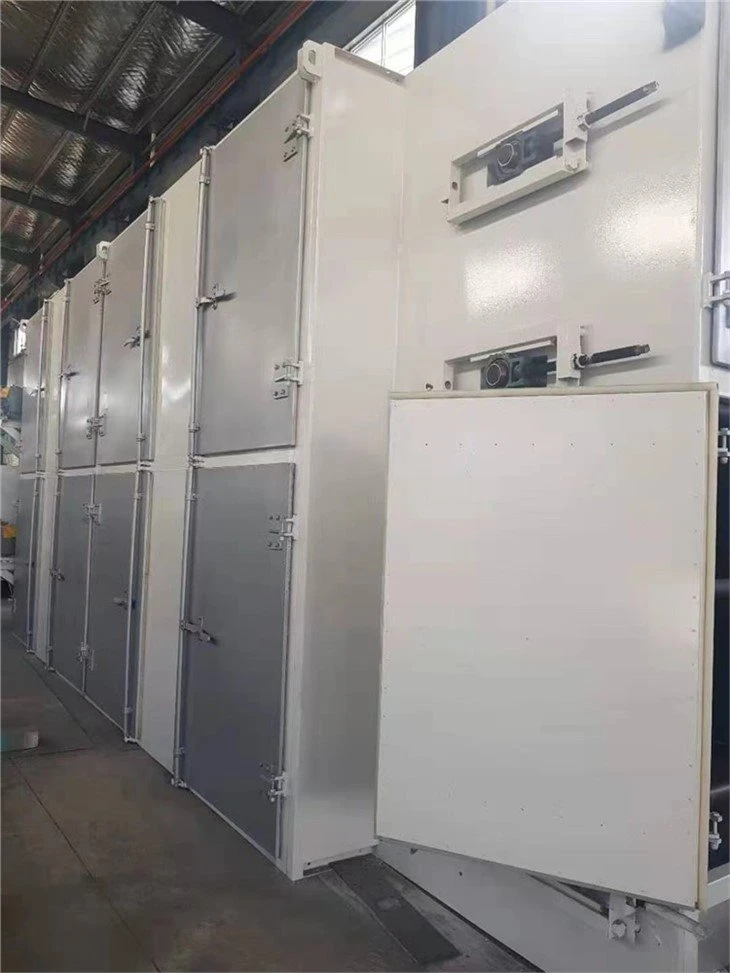

If you're interested in learning more about our belt dryers or need help with controlling the material layer thickness, don't hesitate to reach out. We're here to assist you in finding the best solutions for your drying needs. Let's work together to optimize your drying process and get the most out of your belt dryer.
References
- Smith, J. (2018). "Advanced Techniques in Belt Drying". Journal of Drying Technology.
- Brown, A. (2020). "Optimizing Material Handling in Belt Dryers". Industrial Processing Magazine.