

When it comes to belt dryers, selecting the right insulation material is crucial for optimizing performance, energy efficiency, and product quality. As a belt dryer supplier, I've witnessed firsthand the impact that proper insulation can have on the overall operation of these machines. In this blog post, I'll share some insights on how to choose the insulation material for a belt dryer.
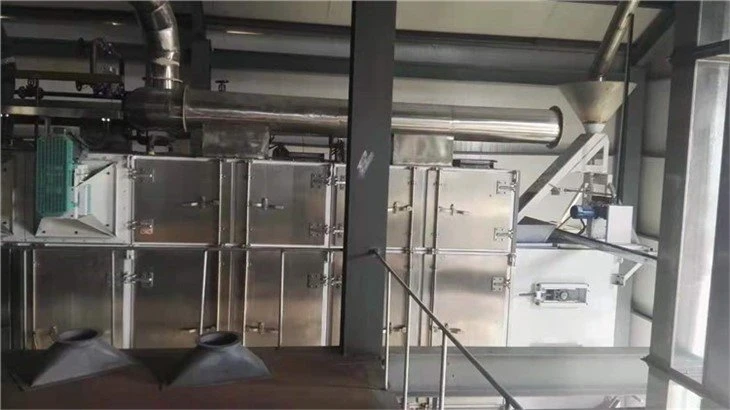

Understanding the Role of Insulation in Belt Dryers
Belt dryers are used to remove moisture from various materials by passing them through a heated chamber on a conveyor belt. Insulation plays a vital role in this process by reducing heat loss from the dryer's enclosure. This not only helps to maintain a consistent temperature inside the dryer, which is essential for uniform drying, but also improves energy efficiency by minimizing the amount of heat that escapes into the surrounding environment.
In addition to energy savings, good insulation can also enhance the safety of the belt dryer. By keeping the outer surface of the dryer at a lower temperature, it reduces the risk of burns to operators and minimizes the potential for fire hazards.
Factors to Consider When Choosing Insulation Material
Thermal Conductivity
One of the most important factors to consider when selecting insulation material is its thermal conductivity, which is a measure of how well the material conducts heat. A lower thermal conductivity means that the material is a better insulator, as it will transfer less heat through it. Materials with low thermal conductivity, such as fiberglass, mineral wool, and polyurethane foam, are commonly used in belt dryer insulation.
Temperature Resistance
Belt dryers can operate at high temperatures, so it's essential to choose an insulation material that can withstand these conditions without degrading or losing its insulating properties. Different insulation materials have different temperature limits, so it's important to select a material that can handle the maximum operating temperature of your belt dryer. For example, ceramic fiber insulation can withstand temperatures up to 2300°F (1260°C), making it suitable for high-temperature applications.
Chemical Resistance
Depending on the type of material being dried in the belt dryer, there may be a risk of exposure to chemicals or corrosive substances. In such cases, it's important to choose an insulation material that is resistant to these chemicals. For example, some insulation materials may be damaged by acids, alkalis, or solvents, while others are specifically designed to be chemically resistant.
Moisture Resistance
Moisture can reduce the effectiveness of insulation by increasing its thermal conductivity. Therefore, it's important to choose an insulation material that is resistant to moisture absorption. Closed-cell insulation materials, such as polyurethane foam, are generally more moisture-resistant than open-cell materials, such as fiberglass or mineral wool.
Mechanical Strength
The insulation material should also have sufficient mechanical strength to withstand the rigors of the belt dryer's operation. This includes resistance to vibration, impact, and abrasion. For example, in a belt dryer with a high-speed conveyor belt, the insulation material needs to be able to withstand the forces generated by the moving belt without breaking or crumbling.
Cost
Cost is always a consideration when choosing insulation material. While it's important to select a high-quality insulation material that meets your requirements, you also need to balance this with your budget. Different insulation materials have different costs, so it's important to compare the prices of various options and choose the one that offers the best value for money.
Common Insulation Materials for Belt Dryers
Fiberglass Insulation
Fiberglass insulation is one of the most commonly used insulation materials in belt dryers. It is made from fine glass fibers that are woven or matted together. Fiberglass insulation has a low thermal conductivity, is relatively inexpensive, and is easy to install. However, it can be irritating to the skin and lungs if not handled properly, so appropriate safety measures should be taken during installation.
Mineral Wool Insulation
Mineral wool insulation is made from natural or synthetic minerals, such as basalt or slag. It has similar properties to fiberglass insulation, including low thermal conductivity and good fire resistance. Mineral wool insulation is also more resistant to high temperatures than fiberglass, making it suitable for applications where the belt dryer operates at elevated temperatures.
Polyurethane Foam Insulation
Polyurethane foam insulation is a closed-cell insulation material that offers excellent thermal insulation properties. It has a very low thermal conductivity and is also moisture-resistant. Polyurethane foam can be applied as a spray foam or in rigid board form, making it suitable for a variety of belt dryer configurations. However, it is more expensive than fiberglass or mineral wool insulation.
Ceramic Fiber Insulation
Ceramic fiber insulation is a high-temperature insulation material that can withstand temperatures up to 2300°F (1260°C). It is made from ceramic fibers that are spun into a mat or blanket. Ceramic fiber insulation is lightweight, has low thermal conductivity, and is resistant to thermal shock. It is commonly used in high-temperature belt dryers, such as those used in the ceramics or metalworking industries.
Making the Right Choice
When choosing the insulation material for your belt dryer, it's important to consider all of the factors mentioned above. You may also want to consult with a professional insulation contractor or a belt dryer supplier to get their recommendations based on your specific requirements.
As a belt dryer supplier, we offer a range of belt dryers, including Feed Belt Dryer and Food Belt Dryer. Our experts can help you select the right insulation material for your belt dryer to ensure optimal performance and energy efficiency.
If you're interested in learning more about our belt dryers or need assistance with choosing the right insulation material, please don't hesitate to contact us. We're here to help you make the best decision for your business.
References
- ASHRAE Handbook of Fundamentals. American Society of Heating, Refrigerating and Air-Conditioning Engineers.
- Insulation Materials: Properties and Applications. CRC Press.
- Belt Dryer Design and Operation Manual. Industry-standard publication.