

How to calculate the heat transfer area of a Counterflow Cooler?
As a supplier of counterflow coolers, I understand the importance of accurately calculating the heat transfer area for optimal performance. In this blog post, I will guide you through the process of calculating the heat transfer area of a counterflow cooler, providing you with the knowledge and tools necessary to make informed decisions for your cooling needs.
Understanding the Basics of Counterflow Coolers
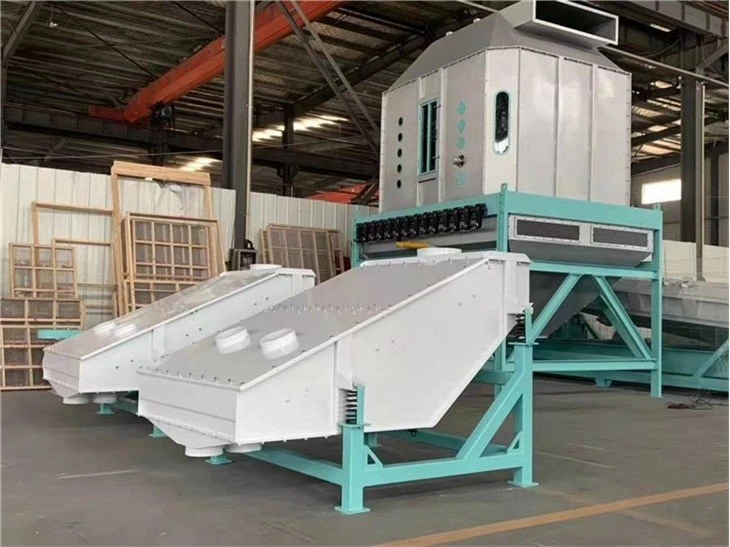
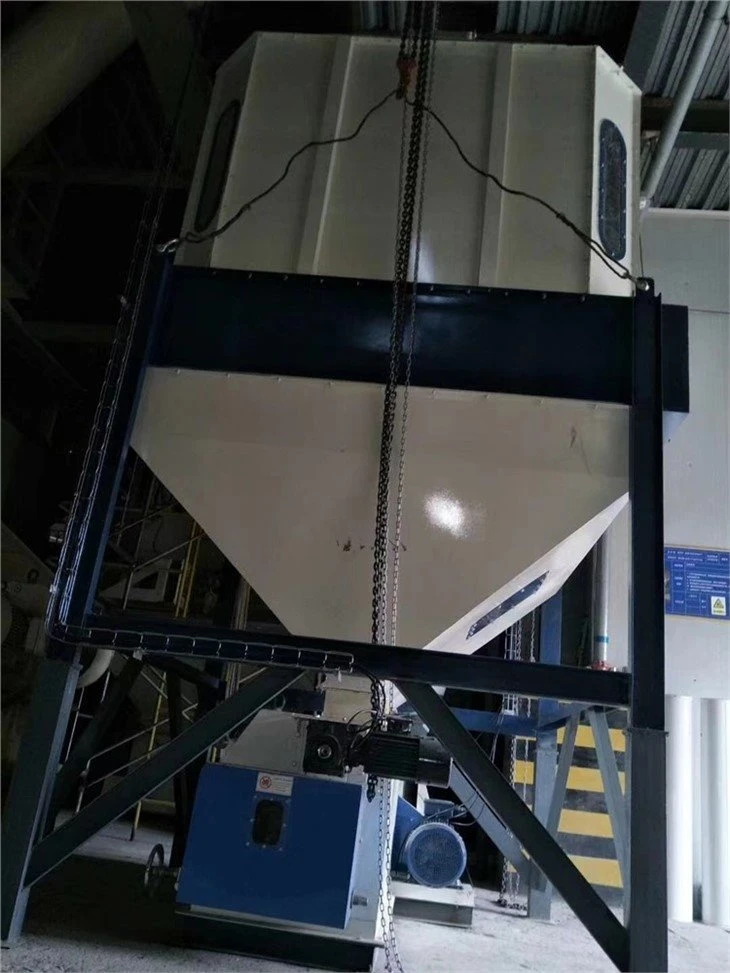
A counterflow cooler is a type of heat exchanger that operates on the principle of countercurrent flow, where the hot and cold fluids flow in opposite directions. This design allows for efficient heat transfer between the two fluids, as the temperature difference between them is maintained throughout the length of the cooler. Counterflow coolers are commonly used in various industries, including food processing, chemical, and power generation, to cool down hot products or fluids.
Factors Affecting Heat Transfer in a Counterflow Cooler
Before we dive into the calculation of the heat transfer area, it's important to understand the factors that affect heat transfer in a counterflow cooler. These factors include:
- Temperature Difference: The greater the temperature difference between the hot and cold fluids, the higher the rate of heat transfer.
- Flow Rate: The flow rate of the hot and cold fluids affects the residence time in the cooler, which in turn affects the heat transfer rate.
- Heat Transfer Coefficient: The heat transfer coefficient is a measure of the ability of the cooler to transfer heat between the hot and cold fluids. It depends on the properties of the fluids, the design of the cooler, and the operating conditions.
- Surface Area: The surface area of the cooler is directly proportional to the heat transfer rate. A larger surface area allows for more contact between the hot and cold fluids, resulting in increased heat transfer.
Calculating the Heat Transfer Area
The heat transfer area of a counterflow cooler can be calculated using the following formula:
[Q = U \times A \times \Delta T_{lm}]
Where:
- (Q) is the heat transfer rate (in watts or BTU/hr)
- (U) is the overall heat transfer coefficient (in (W/m^2K) or (BTU/hr ft^2°F))
- (A) is the heat transfer area (in (m^2) or (ft^2))
- (\Delta T_{lm}) is the log mean temperature difference (in (K) or (°F))
To calculate the heat transfer area, we need to know the heat transfer rate, the overall heat transfer coefficient, and the log mean temperature difference.
Step 1: Determine the Heat Transfer Rate ((Q))
The heat transfer rate can be calculated using the following formula:
[Q = m \times C_p \times \Delta T]
Where:
- (m) is the mass flow rate of the hot fluid (in kg/s or lb/hr)
- (C_p) is the specific heat capacity of the hot fluid (in (J/kgK) or (BTU/lb°F))
- (\Delta T) is the temperature difference of the hot fluid (in (K) or (°F))
For example, let's assume we have a hot fluid with a mass flow rate of 10 kg/s, a specific heat capacity of 4.2 kJ/kgK, and a temperature difference of 50 K. The heat transfer rate can be calculated as follows:
[Q = 10 \ kg/s \times 4.2 \ kJ/kgK \times 50 \ K = 2100 \ kJ/s = 2100000 \ W]
Step 2: Determine the Overall Heat Transfer Coefficient ((U))
The overall heat transfer coefficient depends on the properties of the fluids, the design of the cooler, and the operating conditions. It can be determined experimentally or estimated using correlations based on the type of cooler and the fluid properties. For a counterflow cooler, typical values of the overall heat transfer coefficient range from 100 to 500 (W/m^2K) for water-to-water applications and from 50 to 200 (W/m^2K) for air-to-water applications.
Let's assume we have a counterflow cooler with an overall heat transfer coefficient of 200 (W/m^2K).
Step 3: Determine the Log Mean Temperature Difference ((\Delta T_{lm}))
The log mean temperature difference is a measure of the average temperature difference between the hot and cold fluids over the length of the cooler. It can be calculated using the following formula:
[\Delta T_{lm} = \frac{\Delta T_1 - \Delta T_2}{\ln(\frac{\Delta T_1}{\Delta T_2})}]
Where:
- (\Delta T_1) is the temperature difference between the hot and cold fluids at one end of the cooler
- (\Delta T_2) is the temperature difference between the hot and cold fluids at the other end of the cooler
For example, let's assume the hot fluid enters the cooler at 100°C and leaves at 50°C, while the cold fluid enters the cooler at 20°C and leaves at 40°C. The temperature differences at the two ends of the cooler are:
(\Delta T_1 = 100°C - 20°C = 80°C)
(\Delta T_2 = 50°C - 40°C = 10°C)
The log mean temperature difference can be calculated as follows:
[\Delta T_{lm} = \frac{80°C - 10°C}{\ln(\frac{80°C}{10°C})} = \frac{70°C}{\ln(8)} \approx 37.6°C]
Step 4: Calculate the Heat Transfer Area ((A))
Now that we have the heat transfer rate ((Q)), the overall heat transfer coefficient ((U)), and the log mean temperature difference ((\Delta T_{lm})), we can calculate the heat transfer area using the formula:
[A = \frac{Q}{U \times \Delta T_{lm}}]
Substituting the values we calculated above, we get:
[A = \frac{2100000 \ W}{200 \ W/m^2K \times 37.6 \ K} \approx 279.25 \ m^2]
Importance of Accurate Heat Transfer Area Calculation
Accurately calculating the heat transfer area of a counterflow cooler is crucial for ensuring optimal performance and energy efficiency. If the heat transfer area is too small, the cooler may not be able to cool the hot fluid to the desired temperature, resulting in inefficient operation and increased energy consumption. On the other hand, if the heat transfer area is too large, the cooler may be overdesigned, leading to higher initial costs and unnecessary energy consumption.
Our Counterflow Cooler Solutions
At our company, we offer a wide range of SKLN Counterflow Cooler and Counterflow Feed Pellet Cooler solutions designed to meet the diverse needs of our customers. Our coolers are engineered with the latest technology and high-quality materials to ensure efficient heat transfer and reliable operation.
We understand that every application is unique, and we work closely with our customers to design and manufacture counterflow coolers that are tailored to their specific requirements. Our team of experienced engineers can assist you in calculating the heat transfer area and selecting the right cooler for your application.
Contact Us for More Information
If you are interested in learning more about our counterflow coolers or need assistance with calculating the heat transfer area, please feel free to contact us. Our sales team will be happy to provide you with detailed information and answer any questions you may have. We look forward to working with you to meet your cooling needs.
References
- Incropera, F. P., & DeWitt, D. P. (2002). Fundamentals of Heat and Mass Transfer. John Wiley & Sons.
- Holman, J. P. (2002). Heat Transfer. McGraw-Hill.