

Hey there! As a supplier of counterflow coolers, I've been getting a lot of questions lately about how to adjust the cooling capacity of these nifty machines. So, I thought I'd put together this blog post to share some tips and tricks that I've picked up over the years.
First off, let's talk about what a counterflow cooler is and why it's so important. A counterflow cooler is a type of industrial equipment used to cool down hot materials, like feed pellets, by passing them through a stream of cool air. The cool air flows in the opposite direction of the hot materials, hence the name "counterflow." This design allows for efficient heat transfer and ensures that the materials are cooled evenly.
Now, let's get into the nitty-gritty of adjusting the cooling capacity of a counterflow cooler. There are several factors that can affect the cooling capacity, including the airflow rate, the temperature of the incoming air, and the moisture content of the materials. Here are some steps you can take to adjust the cooling capacity:
1. Adjust the Airflow Rate
The airflow rate is one of the most important factors in determining the cooling capacity of a counterflow cooler. By increasing the airflow rate, you can increase the amount of cool air that comes into contact with the hot materials, which will help to cool them down more quickly. On the other hand, if you decrease the airflow rate, the cooling process will be slower.
To adjust the airflow rate, you'll need to locate the fan on your counterflow cooler. Most counterflow coolers have a variable speed fan that allows you to adjust the airflow rate. Simply turn the fan speed up or down to increase or decrease the airflow rate. You may need to experiment a bit to find the optimal airflow rate for your specific application.
2. Control the Temperature of the Incoming Air
The temperature of the incoming air also plays a crucial role in the cooling process. If the incoming air is too warm, it won't be able to cool the hot materials effectively. On the other hand, if the incoming air is too cold, it could cause the materials to become too dry or brittle.
To control the temperature of the incoming air, you can use a pre - cooler or a heat exchanger. A pre - cooler is a device that cools the incoming air before it enters the counterflow cooler. A heat exchanger, on the other hand, can be used to transfer heat from the hot air leaving the cooler to the incoming air, which can help to improve energy efficiency.
3. Monitor and Adjust the Moisture Content
The moisture content of the materials being cooled can also affect the cooling capacity. If the materials are too moist, they will take longer to cool down, and there's a risk of mold or bacteria growth. If the materials are too dry, they may become brittle and break apart.
To monitor the moisture content, you can use a moisture meter. If the moisture content is too high, you may need to increase the airflow rate or the temperature of the incoming air to help dry the materials. If the moisture content is too low, you can try reducing the airflow rate or adding a bit of moisture to the incoming air.
4. Optimize the Loading Rate
The loading rate, or the amount of materials being fed into the counterflow cooler at one time, can also impact the cooling capacity. If you overload the cooler, the materials won't have enough time to cool down properly. On the other hand, if you underload the cooler, you're not using its full capacity.
To optimize the loading rate, you'll need to find the right balance based on the size and capacity of your counterflow cooler. You may need to do some trial and error to determine the optimal loading rate for your specific application.
5. Regular Maintenance
Regular maintenance is essential for ensuring that your counterflow cooler operates at its peak performance. Over time, dust, debris, and other contaminants can build up inside the cooler, which can reduce its efficiency.
Make sure to clean the cooler regularly, including the fan, the ductwork, and the cooling chamber. Check the belts, bearings, and other moving parts for wear and tear, and replace them as needed. Also, inspect the seals and gaskets to ensure that there are no air leaks.

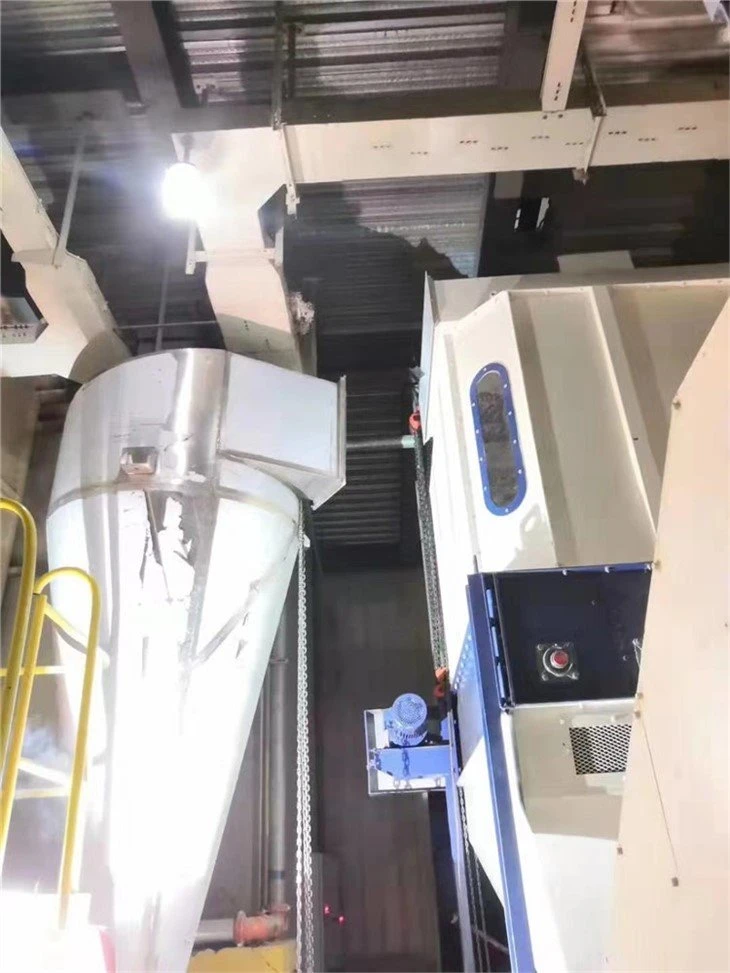
Now, I'd like to introduce you to some of our top - notch counterflow coolers. We offer the SKLN Counterflow Cooler, which is known for its high efficiency and reliable performance. It's designed to handle a wide range of materials and can be easily adjusted to meet your specific cooling needs.
Another great option is our Counterflow Feed Pellet Cooler. This cooler is specifically designed for cooling feed pellets and ensures that the pellets are cooled evenly and efficiently, maintaining their quality and integrity.
If you're in the market for a counterflow cooler or have any questions about adjusting the cooling capacity, don't hesitate to reach out. We're here to help you find the best solution for your business. Whether you're a small - scale operation or a large industrial facility, we have the expertise and the products to meet your needs. Contact us today to start a discussion about your requirements and let's work together to get the most out of your counterflow cooler.
References
- Association of Feed Equipment Manufacturers (AFEM). "Best Practices for Counterflow Cooler Operation." Feed Equipment Handbook.
- Industrial Cooling Solutions Journal. "Optimizing Cooling Capacity in Counterflow Coolers." Vol. 15, Issue 3.