

Hey there! I'm a supplier of Feed Mill Grinders, and today I wanna chat about how the particle size distribution of the feed can have a huge impact on the grinder's performance.
Let's start with the basics. When we talk about particle size distribution in feed, we're referring to how the different - sized particles are spread out in the feed material. You see, feed isn't just a bunch of uniform pieces. It can have all sorts of particle sizes, from really tiny to quite large.
Now, why does this matter for the grinder? Well, the grinder has to deal with these different - sized particles, and the way they're distributed can make or break its efficiency.
First off, let's consider the energy consumption. If the feed has a wide particle size distribution, with a mix of large and small particles, the grinder has to work harder. The large particles need more energy to break down, while the small ones are already in a good state. When the grinder tries to handle this uneven mix, it has to use extra power to keep going. This means higher energy bills for the user, which is definitely not a good thing.
On the other hand, if the particle size distribution is more uniform, the grinder can operate more smoothly. It doesn't have to constantly adjust its power to deal with the extreme differences in particle size. For example, if most of the particles are around the same size, the grinder can set a consistent speed and force to break them down, using less energy in the process.
Another important aspect is the wear and tear on the grinder. When there are large particles in the feed, they can cause more damage to the grinder's components. The blades or hammers in the grinder have to work harder to crush these big pieces, and this can lead to faster wear. Over time, this means more frequent replacements of parts, which adds to the overall cost of operating the grinder.
A more uniform particle size distribution reduces this wear. Since the grinder doesn't have to deal with the stress of breaking down large particles all the time, the components last longer. This not only saves money on replacement parts but also reduces the downtime for maintenance.
The quality of the ground product is also affected by the particle size distribution of the feed. If the feed has a wide distribution, the final product may have an inconsistent particle size. Some parts may be too fine, while others are still relatively large. This can be a problem, especially in the animal feed industry. Animals need a certain particle size in their feed for proper digestion. An inconsistent product may lead to poor nutrient absorption, which can affect the health and growth of the animals.
When the feed has a more uniform particle size distribution, the grinder can produce a more consistent final product. This ensures that the animals get the right amount of nutrients from the feed, leading to better health and growth.
Now, let's talk about how we can manage the particle size distribution of the feed. One way is to use a feeder, like the Animal Feed Impeller Feeder. This feeder can help control the flow of the feed into the grinder, ensuring that the particles are fed in a more even manner. By regulating the feed rate, it can prevent large clumps of particles from entering the grinder at once, which helps in maintaining a more consistent particle size distribution during the grinding process.
The Impeller Feeder is another great option. It can be adjusted to handle different types of feed and particle sizes. It can break up any large clumps in the feed before it enters the grinder, making the grinding process more efficient.
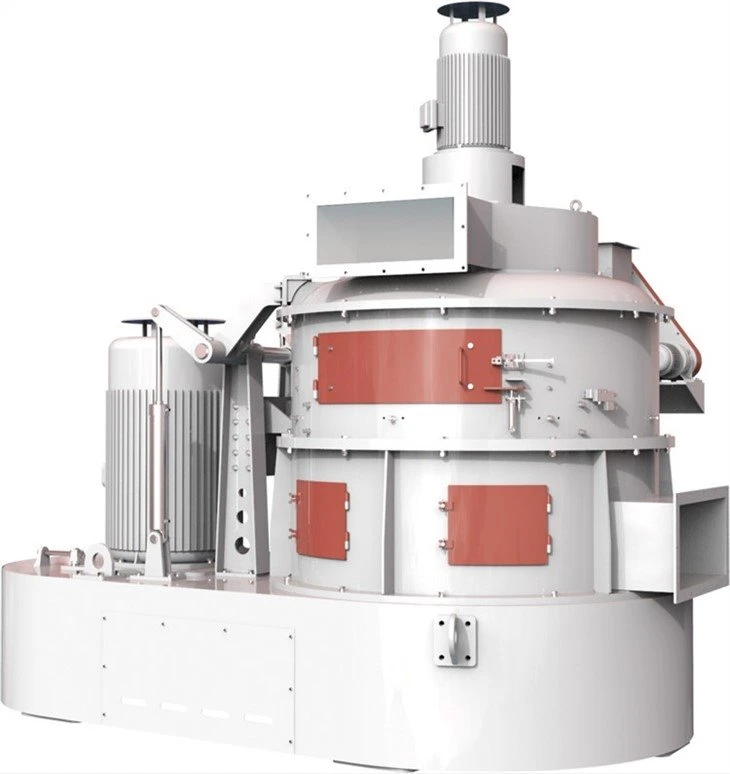
We also offer the SWFL Series Ultra - fine Pulverizer, which is designed to handle a wide range of particle sizes. It can further refine the particle size distribution of the feed, ensuring a more consistent final product.

In conclusion, the particle size distribution of the feed plays a crucial role in the performance of the grinder. A more uniform distribution leads to lower energy consumption, less wear and tear, and a higher - quality final product. As a Feed Mill Grinder supplier, we understand these challenges and offer solutions to help our customers get the most out of their grinders.
If you're in the market for a feed mill grinder or want to improve the performance of your existing one, don't hesitate to reach out. We're here to help you find the best solutions for your specific needs. Let's have a chat and see how we can work together to optimize your grinding process.
References
- Some research papers on feed processing technology
- Industry reports on grinder performance and particle size distribution